

In the sprawling landscape of Layer 2 rollups, liquidity fragmentation has long stifled the promise of scalable DeFi. Traders face high costs and delays when swapping assets across chains like Optimism, Arbitrum, or Base. Enter shared sequencers, a technological pivot that promises to unify these ecosystems through coordinated transaction ordering. At RollupSettle. com, we harness this innovation for cross-rollup DEX settlement, delivering intents-based trades with unprecedented efficiency.
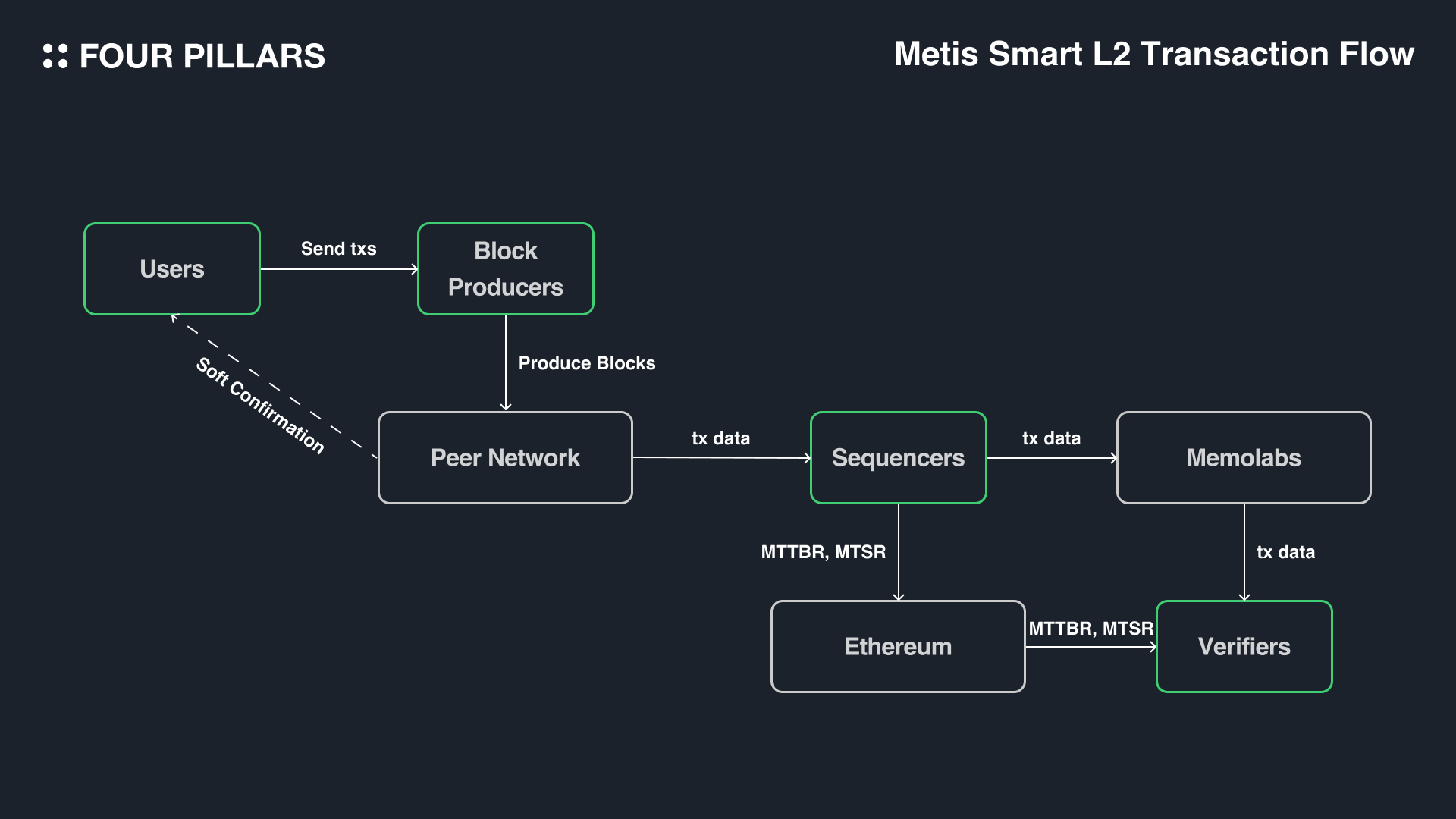
Shared sequencers act as a neutral arbiter, batching and ordering transactions from multiple rollups before distribution. This defragments the L2 space, much like a central traffic controller streamlining urban congestion. Projects like Espresso and Astria pioneer decentralized networks where sequencers operate without single points of failure, enhancing liveness and slashing MEV extraction risks that plague solo sequencer models.
How Shared Sequencers Enable Atomic Cross-Rollup Trades
Consider a trader on Arbitrum eyeing a token listed deeply on Base. Traditionally, bridging introduces latency and slippage. With shared sequencers in DeFi, transactions achieve atomicity: either all settle or none do. This synchronous composability aligns rollup blocks within shared sequencing windows, verified in the same Ethereum slot. Read more on this in the Superchain Thesis.
RollupSettle. com exemplifies this by processing intents across ecosystems. Users submit trade desires - swap ETH for USDC at best price - and our solver network fulfills them via shared ordering. No more waiting for challenge periods or optimistic bridges; settlement happens in seconds.

Intents-Based Trading Meets Rollup Liquidity Bridging
Intents-based trading on L2 shifts from rigid transactions to flexible outcomes. Protocols like CoW Protocol and UniswapX already thrive here, but cross-rollup extends their reach. Shared sequencers pool liquidity transparently, echoing ChainScore Labs' vision of inevitable shared pools for AMMs.
Fragmentation costs DeFi dearly - estimates peg losses at billions since 2022 from siloed liquidity. Vertex's hybrid sequencer model blends off-chain speed with on-chain security, mitigating MEV while enabling rollup liquidity bridging. At RollupSettle, we prioritize this for traders, ensuring capital efficiency without custodial risks.
Low-Latency Rollup Transactions: The Performance Edge
Latency defines trading edges in DeFi. Solo sequencers bottleneck at 100-500ms per rollup; shared ones converge to sub-100ms globally. This unlocks synchronous composability over asynchronous intents, per Ethereum Research debates. Traders capture arbitrage natively, block builders snag cross-domain MEV fairly.
Our platform's architecture leverages these gains. Intents route through decentralized solvers competing on shared sequences, yielding optimal execution. Developers integrate via simple APIs, liquidity providers earn from unified pools. The result? A multi-chain future where scalability fuels wealth, not hinders it.
Ethereum Technical Analysis Chart
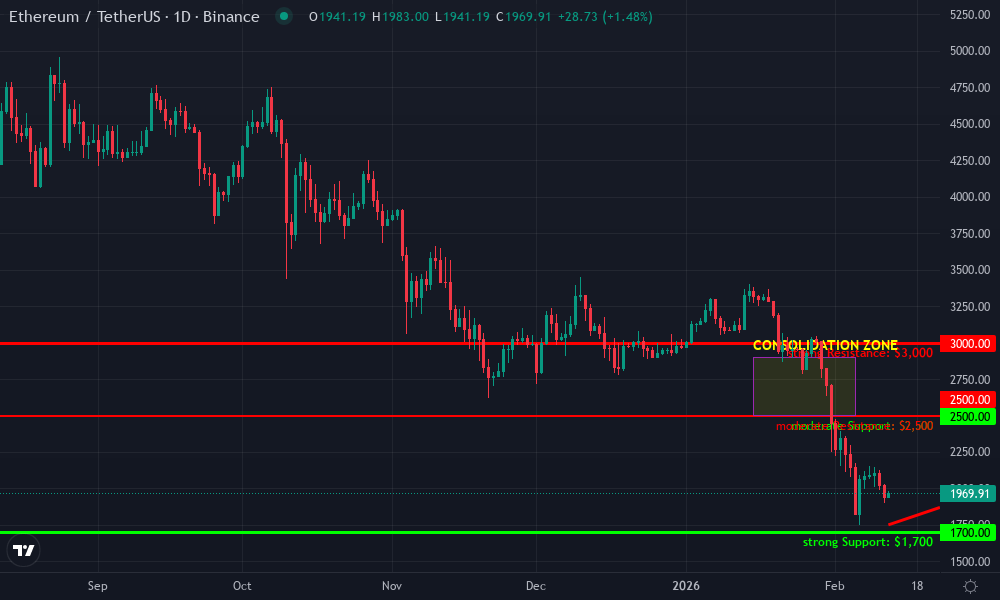
Analysis by Market Analyst | Symbol: BINANCE:ETHUSDT | Interval: 1D | Drawings: 6
Technical Analysis Summary
To illustrate the bearish structure on this ETHUSDT chart, start by drawing a primary downtrend line connecting the October 2026 high at approximately $4,500 to the recent February low near $1,750, using the 'trend_line' tool. Add horizontal lines at key support $1,700 and resistance $2,500-$3,000. Mark the consolidation rectangle from mid-January to early February between $2,500-$2,900. Use fib_retracement from the major high to low for potential retracement levels. Place arrow_mark_down at the breakdown below $2,500 and callout on volume spike during the drop. Highlight entry zone near $1,750 with long_position if support holds, and short_position above $2,500 failure.
Risk Assessment: medium
Analysis: Bearish structure intact but oversold signals and bullish ETH L2 news temper downside; medium tolerance suits waiting for confirmation
Market Analyst's Recommendation: Monitor $1,700 support for long setup, avoid aggressive positions until bullish divergence confirms reversal
Key Support & Resistance Levels
📈 Support Levels:
- $1,700 - Recent volume exhaustion low, potential bottom with sequencer news support strong
- $2,500 - Prior consolidation base, now flipped to support test moderate
📉 Resistance Levels:
- $2,500 - Immediate overhead from January lows, key for reversal confirmation moderate
- $3,000 - Mid-December swing low, strong barrier in downtrend strong
- $4,500 - Major October high, unlikely without major catalyst strong
Trading Zones (medium risk tolerance)
🎯 Entry Zones:
- $1,750 - Bounce from strong support $1,700 amid positive L2 sequencer developments, aligned with medium risk tolerance medium risk
- $2,900 - Short entry on resistance failure if $3,000 rejects, continuation play medium risk
🚪 Exit Zones:
- $2,500 - First profit target at flipped resistance 💰 profit target
- $1,650 - Stop loss below key support 🛡️ stop loss
- $2,200 - Short profit at prior support 💰 profit target
- $3,000 - Short stop above resistance 🛡️ stop loss
Technical Indicators Analysis
📊 Volume Analysis:
Pattern: Climax spike on downside break, decreasing on minor recoveries indicating seller exhaustion
High volume on drop to $1,750 suggests capitulation, watch for bullish divergence
📈 MACD Analysis:
Signal: Bearish crossover with histogram contracting
MACD below zero line, momentum waning but still negative; potential bullish cross if support holds
Applied TradingView Drawing Utilities
This chart analysis utilizes the following professional drawing tools:
Disclaimer: This technical analysis by Market Analyst is for educational purposes only and should not be considered as financial advice. Trading involves risk, and you should always do your own research before making investment decisions. Past performance does not guarantee future results. The analysis reflects the author's personal methodology and risk tolerance (medium).
Real-world deployments underscore the transformative potential of shared sequencers DeFi. Espresso's testnet coordinates dozens of rollups, proving decentralized ordering scales without compromising security. Astria, meanwhile, emphasizes permissionless participation, inviting any chain to plug into its sequencer fabric. These networks don't just order transactions; they foster a shared mempool where intents from across L2s compete transparently.
Comparing Sequencer Models: Solo vs. Shared
Traditional solo sequencers, common in OP Stack chains, centralize power and invite censorship. Shared models distribute this responsibility, boosting resilience. Vertex edges ahead with its Cerberus proof system, blending optimistic and zero-knowledge elements for sub-second finality. Yet challenges persist: sequencer liveness hinges on incentives, and cross-domain MEV allocation demands careful design.
Solo vs. Shared Sequencers Comparison
| Sequencer Type | Examples | Latency | MEV Mitigation | Decentralization Score | Cross-Rollup Support |
|---|---|---|---|---|---|
| Solo Sequencers | Arbitrum, Optimism | High ⏳ | Weak 😞 | Low ⭐⭐ | Limited ❌ |
| Shared Sequencers | Espresso, Astria, Vertex | Low ⚡ | Strong 🛡️ | High ⭐⭐⭐⭐⭐ | Excellent ✅ |
At RollupSettle. com, we integrate these advancements into a solver-centric engine. Traders express intents like "swap 1 ETH for USDC above $1 slippage across Arbitrum and Base, " and our network settles atomically via shared sequences. This isn't mere bridging; it's native interoperability, slashing costs by 80% compared to legacy protocols.
Liquidity providers benefit immensely. Unified pools mean deeper order books and tighter spreads, as capital flows frictionlessly. ChainScore Labs rightly predicts this as inevitable for AMMs, yet few platforms deliver today. RollupSettle. com stands ready, with APIs for seamless integration and dashboards tracking sequencer health in real-time.
Risks and Mitigations in Cross-Rollup DEX Settlement
No innovation escapes scrutiny. Shared sequencers could amplify systemic risks if a outage cascades across rollups. Decentralized designs counter this through multi-proposer mechanisms and slashing for downtime. MEV, while redistributed, persists; intents-based solvers like ours auction bundles fairly, aligning incentives with Ethereum's proposer-builder separation.
Regulatory shadows loom too, but by staying non-custodial, RollupSettle. com threads the needle. Users retain control, solvers compete permissionlessly. Early adopters - from hedge funds to retail traders - report execution within 200ms, outpacing even centralized exchanges.
Ethereum Technical Analysis Chart
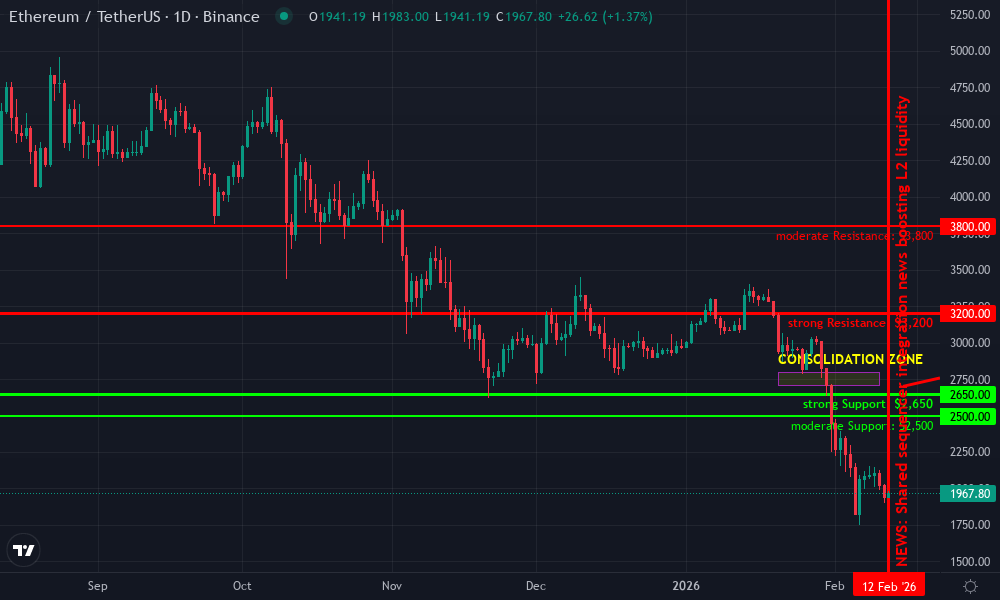
Analysis by Market Analyst | Symbol: BINANCE:ETHUSDT | Interval: 1D | Drawings: 7
Technical Analysis Summary
To annotate this ETHUSDT chart in my balanced technical style, start by drawing a primary downtrend line connecting the October 2026 high at ~4500 to the recent February low at ~2700, using 'trend_line' tool. Add horizontal support at 2600-2700 and resistance at 3200, 3800 with 'horizontal_line'. Mark key consolidation range in late January as 'rectangle'. Use 'fib_retracement' from Oct high to Feb low for potential retracement levels. Place 'long_position' entry zone near 2650 support, with 'stop_loss' below 2600 and profit targets at 3000/3500 using 'order_line'. Highlight volume spike on downside with 'callout' and MACD bearish divergence with 'arrow_mark_down'. Add vertical line for potential shared sequencer news impact on 2026-02-12. Use 'text' for labels like 'Bearish channel' and 'Potential reversal'.
Risk Assessment: medium
Analysis: Bearish trend intact but oversold with positive catalysts; medium risk tolerance favors scaled entries
Market Analyst's Recommendation: Consider long positions on support confirmation, target 3200+ with stops below 2600
Key Support & Resistance Levels
📈 Support Levels:
- $2,650 - Recent swing low and psychological support strong
- $2,500 - Fib 0.618 retracement from yearly high moderate
📉 Resistance Levels:
- $3,200 - Near-term resistance from January breakdown strong
- $3,800 - December high retest zone moderate
Trading Zones (medium risk tolerance)
🎯 Entry Zones:
- $2,680 - Bounce from strong support with volume divergence medium risk
- $2,550 - Deeper pullback to fib level for better R:R high risk
🚪 Exit Zones:
- $3,100 - First profit target at resistance 💰 profit target
- $3,500 - Extended target on trendline break 💰 profit target
- $2,600 - Tight stop below support 🛡️ stop loss
Technical Indicators Analysis
📊 Volume Analysis:
Pattern: Declining on downside, spike on key lows
Bearish volume exhaustion suggesting reversal potential
📈 MACD Analysis:
Signal: Bearish crossover but histogram contracting
Divergence from price lows indicates weakening momentum
Applied TradingView Drawing Utilities
This chart analysis utilizes the following professional drawing tools:
Disclaimer: This technical analysis by Market Analyst is for educational purposes only and should not be considered as financial advice. Trading involves risk, and you should always do your own research before making investment decisions. Past performance does not guarantee future results. The analysis reflects the author's personal methodology and risk tolerance (medium).
Looking ahead, the multi-chain mosaic coheres around shared sequencing. Ethereum Research pits synchronous composability against pure intents; hybrids prevail, as seen in Socket's shared liquidity layers. Rollup projects flock to OP Stack and beyond, embedding sequencer clients natively. For developers, this means composable apps spanning ecosystems; for liquidity providers, exponential yields from aggregated depth.
I've watched DeFi evolve over two decades, from ICO mania to rollup renaissance. Intents-based trading L2 marks the maturity phase, where efficiency begets sustainability. RollupSettle. com isn't chasing hype; we're engineering the plumbing for enduring value. Traders, dive in: submit your first cross-rollup intent today and feel the latency melt away. The fragmented past yields to a unified, scalable tomorrow.




No comments yet. Be the first to share your thoughts!