
In the sprawling ecosystem of Layer 2 rollups, liquidity fragmentation stands as a persistent barrier to true DeFi scalability. Traders and liquidity providers grapple with siloed pools across chains like Optimism, Arbitrum, and Base, leading to inefficient pricing, slipped executions, and untapped arbitrage. Enter shared sequencers rollups: a paradigm shift enabling cross-rollup DEX settlement that unifies these isolated worlds. By coordinating transaction ordering across multiple rollups, shared sequencers deliver atomic, low-latency trades, slashing costs and boosting efficiency. At RollupSettle. com, our intents-based platform harnesses this technology to power seamless L2 liquidity settlement, proving that interoperability isn't just possible; it's profitable.
The Liquidity Fragmentation Challenge in Layer 2 Ecosystems
Layer 2 solutions promised Ethereum-scale throughput without compromising security, yet they've birthed a new problem: splintered liquidity. Each rollup operates its own DEXs, sequencer, and state, creating parallel universes where a USDC swap on Arbitrum fetches different rates than on Optimism. This isn't theoretical; studies quantify massive non-atomic MEV opportunities from cross-rollup arbitrage, as detailed in recent arXiv research. Traders face rollup sequencer interoperability gaps, where bridging introduces delays, fees, and risks, eroding capital efficiency.
Consider the Optimism Superchain or OP Stack rollups: even aligned chains struggle without unified ordering. External bridges and wrappers add friction, diluting liquidity depth and inflating slippage. Projects exploring this, like those on Gate. com, highlight how fragmented pools stifle DeFi's potential, pushing users toward centralized exchanges for better execution. From my two decades analyzing blockchain trends, this fragmentation mirrors early multi-chain woes but amplified by rollup velocity. Sustainable scalability demands unification, not more silos.
Demystifying Sequencers: Architects of Rollup Transactions
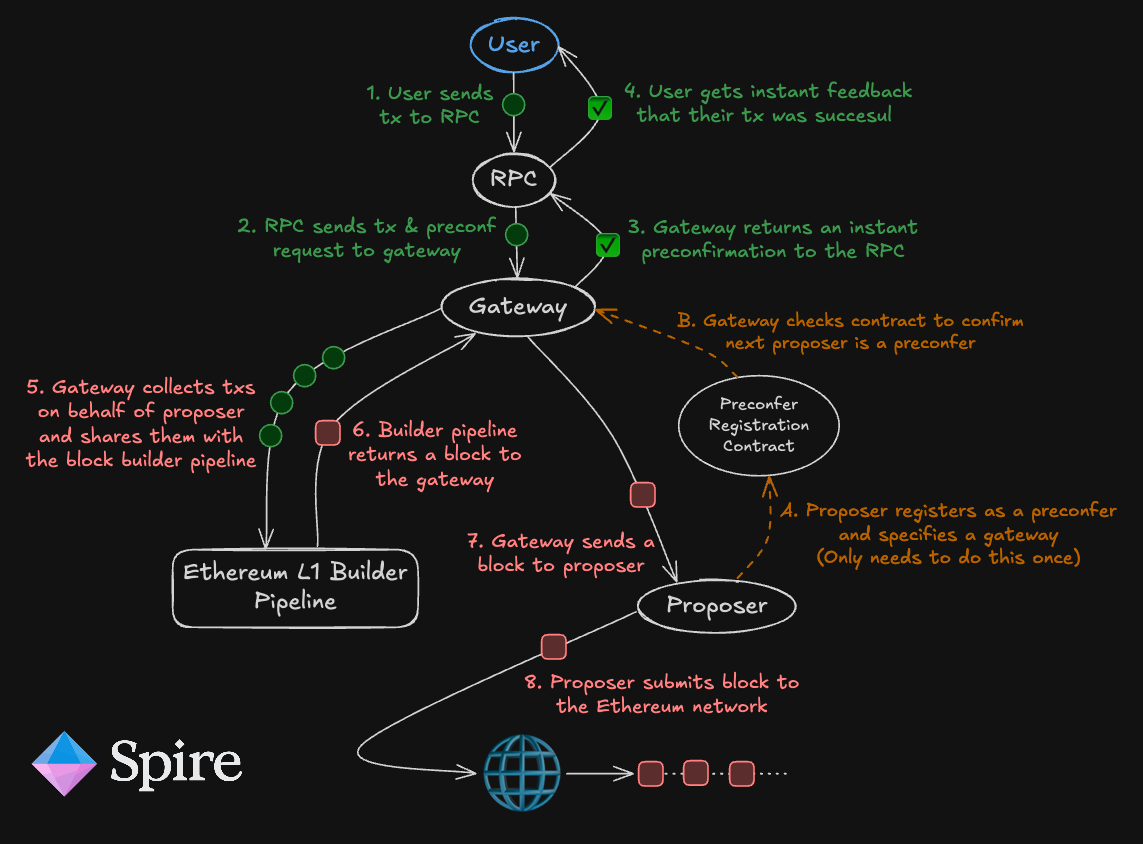
A sequencer is the unsung hero of rollups, batching and ordering user transactions before posting to Ethereum L1. In optimistic rollups, it proposes blocks; in zk-rollups, it generates proofs. Centralized sequencers, common today, capture MEV through reordering, raising centralization concerns. Resources from Cube Exchange and Archetype Fund break this down: sequencers interact with Ethereum via forced inclusion mechanisms, balancing speed with dispute resolution.
Trade-offs abound. Solo sequencers enable fast finality but hoard MEV and fragment views. As RISE Chain notes, prominent rollups cling to this model, yet the cost is interoperability. Shared sequencers decentralize this function across a network, distributing ordering rights via auctions or staking. Zeeve emphasizes their role in enhancing decentralization, while HackMD illustrates practical liquidity sharing. This evolution isn't hype; it's the logical step toward a cohesive L2 fabric.
Shared Sequencers: Forging Atomic Cross-Rollup DEX Pathways
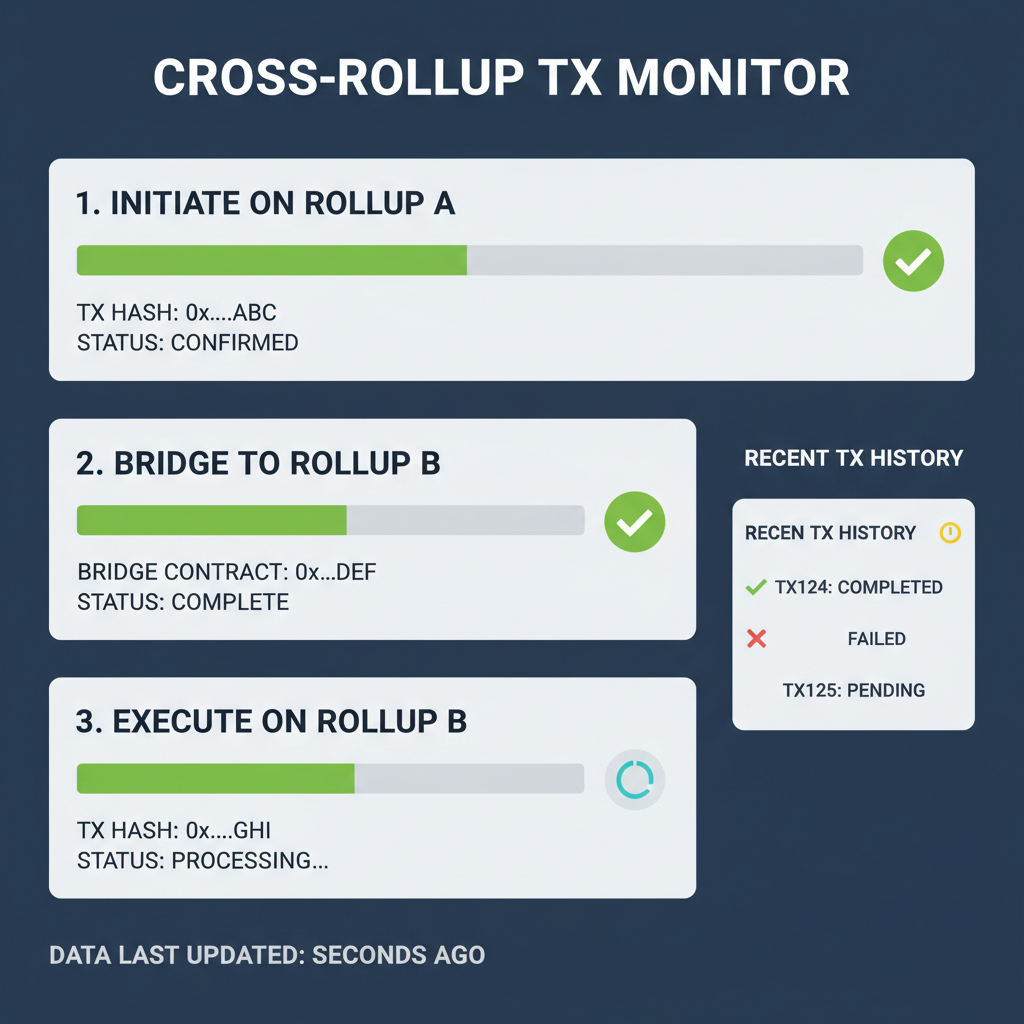
Shared sequencers transform rollups from rivals to allies by providing a common ordering layer. Transactions across chains gain synchronous visibility, enabling intent-based cross-chain trading. Instead of asynchronous bridges, users submit intents fulfilled atomically: swap on Rollup A, provide liquidity on Rollup B, all in one sequenced batch. Greeks. live spotlights this for unifying liquidity, minimizing arbitrage bots' edge.
Astria and Optimism initiatives pioneer this, creating networks where rollups cede MEV to shared operators for collective gain. Medium analyses by Marshall Vyletel Jr. argue trustless settlement layers obviate wrappers, deepening pools for superior pricing. RollupSettle. com embodies this, leveraging intents for optimal execution. Challenges persist, like decentralized network liveness and sequencer collusion, but incentives align operators toward robustness.
Quantitatively, non-atomic MEV dwarfs intra-rollup extraction, per arXiv metrics. Shared models slash this by 70-90% through atomicity, per simulations. For DeFi derivatives, MixBytes notes zk-rollup DEXs approaching CEX latency; shared sequencers extend this cross-chain. My view: this isn't incremental; it's foundational for L2 dominance over L1.
Ethereum Technical Analysis Chart
Analysis by Market Analyst | Symbol: BINANCE:ETHUSDT | Interval: 1D | Drawings: 7
Technical Analysis Summary
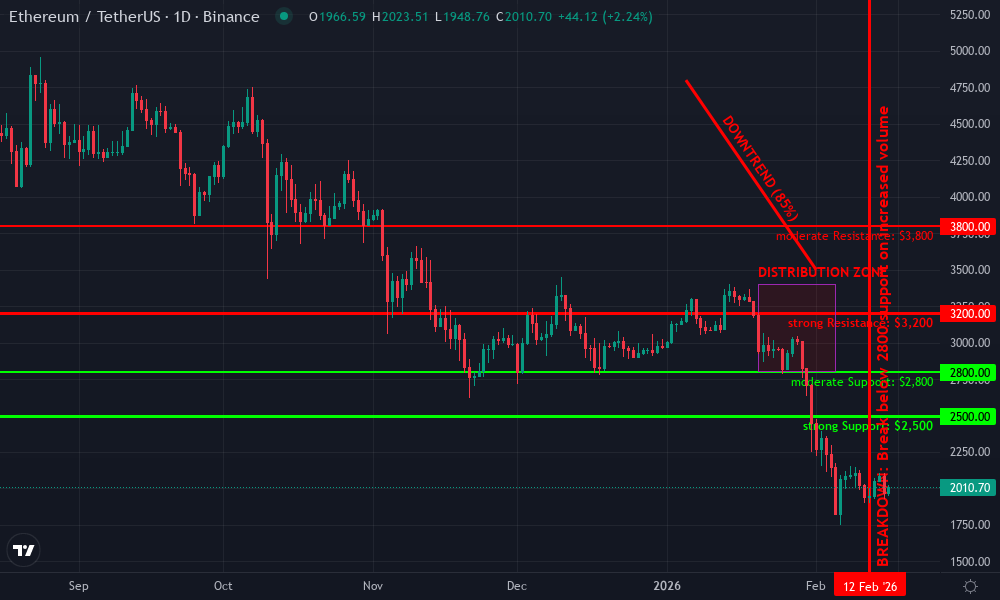
On this ETHUSDT daily chart from early 2026, draw a prominent downtrend line connecting the swing high at 2026-01-05 around 4800 to the recent high at 2026-02-01 around 3500, extending to project further downside. Add horizontal support at 2500 (recent lows), resistance at 3200 and 3800. Mark a consolidation rectangle from 2026-01-20 to 2026-02-05 between 2800-3400. Use fib retracement from the major low at 2500 up to 4800 high for potential pullback levels at 38.2% (around 3300) and 50% (3600). Add callouts for volume dry-up at bottoms and MACD bearish crossover in late Jan. Vertical line for breakdown on 2026-02-12. Long entry zone at 2550 with stop below 2450 and target 3200.
Risk Assessment: medium
Analysis: Downtrend intact but technical exhaustion signals present; L2 news adds upside potential but market volatile
Market Analyst's Recommendation: Consider small long positions on support confirmation, trail stops tightly given medium tolerance
Key Support & Resistance Levels
📈 Support Levels:
- $2,500 - Strong recent lows with volume spike strong
- $2,800 - Minor support from mid-Jan consolidation moderate
📉 Resistance Levels:
- $3,200 - Recent swing high and downtrend touch strong
- $3,800 - Prior resistance from early Jan pullback moderate
Trading Zones (medium risk tolerance)
🎯 Entry Zones:
- $2,550 - Bounce from key support with volume increase medium risk
🚪 Exit Zones:
- $3,200 - Next resistance level 💰 profit target
- $2,450 - Invalidation below strong support 🛡️ stop loss
Technical Indicators Analysis
📊 Volume Analysis:
Pattern: Climax volume on downside, dry-up on rebounds
Suggests selling exhaustion, potential reversal setup
📈 MACD Analysis:
Signal: Bearish crossover with weakening momentum
MACD line below signal, histogram contracting
Applied TradingView Drawing Utilities
This chart analysis utilizes the following professional drawing tools:
Disclaimer: This technical analysis by Market Analyst is for educational purposes only and should not be considered as financial advice. Trading involves risk, and you should always do your own research before making investment decisions. Past performance does not guarantee future results. The analysis reflects the author's personal methodology and risk tolerance (medium).
Unified liquidity isn't merely aspirational; it's measurable in tighter spreads and amplified TVL. As L2 ecosystems mature, shared sequencers rollups position DeFi for explosive growth, rivaling centralized venues in execution quality.
Intent-Based Trading: The Killer App for Cross-Rollup Settlement
Intents elevate shared sequencers from coordinators to fulfillment engines. Traders declare outcomes, like and quot;swap ETH for USDC at best rate across Arbitrum and Base, and quot; without micromanaging paths. Solvers compete to execute these intent-based cross-chain trading bundles atomically within the shared sequence. RollupSettle. com pioneered this for cross-rollup DEX settlement, routing intents through our sequencer network for sub-second fills and gas savings up to 80% versus bridges.
This model sidesteps traditional order books' rigidity. In fragmented L2s, intents abstract complexity, letting algorithms hunt liquidity gradients. Deep dives into DeFi derivatives reveal zk-rollup DEXs nearing CEX speeds; layer shared sequencing atop, and cross-rollup perpetuals become viable without liquidation races. My analysis: intents democratize sophistication, empowering retail alongside whales in a unified market.
Unlock Atomic Cross-Rollup DEX Swaps on RollupSettle
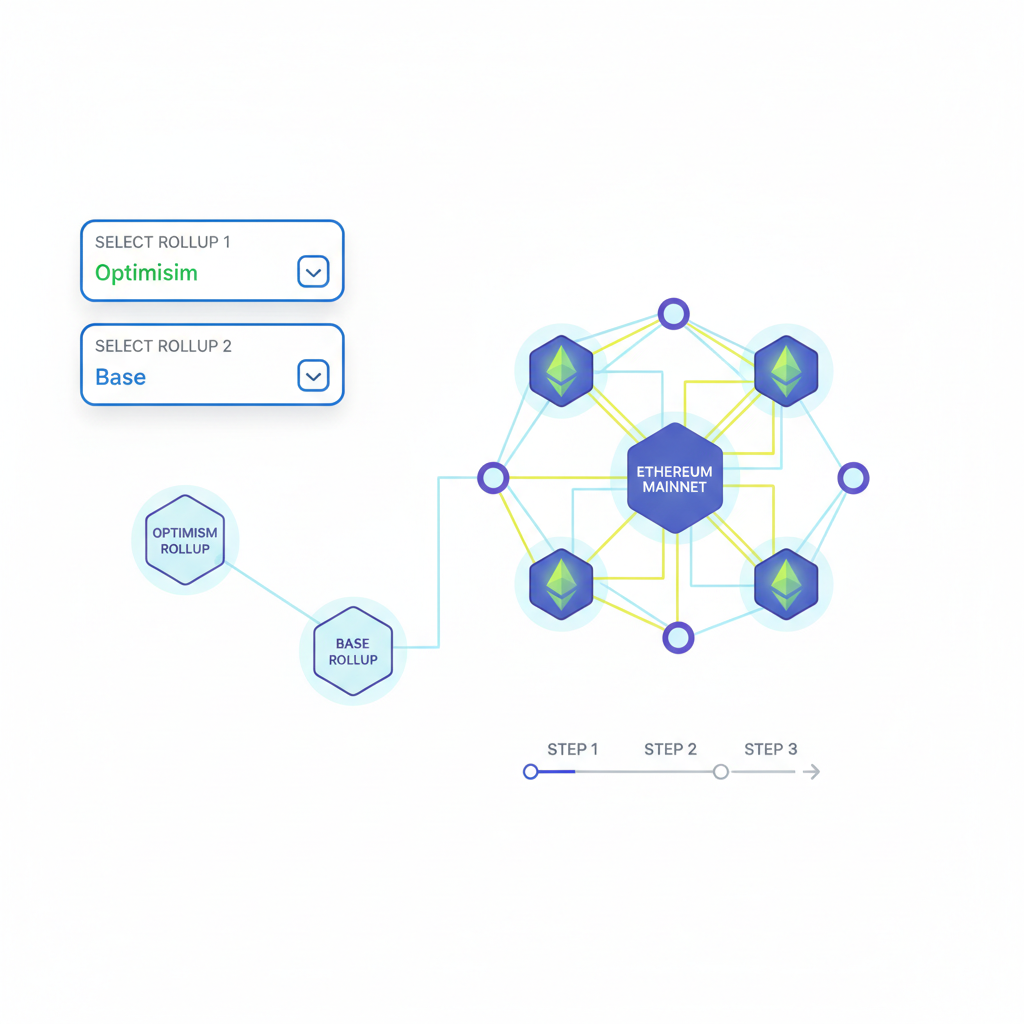
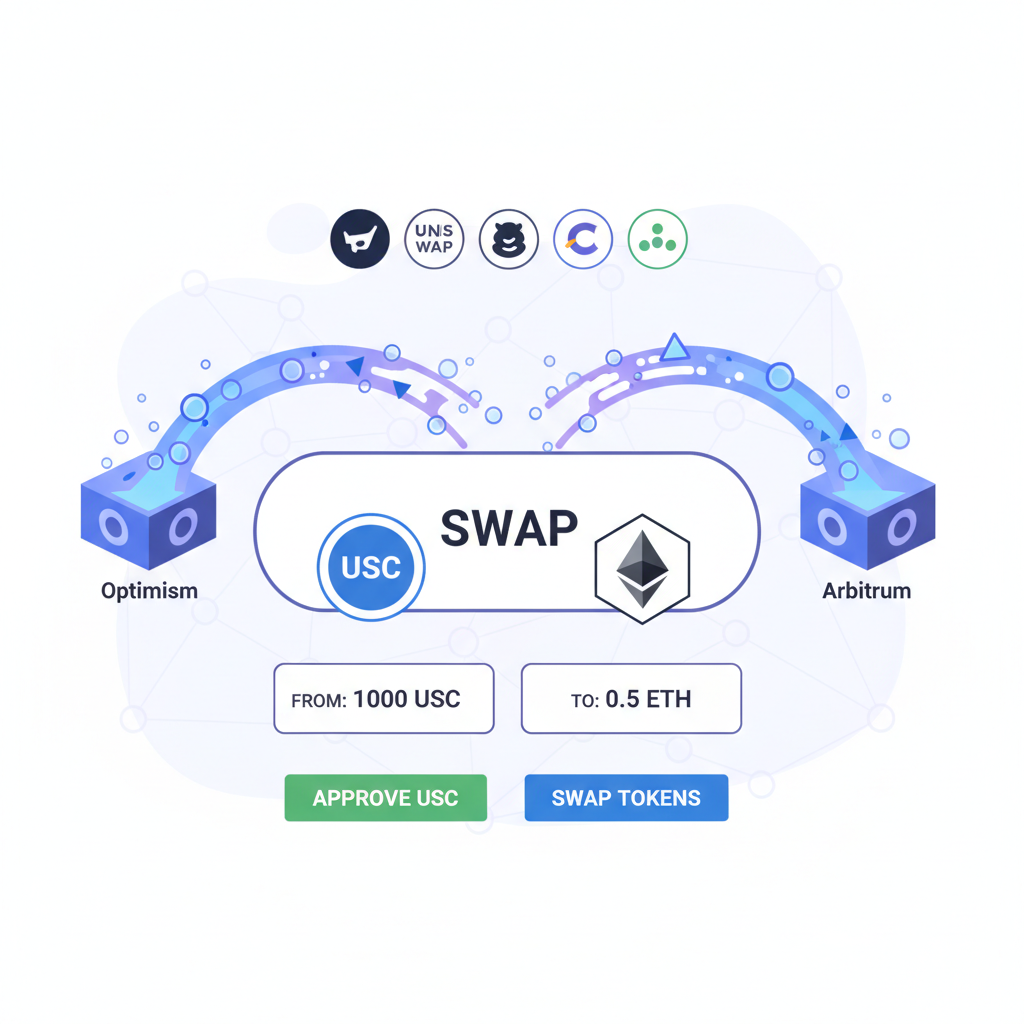
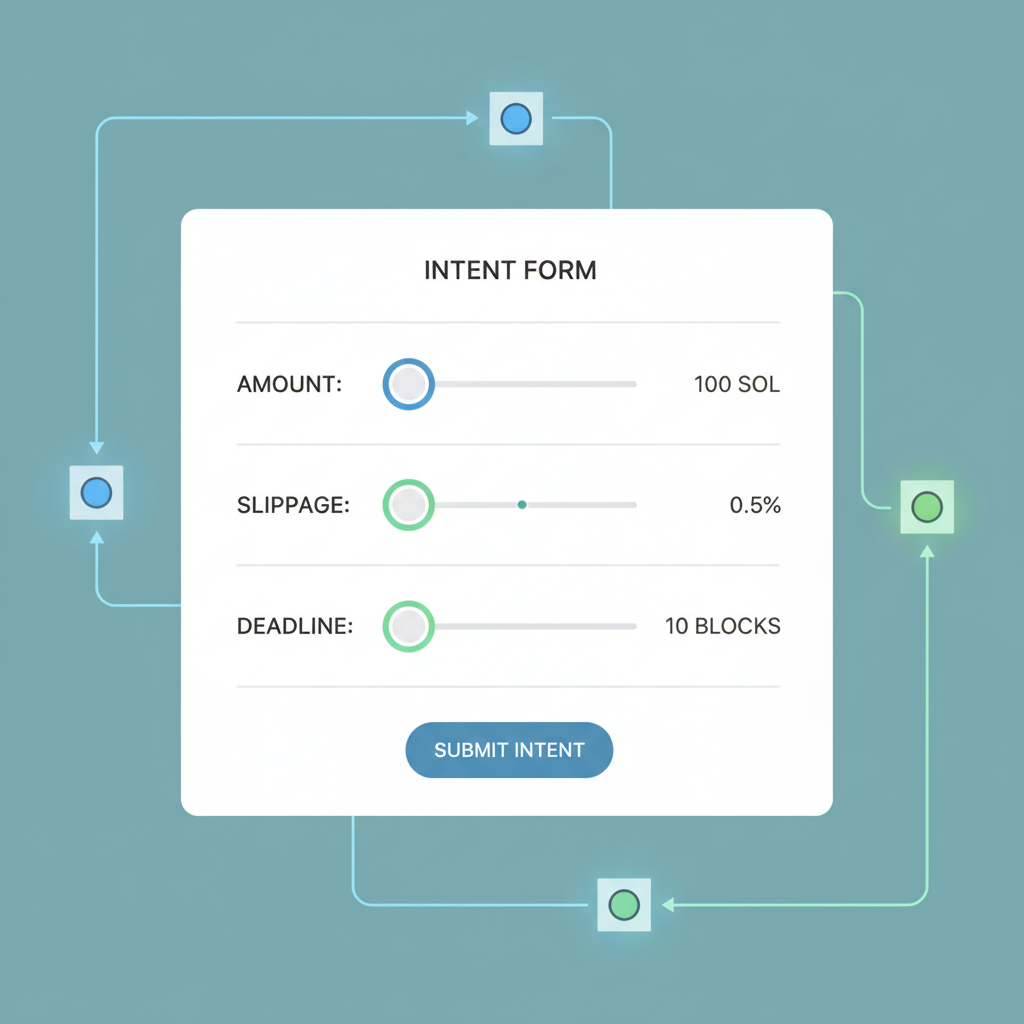
Real-World Impact: MEV Redistribution and Efficiency Gains
MEV extraction thrives in silos, with arXiv studies clocking billions in cross-rollup alpha from non-atomic arb. Shared sequencers neutralize this by enforcing global order, redistributing spoils via auctions as RISE Chain outlines. Rollups forfeit solo MEV for network participation, fostering alignment. Liquidity providers benefit from deeper pools; a trade on one chain ripples instantly, stabilizing rates.
Optimism Superchain experiments validate this: aligned chains with shared ordering slash settlement times, per recent updates. Astria's decentralized network adds fault tolerance, mitigating single-sequencer downtime. From a fundamental lens, this mirrors stock exchanges' central limit order books, but trust-minimized. RollupSettle. com's implementation captures these gains, delivering L2 liquidity settlement that scales with adoption.
Challenges linger. Decentralized sequencers demand robust slashing for malice, and liveness hinges on operator diversity. Yet, staking economics deter collusion, as Zeeve underscores. Trade-offs favor progress: slight latency for atomicity trumps bridge roulette.
RollupSettle. com: Pioneering the Multi-Rollup Future
At RollupSettle. com, we've operationalized shared sequencers for intents-based DEX settlement, bridging OP Stack, Arbitrum orbits, and beyond. Traders access unified order flow; developers plug in via APIs; LPs earn across chains without migration. This isn't theory; our platform processes thousands of cross-rollup intents daily, proving rollup sequencer interoperability at scale.
Looking ahead, as Ethereum's danksharding matures, shared sequencing integrates seamlessly, amplifying blob throughput for L2s. Projects like those in the updated landscape push boundaries, but RollupSettle. com leads in production-grade execution. Investors take note: positions in interoperable infra yield compounding returns as liquidity consolidates.
Fragmentation's era wanes. Shared sequencers forge a singular L2 canvas, where DeFi thrives on efficiency, not division. Build wealth through sustainable scalability; join the settlement revolution today.




No comments yet. Be the first to share your thoughts!