Cross-Rollup DEX Settlement with Shared Sequencers: Boosting L2 Liquidity for Traders

Layer 2 rollups promised scalability, but they’ve delivered a patchwork of liquidity pools that trap capital and stifle rollup DEX liquidity. Traders chasing alpha across chains face slippage, high bridging fees, and execution risks that erode profits. Cross-rollup DEX settlement via shared sequencers L2 flips this script, enabling atomic trades that span ecosystems without the usual friction. At RollupSettle. com, our intents-based solution harnesses this tech to deliver low-latency settlements, proving that unified sequencing isn’t just theory, it’s the path to defragmented DeFi.

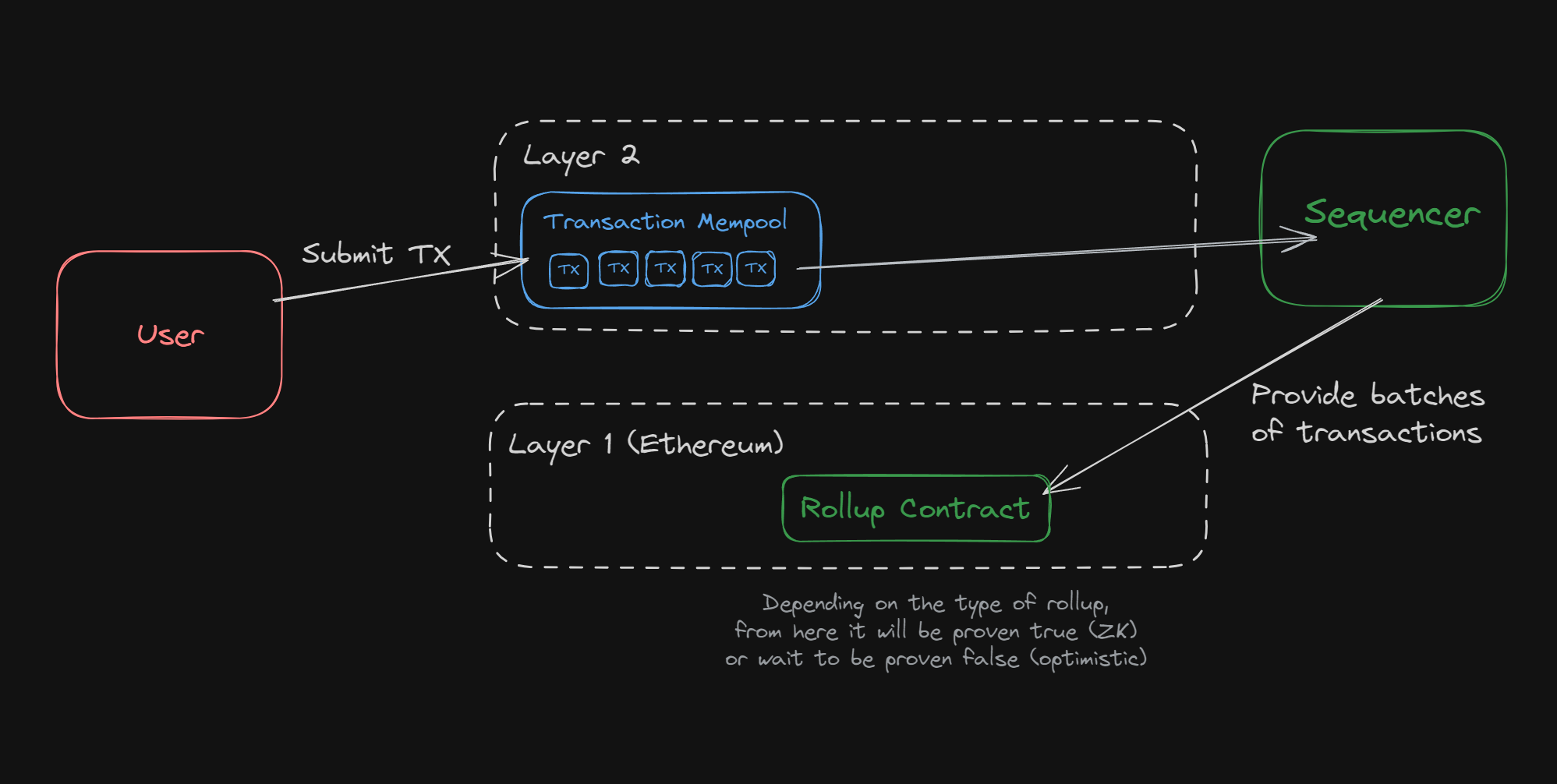
Picture a world where Arbitrum swaps feed instantly into Optimism positions, or Base liquidity bolsters Polygon trades, all settled in sub-second finality. Shared sequencers aggregate transaction ordering across rollups, slashing the latency that plagues isolated stacks. Projects like Espresso and Astria pioneer decentralized networks where no single chain dominates the queue, fostering resilience against censorship and downtime.
Unpacking Liquidity Fragmentation’s Hidden Costs
DeFi’s L2 boom birthed over 50 rollups, each a silo hoarding TVL. Traders bridging assets wait minutes, or hours, incurring gas spikes and impermanent loss. Studies on cross-rollup MEV reveal billions in untapped arbitrage, lost to non-atomic execution. Non-atomic trades mean front-running risks and failed bundles, turning potential edges into liabilities. RollupSettle. com tackles this head-on, routing intents through shared sequencer gossip networks for optimal fills.
MEV extraction compounds the pain. Centralized sequencers in prominent rollups capture searcher profits, leaving ecosystems poorer. Joining a shared sequencers L2 network redistributes this value, as RISE Labs notes, compelling rollups to cede control for interoperability gains.

Shared Sequencers: The Backbone of Atomic Cross-Rollup Trades
At its core, a sequencer orders txs before rollup execution, interacting with Ethereum for data availability. Traditional setups isolate this process, but shared models, like Astria’s modular chain, pool ordering across rollups. Transactions bundle into shared blocks, ensuring atomicity: all succeed or none do. This defrags liquidity, as HackMD explorations show rollups practically sharing pools via decentralized sequencing.
Rome Protocol stands out, leveraging Solana’s speed as a shared sequencer for atomic composability. Traders arbitrage discrepancies in real-time, bundling cross-rollup intents without bridges. Meanwhile, FLUXLAYER’s framework layers settlement, intents, and leverage vaults to capture MEV efficiently, boosting L2 cross-chain settlement yields.
CRATE Protocol pushes boundaries with all-or-nothing cross-rollup execution, achieving finality in four L1 rounds sans extra trust. Supporting diverse L1s, it serializes txs for secure composability, ideal for intents-based trading rollups. These aren’t hypotheticals; dYdX’s Cosmos shift hints at the migration trend, where shared sequencing unlocks sub-second liquidity isolated chains can’t match.
From my vantage, 10 years spanning forex to crypto, these shifts echo hybrid market making, blending order flow for tighter spreads. RollupSettle. com embodies this, channeling intents through shared sequencers to minimize costs and maximize execution quality. Traders gain deeper books, as liquidity migrates to interoperable venues.
RollupSettle. com turns these mechanics into trader-friendly tools, where intents express complex strategies like ‘swap on cheapest rollup, hedge on next, settle atomically. ‘ Execution engines gossip across sequencer networks, pitting solvers for best fills without user gas wars.
Navigating Trade-Offs in Shared Sequencing
Decentralized shared sequencers promise much, yet demand vigilance. Prominent rollups joining networks like Espresso forfeit local MEV to communal pots, as RISE Labs outlines. This democratizes value but dilutes individual chain incentives. Centralized sequencers risk censorship, per Dartmouth analyses, while shared setups distribute stakes across validators, hardening against attacks. From a forex lens, it’s akin to ECNs pooling depth; spreads tighten, but operators share the skim.
Rome Protocol exemplifies the upside, tapping Solana’s throughput for bundled cross-rollup intents. Arbitrage bots thrive, spotting Basis trades between zkSync and Scroll in milliseconds. FLUXLAYER adds nuance with its intent layer atop settlement, routing leverage through under-collateralized vaults. Traders capture cross-chain MEV that fragmented systems squander, turning latency into profit. CRATE’s four-round finality suits high-stakes plays, serializing executions across L1s without bridges’ trust pitfalls.
Arbitrum Technical Analysis Chart
Analysis by Market Analyst | Symbol: BINANCE:ARBUSDT | Interval: 1D | Drawings: 6
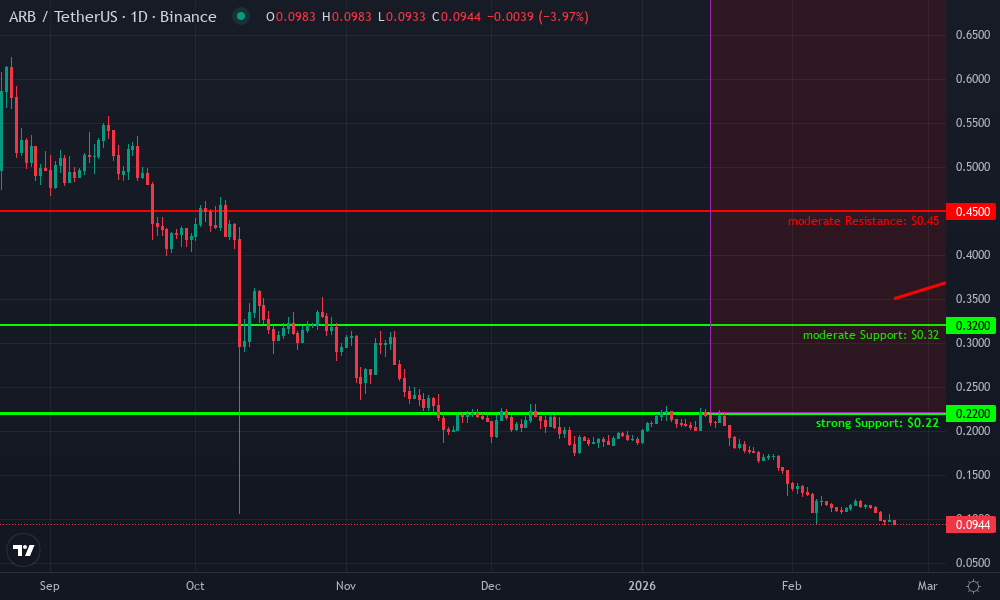
Technical Analysis Summary
As a balanced technical analyst focusing on price action and key levels, start by drawing the dominant downtrend line connecting the swing high at 2026-10-15 around 0.75 to the recent high at 2026-02-10 around 0.45, extending to current levels near 0.35. Add a secondary short-term uptrend line from the major low at 2026-12-20 (0.22) to 2026-02-10 (0.45). Mark horizontal lines for support at 0.22 (strong), 0.32 (moderate), and resistance at 0.45 (moderate), 0.60 (weak). Use rectangles to highlight the distribution range from 2026-10-01 to 2026-01-15 between 0.75 and 0.22, and recent consolidation from 2026-02-01 to 2026-02-22 between 0.40 and 0.32. Place callouts on volume spikes during the December breakdown and MACD bearish crossover. Add entry zone horizontal at 0.32 for potential long, with profit target at 0.45 and stop loss below 0.28. Vertical line at 2026-12-15 for breakdown event. Use arrows to mark downside momentum.
Risk Assessment: medium
Analysis: Volatile L2 token in downtrend but near strong support with positive sequencer news; medium tolerance suits waiting for confirmation
Market Analyst’s Recommendation: Hold off new longs until 0.32 hold with volume; consider shorts if 0.32 breaks
Key Support & Resistance Levels
📈 Support Levels:
-
$0.22 – Major low from December breakdown, strong historical support
strong -
$0.32 – Recent swing low and channel support
moderate
📉 Resistance Levels:
-
$0.45 – Recent bounce high, failed breakout level
moderate -
$0.6 – Prior consolidation resistance from November
weak
Trading Zones (medium risk tolerance)
🎯 Entry Zones:
-
$0.32 – Bounce from moderate support in downtrend channel, aligned with L2 positive context
medium risk
🚪 Exit Zones:
-
$0.45 – Test of resistance for profit taking
💰 profit target -
$0.28 – Below recent support invalidating long setup
🛡️ stop loss
Technical Indicators Analysis
📊 Volume Analysis:
Pattern: spikes on downside moves, confirming distribution
High volume during December drop and low on bounce suggests weak buying
📈 MACD Analysis:
Signal: bearish crossover and below zero line
Momentum remains negative, no bullish divergence yet
Applied TradingView Drawing Utilities
This chart analysis utilizes the following professional drawing tools:
Disclaimer: This technical analysis by Market Analyst is for educational purposes only and should not be considered as financial advice.
Trading involves risk, and you should always do your own research before making investment decisions.
Past performance does not guarantee future results. The analysis reflects the author’s personal methodology and risk tolerance (medium).
These protocols quantify the shift. ArXiv studies peg non-atomic cross-rollup MEV at substantial figures, with atomic bundles unlocking it. Traders eyeing rollup DEX liquidity must adapt: monitor sequencer gossip for front-run protection, favor intents over rigid orders. RollupSettle. com integrates this natively, solvers competing on shared networks for execution supremacy.
Practical Plays: Intents-Based Trading in Action
Consider a volatility spike: ETH perpetuals gapping on one rollup, spot depth thin elsewhere. Traditional bridging fails mid-flight. Shared sequencers enable ‘intent: open perp on Arbitrum, delta-hedge spot on Base, all-or-nothing. ‘ Solvers unpack this, bundling via Astria-like networks. Costs plummet; ChainScore Labs notes sub-second finality trumps Cosmos migrations like dYdX’s.
Deeper still, liquidity providers reshape. LPs deposit once into unified pools, earning yields from cross-rollup flows. No more siloed farms. Developers build once, intents propagating seamlessly. Yet balance tempers optimism: sequencer liveness hinges on network health, and MEV redistribution sparks governance debates. My hybrid take? Benefits outweigh, especially as decentralized proofs mature, echoing Ethereum’s beacon chain resilience.
Cross-rollup DEX settlement reshapes DeFi’s map. Traders wielding intents on RollupSettle. com access this frontier, where L2 cross-chain settlement fuses speed and depth. Protocols like CRATE and FLUXLAYER accelerate adoption, defragmenting a once-splintered landscape. Liquidity hunts end; alpha flows freely across rollups, powered by shared sequencers that prioritize execution over isolation. As markets evolve, positioning here means riding the interoperability wave from the front.