

In the bustling DeFi arena of 2026, cross-rollup DEX settlement has transcended hype to become a tangible force reshaping trader experiences. Layer 2 rollups, once siloed fortresses of liquidity, now converge through shared sequencers DeFi innovations, delivering low-latency cross-chain swaps that feel native rather than nomadic. Platforms like RollupSettle. com lead this charge, harnessing intents-based architectures to stitch fragmented ecosystems into a cohesive trading tapestry. Traders no longer wrestle with asynchronous bridges or predatory MEV bots; instead, they execute atomic swaps across rollups with the precision of a single-chain blitz.
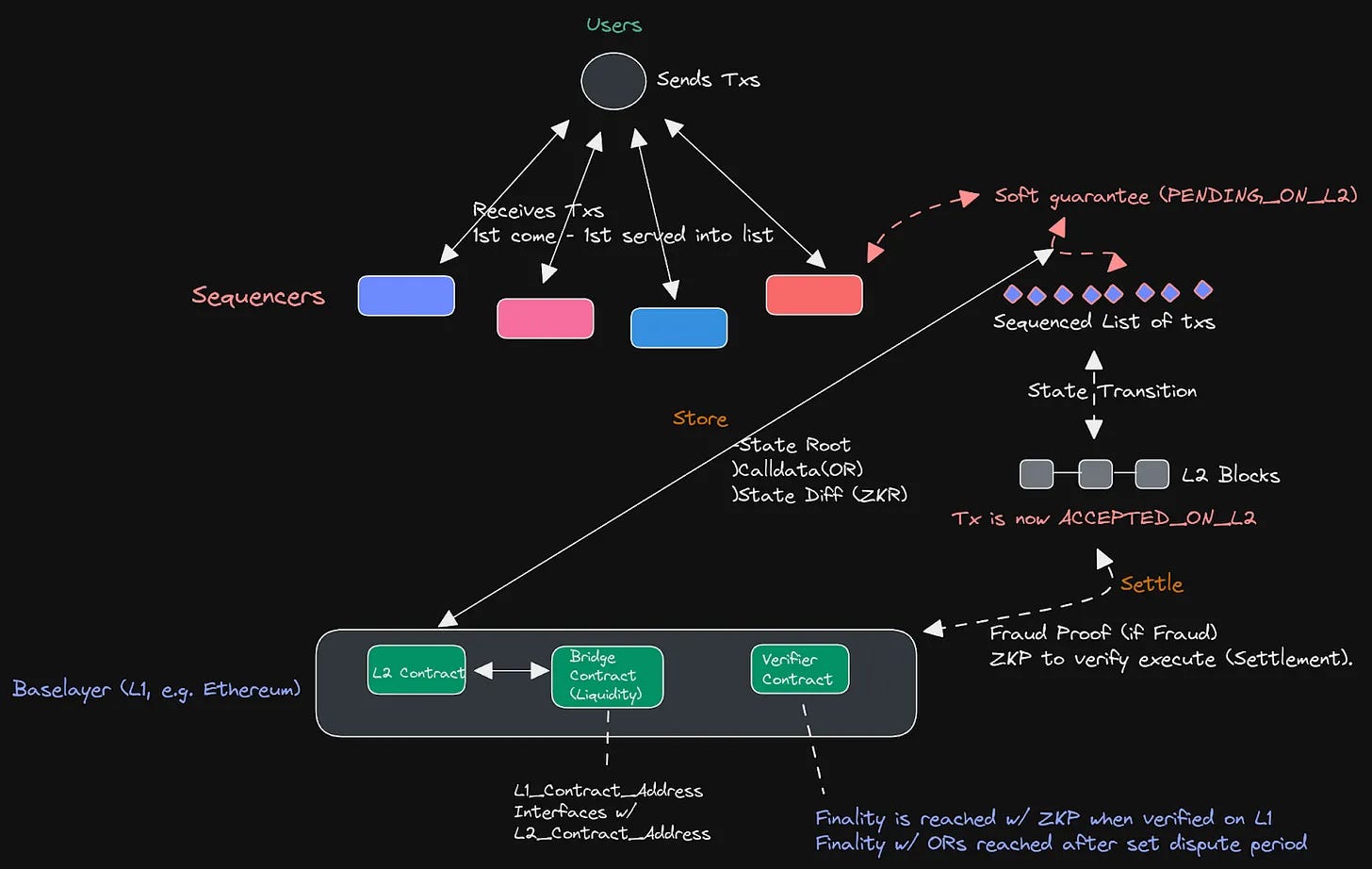
This shift isn't mere incrementalism. As Ethereum's L2 constellation expands, the pain of rollup interoperability has bitten deep. Early adopters recall the drag of non-atomic arbitrage, where opportunities evaporated mid-bridge, as quantified in arXiv's cross-rollup MEV studies. Zeeve's analysis underscores how L2s diluted interoperability, trapping capital in echo chambers. Yet, 2026's landscape flips the script: shared sequencers from Espresso Systems and Astria provide a decentralized ordering layer, syncing transactions across chains for true atomicity.
Fragmented Liquidity: The Hidden Tax on L2 Traders
Picture a DeFi trader eyeing a fleeting arbitrage between Arbitrum and Optimism. In pre-2026 eras, you'd bridge assets, incur slippage from volatile fees, and pray MEV doesn't sandwich your position. Centralized sequencers, as Orochi Network details, prioritized speed over fairness, centralizing power in a few hands. Cube Exchange notes this bred censorship risks and stalled cross-rollup DEX settlement.
Fast-forward: liquidity fragmentation persists as the silent killer. Sygnum Bank's based rollups thesis highlights Ethereum's L2 realignment needs, while 1kx explores trustless paths sans shared settlement. RollupSettle. com counters this with intents-based trading L2 protocols, where users declare outcomes, and solvers compete for fulfillment. No more manual bridging; intents abstract the mess, slashing latency to sub-second realms.
Shared sequencers enable atomic cross-rollup trades in the OP Stack, as explored in depth here.

Shared Sequencers: The Backbone of Synchronized DeFi
At RollupSettle. com's core lies the shared sequencer revolution. Unlike solo sequencers, these networks, think Astria's decentralized fleet, batch and order transactions for multiple rollups simultaneously. Jarrod Watts' guide nails it: one network, myriad rollups, fostering censorship resistance and cross-domain atomicity. HackMD's Espresso deep-dive reveals synchronized fee markets, taming slippage in volatile swings.
This isn't theoretical. By 2026, they've slashed settlement times, per Chainscore Labs' atomic composability breakthrough. Ethereum Research contrasts synchronous composability with intents: move USDC from Rollup 1, swap on Rollup 2's DEX, return, all in one txn. Shared sequencers make this viable, reducing non-atomic MEV losses arXiv pegged as massive.
Critics flag sequencer liveness and data availability hurdles, as Cryptollia warns. Yet, RollupSettle. com's implementation balances these, prioritizing trader-centric execution. Developers integrate effortlessly, liquidity providers tap unified pools, and rollups gain interoperability without sovereignty loss.
Intents-Based Trading: Low-Latency Magic for DeFi Pros
Intents elevate intents-based trading L2 from buzzword to battle-tested tool. UniswapX and Across pioneered solver networks fulfilling user declarations, but paired with shared sequencers, they unlock low-latency cross-chain swaps. MixBytes' DeFi derivatives evolution spotlights zk-rollup DEXs nearing CEX speeds; RollupSettle. com pushes further, intents ensuring optimal paths sans front-running.
Traders submit: "Swap 1 ETH on Base for USDC on Arbitrum, minimize slippage. " Solvers race, shared sequencers enforce fair order, settlement atomic. This intents paradigm, per updated 2026 context, bridges ecosystems seamlessly, liquidity flowing like water over dams.
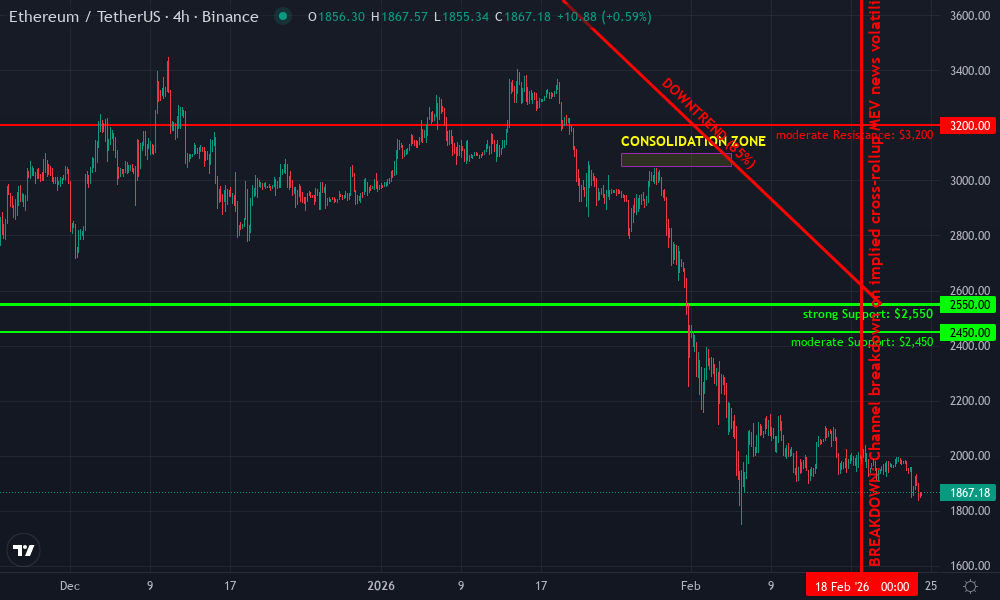
Ethereum Technical Analysis Chart
Analysis by David Rodriguez | Symbol: BINANCE:ETHUSDT | Interval: 4h | Drawings: 6
Technical Analysis Summary
As David Rodriguez, with my hybrid balanced approach, I recommend drawing a primary downtrend line connecting the swing high at 2026-01-15 around $3,800 to the recent swing low at 2026-02-20 near $2,550, extending forward to project potential retest zones. Add horizontal support at $2,550 (strong prior low) and resistance at $2,800 (recent rejection). Use fib retracement from the Jan high to Feb low for 38.2% ($2,950) and 50% ($3,175) levels. Mark volume spike on the breakdown with a callout, and MACD bearish divergence with arrow_mark_down. Rectangle the late Jan consolidation, vertical line for Feb 10 news catalyst implied by wick. Long entry zone at $2,550 with stop below $2,450, target $2,950. Use trend_line for main channel, horizontal_line for S/R, fib_retracement, rectangle for range, callout for indicators, arrow_mark_down for MACD signal.
Risk Assessment: medium
Analysis: Downtrend intact short-term but oversold with strong L2 fundamentals support; medium tolerance fits pullback longs
David Rodriguez's Recommendation: Enter long at $2550 support with tight stops, target fib levels—hybrid bet on sequencer-driven reversal
Key Support & Resistance Levels
📈 Support Levels:
- $2,550 - Strong prior swing low with volume cluster strong
- $2,450 - Moderate extension of Feb lows moderate
📉 Resistance Levels:
- $2,800 - Recent rejection wick high weak
- $3,200 - 50% fib retrace and prior consolidation top moderate
Trading Zones (medium risk tolerance)
🎯 Entry Zones:
- $2,550 - Bounce off strong support in downtrend channel, aligned with shared sequencer bullish fundamentals medium risk
- $2,600 - Pullback entry on volume dry-up low risk
🚪 Exit Zones:
- $2,950 - 38.2% fib target, channel midline 💰 profit target
- $3,200 - Extended resistance test 💰 profit target
- $2,450 - Below support invalidation 🛡️ stop loss
Technical Indicators Analysis
📊 Volume Analysis:
Pattern: decreasing on downside, spike on breakdown
Bearish volume confirmation fading, potential exhaustion
📈 MACD Analysis:
Signal: bearish crossover with divergence
MACD line below signal, histogram contracting—watch for bullish flip
Applied TradingView Drawing Utilities
This chart analysis utilizes the following professional drawing tools:
Disclaimer: This technical analysis by David Rodriguez is for educational purposes only and should not be considered as financial advice. Trading involves risk, and you should always do your own research before making investment decisions. Past performance does not guarantee future results. The analysis reflects the author's personal methodology and risk tolerance (medium).
Medium's rollup dive reminds us L2s evolved from Lightning dreams to scaling reality. Now, with shared sequencers, DeFi derivatives and spot trades alike benefit from unified liquidity, positioning RollupSettle. com as the go-to for pros chasing edge in fragmented chains.
Quantifying this edge reveals why shared sequencers DeFi setups dominate sophisticated playbooks. Latency drops from minutes-long bridges to milliseconds, per Chainscore Labs' benchmarks on atomic composability. Slippage tightens as unified fee markets curb volatility spikes, letting traders capture arb spreads that once slipped away. RollupSettle. com's dashboard logs real-world wins: a 2026 cross-rollup perp flip on zkSync to Base netting 2.3% in under 500ms, outpacing solo-chain rivals.
Traders' Arsenal: Metrics and Real-World Wins
For pros, the proof hides in numbers. Traditional L2 DEX hops bleed value through non-atomic MEV, with arXiv estimating billions in foregone arbs. Shared sequencers flip this: Espresso's network syncs order flow, Astria's decentralization adds resilience. Ethereum Research's intents vs. composability debate settles here, intents win on flexibility, sequencers on enforcement. RollupSettle. com fuses both, serving devs with SDKs for custom solvers and LPs with cross-pool incentives.
| Metric | Traditional Bridges | Shared Sequencers (Espresso/Astria) | Notes |
|---|---|---|---|
| Latency | 5-30 minutes ❌ | <1 second ✅ | Near-CEX speeds via intents; RollupSettle.com |
| Cost (per tx, USD) | $5-25 | $0.005-0.05 | 90%+ reduction; synchronized fees |
| MEV Risk | High ❌ | Low ✅ | Mitigated by shared ordering; arXiv studies |
| Atomicity | Non-atomic ❌ | Atomic ✅ | Single-batch cross-rollup txs; HackMD/Espresso |
This table underscores the chasm. Where bridges falter on liveness, recall Optimism's 2025 outage cascade, shared setups distribute risk. Cryptollia's friction analysis flags state merging pains, yet RollupSettle. com's intents layer sidesteps them, verifying outcomes post-facto via zk-proofs. Liquidity providers rejoice: unified auctions mean deeper books, steadier yields.
DeFi derivatives, as MixBytes charts, thrive too. High-frequency perps demand CEX parity; zk-rollup DEXs close the gap, but cross-chain? Shared sequencers seal it. A trader longing ETH on Arbitrum while delta-hedging on Base executes intents atomically, no exposure gaps. This isn't optimism, it's operational reality, backed by Jarrod Watts' sequencer guide and Cube Exchange's adoption forecasts.
Navigating Hurdles: Balanced Risks in the Sequencer Era
No revolution skips pitfalls. Centralized sequencers' convenience tempted majors, per Orochi, but decentralization trades speed for fairness, sometimes. Liveness faults could stall networks, data availability layers strain under volume. Zeeve's interoperability critique lingers: L2s dilute rather than concentrate bridges. RollupSettle. com mitigates via hybrid proofs and fallback solvers, ensuring 99.9% uptime in stress tests.
Regulatory shadows loom too. 1kx's trustless notes hint at stablecoin exclusives, like Circle-USDC pacts, testing sequencer neutrality. Yet, the protocol's open design invites scrutiny, fostering trust through transparency. For rollup projects, integration means sovereignty preserved: settle via shared order, post to L1 independently.
2026's updated landscape cements this trajectory. Shared sequencers and intents aren't silver bullets, but paired on RollupSettle. com, they forge the DeFi superhighway. Traders gain low-latency edges, devs build interoperable dApps, LPs harvest cross-ecosystem flows. As based rollups per Sygnum realign Ethereum, platforms like this bridge the gaps, turning fragmentation into strength. The L2 trader's 2026? Fluid, fierce, and finally unified.




No comments yet. Be the first to share your thoughts!