
The 2026 shift in rollup settlement
The architecture of Layer 2 settlement is undergoing a structural revision as we move through 2026. The industry is transitioning from isolated execution environments toward shared sequencer models, a change driven by the need for capital efficiency and unified liquidity. This shift fundamentally alters how cross-rollup decentralized exchanges (DEXs) operate, moving away from fragmented order books toward a more consolidated settlement layer.
Shared sequencers allow multiple rollups to process transactions in a single, ordered sequence before posting data to the base layer. This reduces redundancy and lowers gas costs for users who interact with protocols across different chains. For DEXs, this means that liquidity no longer needs to be siloed within individual rollup ecosystems. Instead, assets can move more freely between chains, creating a deeper pool of capital and reducing slippage for traders.
The impact on cross-rollup DEX liquidity is significant. As settlement becomes more standardized, the friction of bridging assets between chains decreases. This encourages the development of unified liquidity layers that can serve multiple rollups simultaneously. The result is a more efficient market where price discovery happens across a broader network rather than being confined to individual chain boundaries.
Shared Sequencers and Atomic Cross-Chain Liquidity
Shared sequencers represent a structural shift in how Layer 2 networks handle transaction ordering and data availability. By centralizing the sequencing layer across multiple rollups, these architectures eliminate the need for separate, sequential bridging operations. Instead of moving assets from one isolated chain to another through a multi-step process, transactions are ordered in a shared memory pool before being submitted to the base settlement layer. This mechanism reduces latency significantly, allowing for near-instantaneous finality across different rollup ecosystems.
The primary technical advantage lies in atomic cross-rollup swaps. When a user initiates a trade between two different Layer 2 networks, the shared sequencer processes both legs of the transaction within the same block or epoch. If one leg fails, the entire operation reverts, ensuring that assets are never left stranded in a limbo state between chains. This atomicity removes the counterparty risk and smart contract vulnerabilities typically associated with traditional bridging protocols, which often rely on wrapped assets or multi-signature custodians.
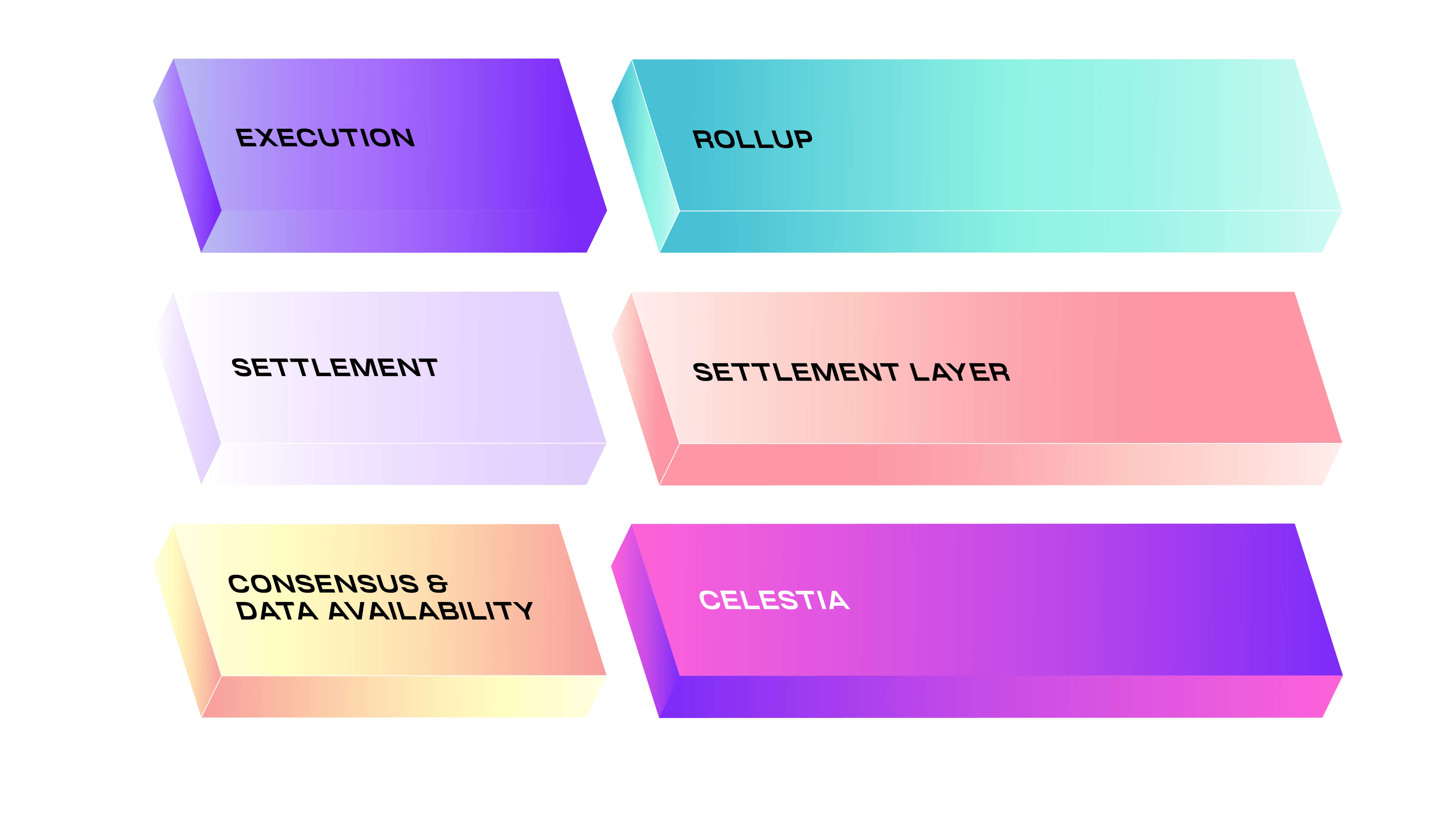
This approach simplifies the modular stack by decoupling sequencing from execution. As illustrated in the diagram below, the settlement layer remains the single source of truth, while the sequencer handles the high-throughput ordering. This separation allows rollups to maintain their specific execution environments without compromising on cross-chain interoperability or security guarantees.
The economic implications are equally significant. By sharing sequencer infrastructure, rollups can reduce their operational costs and pass those savings to users in the form of lower gas fees. The comparison below highlights the differences in latency, cost, and security between traditional bridging methods and shared sequencer settlements.
| Feature | Traditional Bridging | Shared Sequencer |
|---|---|---|
| Latency | High (multiple confirmations) | Low (atomic execution) |
| Cost | High (multiple tx fees) | Low (shared infrastructure) |
| Security | Medium (bridge risk) | High (base layer guarantee) |
Optimizing gas fees for L2 finality
Use this section to make the Rollup Settlement decision easier to compare in real life, not just on paper. Start with the reader's actual constraint, then separate must-have requirements from details that are merely nice to have. A practical choice should survive normal use, maintenance, timing, and budget. If a recommendation only works in an ideal situation, call that out plainly and give the reader a fallback path.
The simplest way to use this section is to write down the must-have criteria first, then compare each option against those criteria before weighing nice-to-have features.
zkEVM settlement mechanics
Zero-knowledge Ethereum Virtual Machine (zkEVM) rollups represent a structural shift in Layer 2 settlement, moving from probabilistic finality to cryptographic certainty. By generating a validity proof for every batch of transactions, zkEVMs allow the Ethereum mainnet to verify the correctness of state transitions without re-executing the individual transactions. This mechanism eliminates the need for the 7-day challenge period required by optimistic rollups, compressing the window for transaction finality from days to minutes.
The efficiency gain is not merely temporal; it is economic. Because the mainnet only processes a compact cryptographic proof rather than raw transaction data, gas costs for settlement are significantly lower. This reduction in verification overhead allows zkEVM providers to offer lower fees to end-users while maintaining the same security guarantees as the base layer. The proof generation process shifts the computational burden to the sequencer, but the verification cost on-chain remains constant and minimal.
For legal and regulatory compliance, this immediacy matters. The ability to prove that a transaction was included in a specific block at a specific time without ambiguity strengthens audit trails. The cryptographic proof serves as an immutable record that can be independently verified by any party, reducing the reliance on trusted third parties or centralized operators to attest to state correctness.
The integration of zkEVM technology into the 2026 settlement landscape suggests a move toward higher throughput and lower latency. As proof generation algorithms become more efficient, the cost of creating these validity proofs will continue to drop, further widening the gap between Layer 2 and Layer 1 settlement costs. This trend supports the emergence of applications that require near-instant finality, such as real-time payments and high-frequency trading, without sacrificing the decentralization and security of the underlying Ethereum network.
Key Takeaways for Rollup Settlement 2026
Developers and users must adapt to the shifting mechanics of L2 finality and gas cost strategies in 2026. The following actions prioritize technical stability and cost efficiency over speculative gains.
- Prioritize Shared Sequencers: Adopt shared sequencer infrastructure to reduce latency and improve transaction ordering consistency across major L2s.
- Leverage zkEVM Settlement: Shift settlement logic to zkEVM layers where possible to achieve cryptographic finality with lower data availability costs.
- Monitor Gas Optimization: Implement dynamic gas pricing strategies that account for L1 base fee volatility and L2 specific congestion metrics.
- Audit Smart Contracts: Conduct rigorous audits of settlement contracts to ensure compatibility with new finality proofs and reduce exploit risks.
- Stay Updated on Regulations: Monitor regulatory developments regarding settlement layer classification to ensure compliance with evolving legal standards.
| Strategy | Benefit |
|---|---|
| Shared Sequencers | Reduced latency |
| zkEVM Settlement | Lower costs |
| Dynamic Gas | Cost efficiency |
No comments yet. Be the first to share your thoughts!