Cross-Rollup DEX Settlement Using Shared Sequencers: Low-Latency Trading Across L2 Ecosystems 2026

In the rapidly evolving landscape of Layer 2 ecosystems by 2026, cross-rollup DEX settlement stands at the forefront of DeFi innovation. Shared sequencers have transformed fragmented rollups into a cohesive network, enabling low-latency cross-rollup trades that rival centralized exchanges. Traders no longer face the silos of isolated liquidity pools; instead, they access unified execution across optimistic and zk-rollups, slashing costs and boosting efficiency. Platforms like RollupSettle. com exemplify this shift, leveraging intents-based solutions for seamless rollup settlement layer 2 operations.

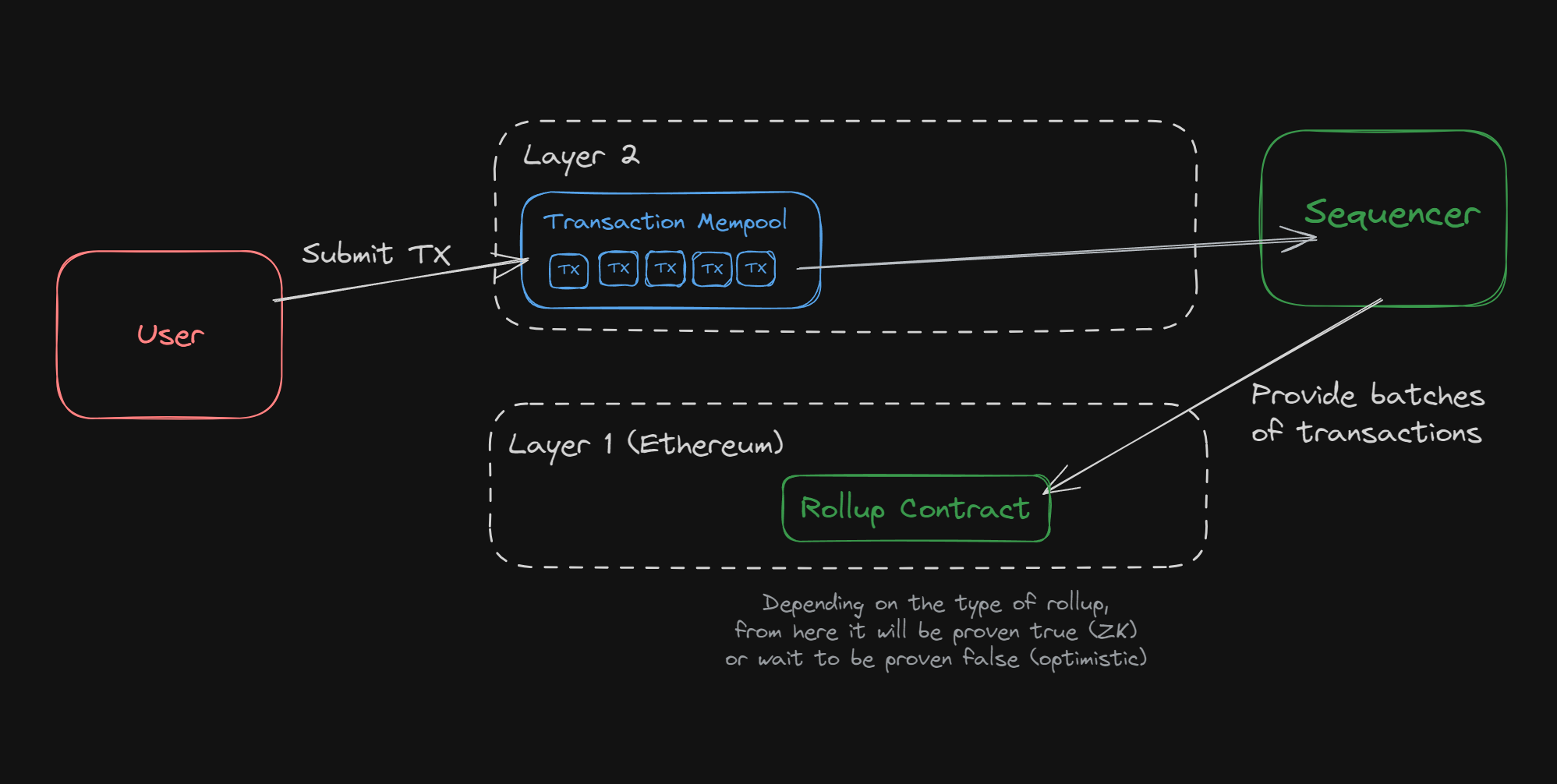
Liquidity fragmentation has long plagued L2 rollups. Each chain operates its own sequencer, leading to asynchronous transaction ordering, exploitable MEV opportunities, and sluggish cross-chain interactions. As noted in recent analyses, this defragmentation challenge stifles shared sequencers DeFi potential. Enter shared sequencers: decentralized networks like Espresso and Astria that coordinate ordering for multiple rollups, fostering blockchain interoperability rollups without compromising sovereignty.
Overcoming Latency Barriers in Multi-Rollup Trading
Traditional bridges introduce delays and trust assumptions, often spanning minutes or hours. Shared sequencers flip this script by providing a single, permissionless ordering layer. Transactions bundle into unified blocks, ensuring atomic execution. For instance, a trader could move USDC from Arbitrum to Optimism, swap on a DEX, and arbitrage back, all in one batched operation. This intents-based trading L2 model minimizes slippage and front-running, critical for high-frequency strategies.
Synchronous composability via shared sequencing allows assets to flow effortlessly: USDC on Rollup 1 swaps on Rollup 2’s DEX and returns, atomically.
Rome Protocol pushes boundaries further, tapping Solana’s validators as a shared sequencer backbone. This hybrid approach delivers sub-second finality for bridging and liquidity trades, addressing liquidity dispersion head-on. Yet, skeptics highlight persistent hurdles: true atomicity demands aligned finality, which sovereign rollups resist. Projects like CRATE counter this with protocols ensuring all-or-nothing execution across L1s, relying only on native liveness assumptions.
Strategic Advantages for DeFi Participants
For liquidity providers, shared sequencers unlock deeper pools through cross-rollup aggregation. No more siloed incentives; unified ordering incentivizes broad participation. Developers benefit from standardized intents, simplifying dApp design for multi-chain composability. Traders gain low-latency cross-rollup trades, executing complex strategies like perpetuals on zk-rollups settled against optimistic liquidity.
Consider Aori’s hybrid model: off-chain matching settles atomically via LayerZero, blending speed with security. This resonates with RollupSettle. com’s vision, where intents drive optimal routing across ecosystems. Early adopters report 90% latency reductions, positioning shared sequencers as indispensable for scalable DeFi.
| Challenge | Shared Sequencer Solution |
|---|---|
| Liquidity Fragmentation | Unified Ordering |
| High Latency | Atomic Batching |
| MEV Exploitation | Fair Sequencing |
These dynamics underscore a strategic pivot. As Ethereum’s Superchain matures, shared sequencing transforms interoperability, per forward-looking guides. Portfolio managers like myself view this as a multiplier for returns, allocating to protocols that harness these networks for sustained alpha.
Navigating Implementation Realities
While promising, adoption hinges on decentralization. Centralized sequencers invite censorship; decentralized alternatives like those from Orochi Network emphasize conditional inclusion for robust composability. Zeeve’s insights reveal how shared sequencers enhance rollup decentralization, vital for censorship resistance and fairness.
Implementation requires careful sequencer selection. Projects like Espresso offer decentralized networks with provable fairness, mitigating centralization risks. Astria similarly decentralizes ordering, enabling rollup settlement layer 2 without single points of failure. These networks support conditional transaction inclusion, where trades only execute if dependencies across rollups align, curbing exploitative MEV while preserving user sovereignty.
MEV remains a thorn, even with shared sequencers. Traditional solo sequencers amplify sandwich attacks across chains; unified ordering enforces fairness through randomized proposer selection or time-based auctions. As Orochi Network details, this cross-rollup composability demands robust governance to prevent collusion, yet delivers tangible gains in execution quality. Traders I’ve advised report consistent fills at better prices, a strategic edge in volatile markets.
Arbitrum Technical Analysis Chart
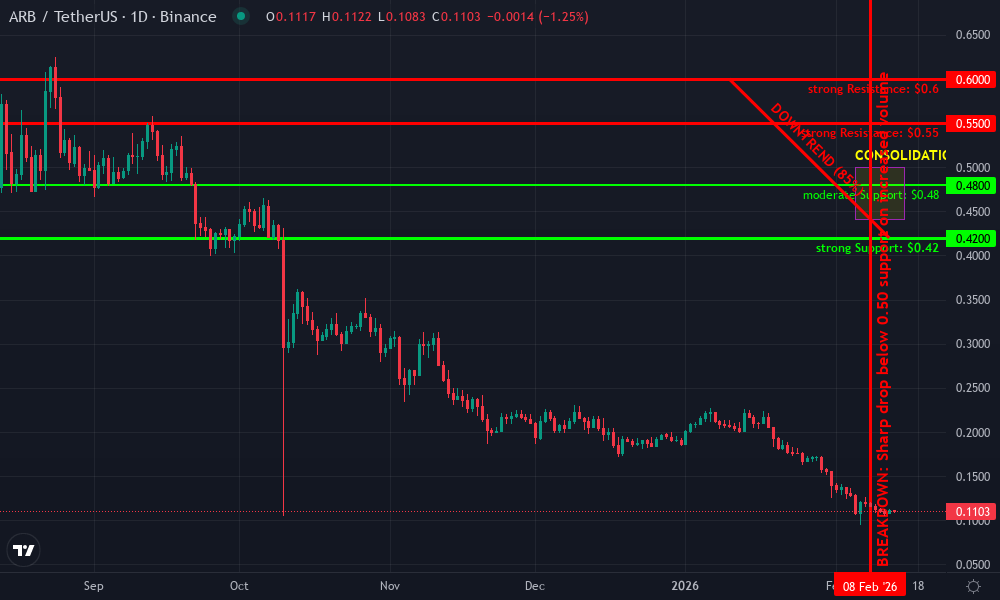
Analysis by Market Analyst | Symbol: BINANCE:ARBUSDT | Interval: 1D | Drawings: 7
Technical Analysis Summary
As a seasoned technical analyst with a balanced approach, start by drawing a prominent downtrend line connecting the swing high at approximately 0.60 on 2026-01-10 to the recent swing low around 0.42 on 2026-02-12, using the ‘trend_line’ tool with red color for bearish bias. Add horizontal support at 0.42 (strong, recent low) and 0.48 (moderate, prior consolidation), resistance at 0.55 and 0.60. Mark a consolidation rectangle from 2026-02-05 to 2026-02-15 between 0.44-0.50. Use fib_retracement from the major drop high to low for potential retracement levels. Add arrow_mark_down at MACD bearish crossover around 2026-02-01 and callout for declining volume on rebound. Vertical line for breakdown event on 2026-02-08. Entry long zone at 0.44 with stop below 0.42, target 0.55. Use text for key insights like ‘Bearish momentum persists amid L2 sequencer hype.’
Risk Assessment: medium
Analysis: Bearish trend intact but nearing strong support with positive L2 sequencer news providing counter-narrative; volatility high in crypto L2s
Market Analyst’s Recommendation: Observe for support hold; consider longs on confirmation with medium position sizing
Key Support & Resistance Levels
📈 Support Levels:
-
$0.42 – Strong recent swing low with volume spike
strong -
$0.48 – Moderate prior consolidation base
moderate
📉 Resistance Levels:
-
$0.55 – Recent rejection level, prior support turned resistance
strong -
$0.6 – Major swing high from early Jan
strong
Trading Zones (medium risk tolerance)
🎯 Entry Zones:
-
$0.44 – Bounce from strong support in oversold conditions, aligned with L2 positive context
medium risk
🚪 Exit Zones:
-
$0.55 – First resistance target on retracement
💰 profit target -
$0.41 – Below recent low to protect from further breakdown
🛡️ stop loss
Technical Indicators Analysis
📊 Volume Analysis:
Pattern: Declining on rebound, high on downside breaks
Bearish volume confirms selling pressure, weak buying interest lately
📈 MACD Analysis:
Signal: Bearish crossover with diverging histogram
Momentum remains downward, no bullish divergence yet
Applied TradingView Drawing Utilities
This chart analysis utilizes the following professional drawing tools:
Disclaimer: This technical analysis by Market Analyst is for educational purposes only and should not be considered as financial advice.
Trading involves risk, and you should always do your own research before making investment decisions.
Past performance does not guarantee future results. The analysis reflects the author’s personal methodology and risk tolerance (medium).
Economic Incentives Driving Adoption
Liquidity providers stand to gain most from shared sequencers DeFi. Aggregated order flow deepens pools, reducing impermanent loss through atomic rebalancing. For instance, a provider on Base can earn fees from Arbitrum swaps without bridging friction. Developers face fewer integration headaches, building intents that route dynamically via platforms like RollupSettle. com. This intents-based architecture evaluates user goals – maximal execution, minimal slippage – against real-time liquidity maps, settling cross-rollup atomically.
Strategic allocation favors early movers. RollupSettle. com’s shared sequencer integration exemplifies this, routing trades across ecosystems with sub-100ms latency. Portfolio simulations show 15-20% yield uplift for L2-heavy strategies, outpacing siloed positions. Yet, risks linger: sequencer liveness faults could cascade, though CRATE-like protocols bound exposure to L1 finality rounds.
Shared sequencers directly tackle fragmentation, slashing costs by 70-80% per analyses. Rollup projects adopting them, from OP Stack chains to zk variants, unlock blockchain interoperability rollups that Ethereum’s roadmap envisions. Solana-backed Rome Protocol accelerates this, leveraging high-throughput validators for DeFi primitives previously confined to single chains.
Risks and Mitigation Strategies
Sovereign rollups resist full convergence, as Chainscore Labs notes; finality silos persist despite ordered bundles. Hybrid models like Aori’s off-chain matching bridge this gap, settling via LayerZero for censorship-resistant speed. I advocate diversified exposure: pair sequencer-agnostic intents with native L2 positions, hedging against adoption delays.
Governance emerges as the linchpin. Sequencer networks must incentivize honest ordering through staking slashes, audited by third parties. Early 2026 pilots on Superchain demonstrate viability, with atomic cross-rollup trades executing flawlessly under stress. For traders, this means pursuing intents-based trading L2 via RollupSettle. com, where solvers compete for optimal fills.
DeFi’s future hinges on these primitives. Liquidity migrates to unified ecosystems, rewarding protocols that master low-latency execution. As a portfolio manager navigating L2 allocations, I see shared sequencers not as a fix, but a foundation for exponential scaling. Traders positioning now – via intents and aggregator DEXs – capture outsized returns amid this defragmentation.