
How to Rollup Settle
Settling a rollup means bundling off-chain transactions and posting them to a base layer to secure the chain. This process ensures that the state updates are valid and final. You are essentially compressing hundreds of individual actions into a single batch to save space and cost on the main network.
The settlement layer acts as the ultimate source of truth. It verifies the data or proofs submitted by the rollup and updates the global state. Without this step, the rollup’s state remains isolated and unsecured.
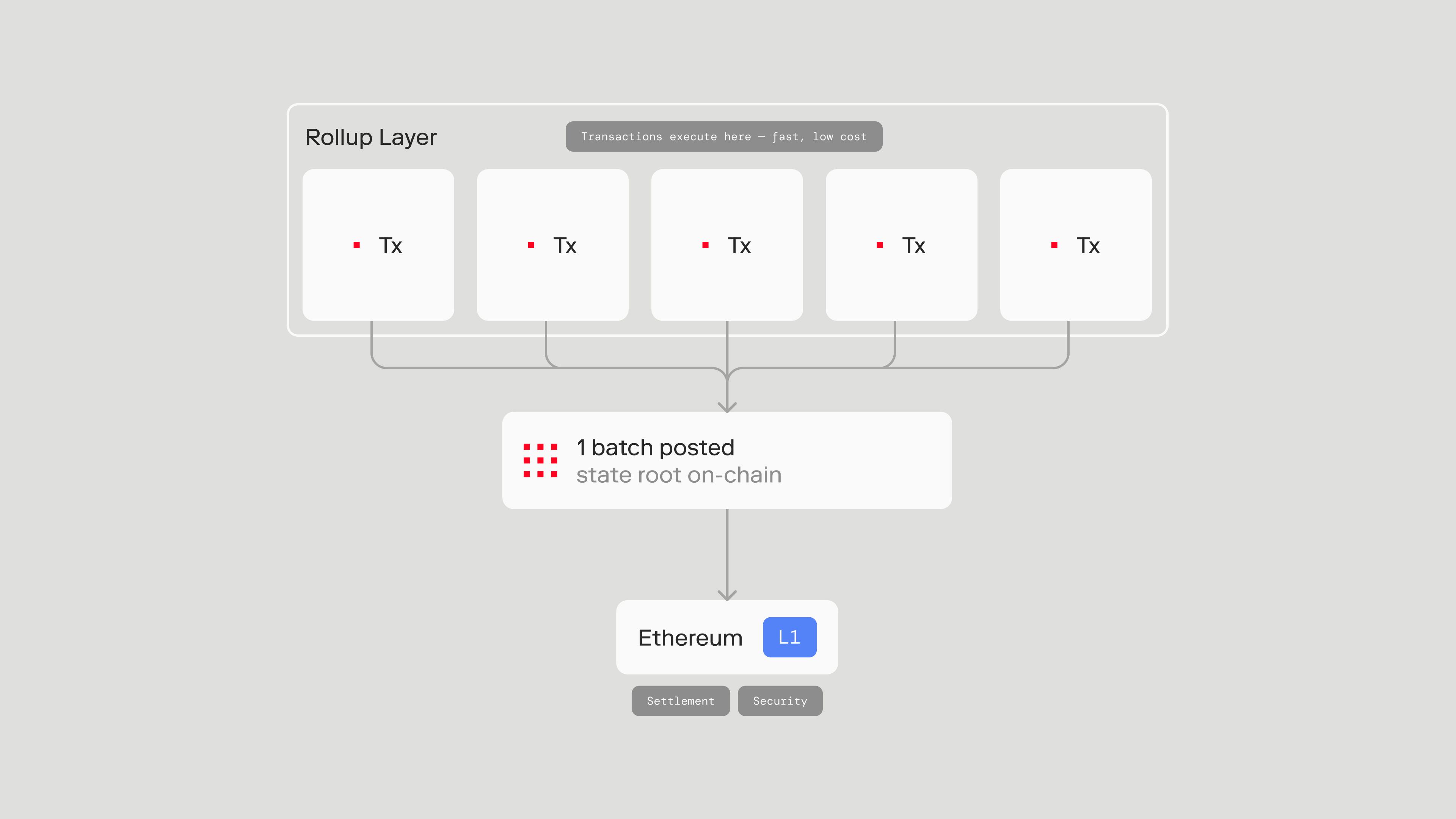
The rollup operator gathers pending transactions from users. These transactions are executed off-chain to determine the new state. Instead of sending each transaction individually to the base layer, the operator groups them into a single batch. This batching is the core efficiency mechanism of rollup settle.
Depending on the rollup type, the operator either submits the raw transaction data (for Optimistic rollups) or a cryptographic validity proof (for ZK rollups). This data is posted to the settlement layer’s smart contract. The settlement layer’s job is to order these batches and ensure they are recorded permanently.
The base layer validators check the submitted information. For ZK rollups, the proof is verified mathematically. For Optimistic rollups, the data is assumed valid unless a fraud proof is submitted during a challenge period. Once verified, the rollup’s state root is updated on the base layer.
After the verification step, the state update is considered settled. The rollup can now consider these transactions final and irreversible. Users can rely on this state because it is secured by the base layer’s consensus. This completes the rollup settle cycle.
Use shared sequencers for cross-chain moves
When you rollup settle a trade that spans two different chains, the bottleneck is usually the bridge. Traditional bridges require you to wait for one chain to finalize, submit a proof, and then wait for the other chain to verify it. This sequential process adds latency and doubles the gas costs because you pay for execution and verification on both sides.
Shared sequencers solve this by ordering transactions from multiple rollups in a single stream before they reach their respective settlement layers. Instead of treating each chain as an isolated silo, the sequencer batches orders across chains. It ensures that the atomic swap logic is preserved, so either both legs of the trade execute or neither does. This coordination happens off-chain first, meaning the heavy lifting of ordering and sequencing is done before the data ever hits the mainnet.
By pre-coordinating the order flow, you reduce the amount of data that needs to be posted to the settlement layer. The rollups can then settle these pre-validated batches with much lower gas fees and higher throughput. This is particularly effective for DEX settlements where speed and cost efficiency are critical.
This approach effectively turns a multi-step, high-friction process into a single, streamlined operation. You get the finality of rollup settle without the penalty of waiting for separate bridge verifications. The result is a faster, cheaper path for moving assets between L2s.
Batch settlements to cut gas fees
Batching multiple inter-rollup transfers into a single L1 transaction is the most effective way to lower the per-user cost of a rollup settle. Instead of submitting individual transactions for every user, the rollup operator aggregates these transfers into one compact data payload. This approach spreads the fixed gas cost of the L1 transaction across all included users, dramatically reducing the fee each person pays.
The process begins with the rollup sequencer collecting pending transfers from its users. These transfers are then grouped into a single batch. The operator constructs a proof for this batch, which attests to the validity of all included transactions. This proof, along with the compressed batch data, is submitted to the settlement layer on L1. The L1 contract verifies the proof once, rather than for each individual transfer, which is where the significant gas savings occur.
This efficiency gain is particularly important as network activity increases. Early ZK rollups often have limited activity, meaning the fixed cost of settlement is the dominant fee component. By batching, you ensure that the cost of verification is amortized over many users. Research into efficiency-improved inter-rollup transfer systems confirms that batch settlement techniques augment transfer efficiency by reducing redundant L1 interactions. This method transforms a linear cost structure into a scalable one, keeping fees low even as the number of users grows.
Verify proofs before finalizing
Before a rollup settle is considered final, the settlement layer must independently verify the validity proofs or wait for a challenge period to pass. This step ensures that the state updates submitted by the rollup operator are mathematically correct and haven't been tampered with. Without this verification, the base layer cannot trust the data it is finalizing, leaving users exposed to potential fraud.
Check ZK Validity Proofs
For Zero-Knowledge rollups, the operator submits a cryptographic proof alongside the new state root. The settlement smart contract runs a verification algorithm to confirm that the proof is valid for the given inputs. This process is computationally expensive but highly efficient compared to re-executing all transactions. If the proof fails verification, the transaction is rejected immediately, and the operator may be slashed depending on the protocol's design.
Monitor Challenge Periods
Optimistic rollups operate differently, assuming transactions are valid by default. Here, the settlement layer waits for a predefined challenge period, typically seven days. During this window, any participant can submit a fraud proof if they detect an invalid state transition. If no challenges are raised within this timeframe, the state is finalized. This approach shifts the computational burden to the network participants rather than the smart contract itself.
Confirm State Root Commitment
Once proofs are verified or the challenge period expires, the settlement layer commits the new state root. This commitment is immutable and serves as the final record of the rollup's state. Users can now withdraw assets or interact with the finalized state with confidence, knowing that the rollup settle has been secured by the base layer's consensus.
Avoid common settlement mistakes
Even a well-designed rollup settle strategy can fail if developers ignore the mechanics of the settlement layer. The most frequent errors involve how transactions are batched and how data costs are calculated. These mistakes don’t just waste time; they inflate gas fees significantly, turning a cost-effective solution into an expensive liability.
Submitting unbatched transactions
Sending individual transactions to the L1 settlement layer instead of bundling them is the fastest way to bleed resources. Each transaction incurs its own base fee and calldata overhead. When you skip batching, you pay for the same verification work repeatedly. Always group state transitions into a single batch to amortize the fixed costs across many operations.
Ignoring data availability costs
Data availability is not optional. If you underestimate the size of your calldata, your settlement transaction will fail or require a costly retry. The Polynya research notes that settlement fees are often the dominant cost for early ZK rollups because they lack the activity to spread these fees thin. Always estimate your calldata size conservatively and account for the current L1 gas price before submitting.
Not verifying proof validity
Submitting a proof that doesn’t match the state root is a critical error. The settlement layer will reject it, and you will lose the gas spent on the submission. Ensure your prover is synchronized with the sequencer’s state before attempting settlement. A failed settlement attempt is a wasted transaction with no recovery mechanism.
-
Batch all state transitions before submission.
-
Estimate calldata size with a 10% buffer.
-
Verify proof validity against the sequencer state.
-
Check current L1 gas prices for cost efficiency.
-
Confirm settlement layer contract address is correct.
-
Batch all state transitions before submission.
-
Estimate calldata size with a 10% buffer.
-
Verify proof validity against the sequencer state.
-
Check current L1 gas prices for cost efficiency.
-
Confirm settlement layer contract address is correct.
No comments yet. Be the first to share your thoughts!