
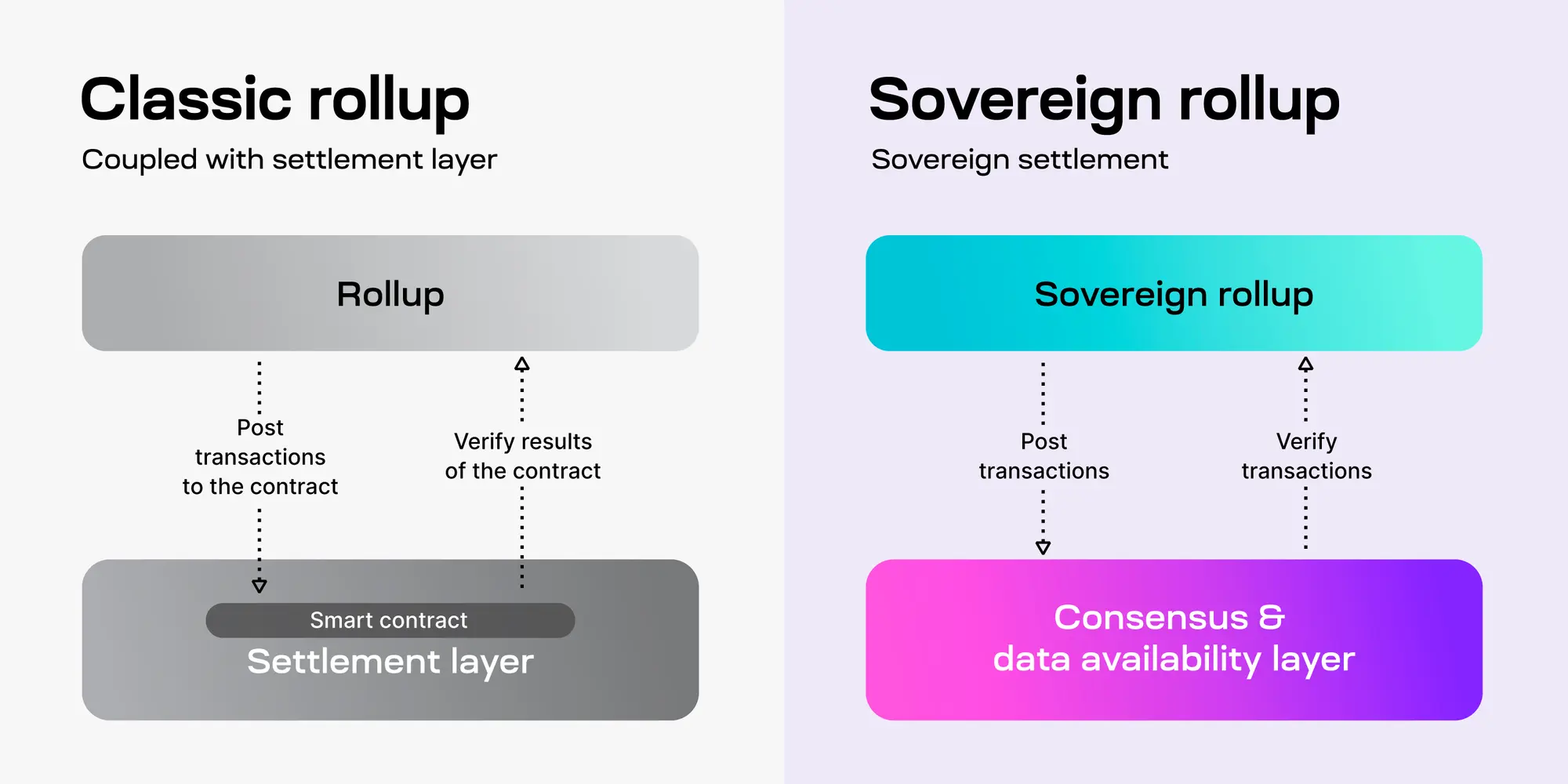
Rollup settle limits to account for
Rollup settlement is the process that makes Layer 2 transactions irreversible. While execution happens off-chain, finality requires posting data and proofs to Ethereum mainnet. This anchoring step is where the tradeoff between speed and security plays out.
Settlement fees are the dominant cost driver for early ZK-rollups. Because activity is still limited, the fixed cost of posting data to L1 remains high per transaction. As usage scales, this cost is amortized across more transactions, driving down fees. Until then, the settle constraint keeps costs predictable but relatively high compared to the execution layer.
The constraint isn't just technical; it's economic. Rollups inherit Ethereum's security for settlement and data availability. This means you don't need to trust the sequencer or the prover for finality. The L1 chain acts as the ultimate judge, verifying that the batch of transactions posted matches the state root. This is the core difference between rollups and sidechains: rollups lean on L1 security, while sidechains operate independently with their own validator sets.
For DeFi protocols, this settle constraint impacts liquidity availability. Funds locked in a rollup are technically "pending" until settlement. This creates a window of risk and a delay in fund accessibility. Protocols must account for this latency when designing withdrawal mechanisms or cross-chain bridges. The closer the settlement time, the more "instant" the user experience feels, but the higher the computational or data cost on L1.
As we move toward 2026, improvements in data availability layers and proof systems aim to reduce this constraint. The goal is to make settlement fast and cheap enough that the rollup feels like a native part of Ethereum, rather than a separate layer with its own settlement rules.
Rollup settle choices that change the plan
Choosing a rollup settlement layer means balancing speed, cost, and security. Optimistic rollups like Base and Arbitrum assume transactions are valid by default, offering lower fees and faster user experience but requiring a 7-day challenge period for finality. ZK rollups like Scroll and zkSync generate cryptographic proofs for every batch, providing instant finality once the proof is verified on Ethereum, though the computational cost can be higher and the technology more complex to maintain.
The choice depends on your use case. DeFi applications requiring immediate settlement and high security often favor ZK rollups, while social apps or gaming platforms that prioritize low fees and tolerance for delayed finality may prefer Optimistic rollups. Layer 2 fees are driven by Ethereum gas prices and the number of transactions in a batch; more active rollups spread costs across more users, lowering individual fees.
| Feature | Optimistic Rollup | ZK Rollup | Sidechain |
|---|---|---|---|
| Finality Time | 7 days | Instant (proof verified) | Instant (independent) |
| Security Model | Inherits Ethereum | Inherits Ethereum | Independent |
| Transaction Cost | Low | Medium-High | Very Low |
| Complexity | Lower | Higher (circuit design) | Independent |
When evaluating these options, consider the tradeoff between trust and efficiency. Optimistic rollups offer a simpler development experience and lower costs but require users to trust the sequencer or wait for the fraud proof window. ZK rollups provide stronger security guarantees and instant finality, making them suitable for high-value transactions, but the overhead of generating proofs can lead to higher fees during network congestion. Sidechains offer the lowest costs and fastest speeds but sacrifice the security inheritance of the main chain, making them less suitable for storing significant value.
Choose the right rollup settlement path
Rollup settlement is no longer a theoretical upgrade; it is the operational backbone of 2026 scaling. By processing transactions off-chain and anchoring proofs to Layer 1, rollups inherit Ethereum’s security while bypassing its gas constraints. But not all settlement paths offer the same tradeoffs. Your choice depends on whether you prioritize instant user feedback or absolute cryptographic finality.
Evaluate instant finality needs
For high-frequency trading and DeFi liquidity pools, speed is the primary currency. Optimistic rollups post transaction data to L1 and assume validity for a 7-day challenge period. This structure keeps fees low but introduces latency. If your application requires real-time confirmation—such as a cross-chain bridge or an automated market maker—this delay creates friction. Instant finality here often requires bridging to a ZK-rollup or using a dedicated execution layer that settles faster.
Assess security and data availability
Security in rollups comes from two sources: execution validity and data availability. ZK-rollups generate zero-knowledge proofs that mathematically guarantee correctness before L1 settlement. This offers the highest security guarantee but demands significant computational overhead. Optimistic rollups rely on economic incentives and fraud proofs. For applications handling large capital reserves, the cryptographic certainty of ZK-proofs often outweighs the slightly higher cost of computation.
Compare fee structures for your volume
Settlement fees scale with activity. In early ZK-rollups, limited activity means users often pay a premium to cover the cost of proof generation. As usage grows, these costs amortize. Optimistic rollups benefit from economies of scale more quickly because they only post raw data. If your protocol handles low transaction volumes, an Optimistic rollup may be more cost-effective. For high-throughput applications, the efficiency of ZK-proof batching eventually becomes the cheaper option.
Finalize your architecture
The decision matrix is clear. Choose Optimistic rollups for applications where user experience tolerates a short delay and capital efficiency is secondary to low upfront costs. Choose ZK rollups for applications where instant finality and maximum security are non-negotiable, such as institutional DeFi or high-frequency trading bots. Align your technical stack with your user’s tolerance for latency and your risk appetite for security models.
| Feature | Optimistic | ZK |
|---|---|---|
| Finality Time | 7 days (challenge period) | Seconds to minutes |
| Security Model | Fraud proofs | Validity proofs |
| Cost at Low Volume | Lower | Higher |
| Best For | General dApps, Gaming | DeFi, High-Frequency Trading |
Watch Out for Weak Settlement Options
Not every "instant" solution is built for serious DeFi. As rollups settle on L1, the gap between marketing hype and cryptographic reality widens. Many projects promise speed but sacrifice the finality required for large-scale liquidity. To avoid costly mistakes, you need to distinguish between true settlement and mere confirmation.
The Optimistic Illusion
Optimistic rollups often feel instant to users, but settlement is inherently delayed. They assume transactions are valid unless challenged. This creates a seven-day dispute window. For a user withdrawing funds, this delay is not a feature; it is a liquidity trap. If a sequencer goes rogue or a bug slips through, your assets are locked until the challenge period expires. This is not true finality. It is a gamble on honesty.
The ZK Bottleneck
Zero-knowledge rollups offer faster dispute resolution, but they introduce a different trap: proving costs. As activity increases, the computational burden of generating proofs can spike fees. Early ZK rollups often struggle with this scaling curve. If the proof generation time exceeds the block time, the chain stalls. You might see "instant" transactions in the UI, but the underlying settlement layer is clogged. Always check the actual proof generation latency, not just the UI response time.
Sidechain Security Risks
Some platforms confuse sidechains with rollups. Sidechains operate independently, often with their own validator sets. They do not inherit Ethereum's security directly. If the sidechain's validators collude, funds can be stolen without L1 intervention. This is a critical distinction. Rollups anchor to L1 for data availability and settlement. Sidechains do not. If you are moving significant capital, assume sidechains carry higher counterparty risk.
The Sequencer Single Point of Failure
Even with robust settlement layers, the sequencer remains a centralization risk. If the sequencer censors transactions or goes offline, users cannot interact with the chain until a decentralized sequencer takes over. This transition is not always seamless. Check if the rollup has a viable fallback mechanism. Without it, "instant" settlement is only as reliable as one company's uptime.
How to Verify
Before committing capital, audit the settlement layer. Look for:
- Dispute windows: Shorter is better, but only if the verification process is fast.
- Proof generation times: Ensure the ZK circuit can handle peak load without stalling.
- Data availability: Confirm that all transaction data is posted to L1, not just proofs.
- Sequencer decentralization: Prefer rollups with multiple sequencer options or fallback modes.
Decision Framework
Use this quick guide to choose the right rollup:
| Use Case | Preferred Rollup Type | Why |
|---|---|---|
| High-Frequency Trading | ZK Rollup | Faster finality, lower dispute risk |
| Large Value Transfers | Optimistic Rollup | Proven security model, lower proof costs |
| Experimental Apps | Sidechain | Lower costs, but higher security risk |
Final Check
Instant finality is a moving target. As technology evolves, so do the risks. Stay informed about upgrades and security audits. Never assume a rollup is secure just because it is fast. Verify the settlement layer yourself.
Rollup settlement: what to check next
Before committing capital to a new L2, it helps to separate the marketing language from the actual mechanics. The following answers address the most common practical objections regarding rollup security, settlement timing, and architecture.
Key tradeoffs to consider
When evaluating rollup options for 2026, focus on the tension between finality speed and security assumptions. Optimistic rollups offer faster user experience but require a 7-day challenge period for dispute resolution. ZK-rollups provide near-instant finality but face higher computational costs for proof generation. Your choice depends on whether you prioritize capital efficiency or transaction certainty.
No comments yet. Be the first to share your thoughts!