
What rollup settlement means for L2s
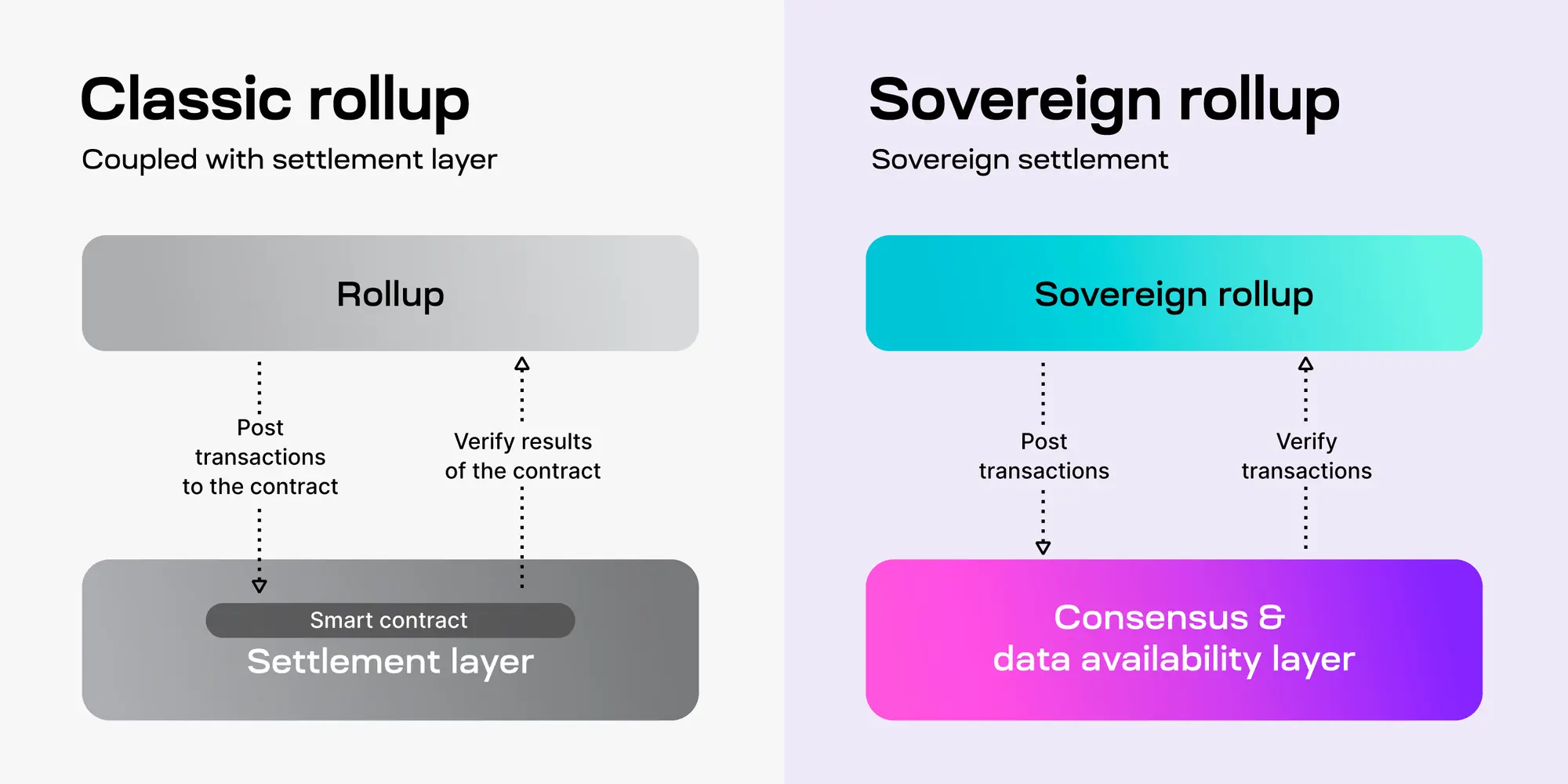
Rollup settlement is the final step where a Layer 2 transaction becomes irreversible and permanently recorded on Ethereum’s Layer 1. While execution and data availability happen off-chain to keep costs low, settlement is where the chain’s security guarantees are enforced. This distinction is critical: execution is about speed, but settlement is about truth.
When a rollup processes a batch of transactions, it doesn’t just delete the old data and move on. It posts a compressed summary—either a validity proof for ZK rollups or a fraud proof window for Optimistic rollups—to the Ethereum mainnet. This anchor on L1 ensures that no single sequencer can arbitrarily reverse transactions or steal funds. The L1 acts as the ultimate arbiter, providing the cryptographic guarantee that the L2 state is valid.
This architecture allows rollups to inherit Ethereum’s security model without paying the full gas costs of mainnet execution. By settling on L1, rollups ensure that their state transitions are verifiable by anyone. If a rollup operator tries to cheat, the L1 consensus mechanism will reject the invalid block, protecting users’ assets. This dependency on Ethereum’s finality layer is what separates rollups from independent sidechains, which rely on their own separate validator sets for security.
Technical settlement fees are often the dominant cost for early-stage rollups, as they must pay L1 gas for posting data and proofs. As activity increases, these costs are amortized across more transactions, driving down the fee per user. Understanding this settlement layer is key to evaluating the security and economic viability of any L2 solution.
How optimistic rollups settle transactions
Optimistic rollups process transactions off-chain and post the results to Ethereum’s Layer 1. The process begins with a sequencer, which is typically a single entity responsible for ordering transactions and executing them. Once the batch is complete, the rollup doesn’t prove every transaction is correct. Instead, it posts a state root—a cryptographic summary of the new account balances—to the Ethereum mainnet. This approach assumes all transactions are valid by default, which is why these systems are called "optimistic."
The critical component of this architecture is the fraud proof system. Because the rollup assumes validity, it leaves a window of time open for anyone to challenge a batch if they detect an error. This challenge period, often seven days, acts as a security buffer. During this window, validators or "challengers" can monitor the posted state. If they spot a fraudulent transaction, they can submit a fraud proof to the smart contract on Ethereum, which pauses the state update and initiates a dispute resolution process. This mechanism allows optimistic rollups to inherit Ethereum’s security without the computational overhead of generating complex proofs for every single transaction.
This design creates a trade-off between speed and finality. While transaction throughput is high and costs are low during the off-chain execution phase, users face a delay before their funds are truly final. Unlike ZK rollups, where validity proofs provide immediate certainty, optimistic rollups require this delay to ensure security. This delay is the cost of the system’s efficiency, allowing for simpler code and broader compatibility with existing Ethereum tools.
How ZK rollups settle proofs
ZK rollups (zero-knowledge rollups) handle settlement by generating a cryptographic proof that validates every transaction in a batch before it reaches the main chain. Unlike optimistic models that rely on a challenge period, ZK rollups treat validity as a mathematical certainty. The sequencer executes transactions off-chain, bundles them, and computes a proof—typically a zk-SNARK or zk-STARK—that attests to the correct state transition.
This proof is posted to Ethereum as calldata or blob data. The L1 contract verifies the proof against the previous state root. If the math checks out, the new state root is accepted immediately. There is no waiting period for fraud proofs or challenge windows. This mechanism reduces finality time from days to minutes, offering near-instant settlement for users and developers.
The trade-off is computational overhead. Generating these proofs requires significant processing power, though advances in proof systems like Plonk and Halo2 are steadily reducing costs. The result is a system that prioritizes immediate validity and security over the gas efficiency of optimistic batching, making it ideal for high-frequency trading and applications requiring strict finality guarantees.
Gas fees and finality times
Optimistic and ZK rollups solve the same scaling problem but take different paths to settle transactions on Ethereum. This fundamental difference shapes both the cost structure for users and the speed at which funds become available.
Optimistic rollups assume transactions are valid unless proven otherwise. This approach lowers the upfront computational cost for the operator but introduces a delay. Users must wait for the challenge period—typically seven days—to ensure no fraudulent activity occurred before funds are considered fully settled and withdrawn.
ZK rollups, by contrast, generate a cryptographic proof for every batch of transactions. This proof is verified on-chain, allowing for immediate finality. While the computational overhead for generating these proofs is higher, the user experience is significantly faster because there is no waiting period for disputes.
The cost dynamic also shifts based on network activity. As Polynya notes, settlement fees are where the "more active -> lower fees" model applies. Currently, because ZK rollups have less historical activity, the fixed cost of proof generation can dominate the fee structure, making them more expensive per transaction than optimistic rollups in the short term.
The table below outlines the key differences in settlement mechanics and cost drivers.
| Feature | Optimistic Rollups | ZK Rollups |
|---|---|---|
| Finality Time | 7-day challenge period | Immediate (minutes) |
| Security Model | Fraud proofs | Validity proofs |
| Primary Cost Driver | Data availability (calldata) | Proof generation + data |
| Best Use Case | High-throughput, low-value transfers | High-value, time-sensitive settlements |
Choosing the right rollup for your use case
Selecting between an Optimistic and a ZK rollup depends on how your application balances finality speed against implementation complexity and cost. There is no single superior architecture; the decision rests on whether your users prioritize instant confirmation or rely on the established security guarantees of Ethereum’s mainnet settlement.
Optimistic rollups: Simplicity and compatibility
Optimistic rollups are often the pragmatic choice for developers migrating existing Ethereum applications. Because they assume transactions are valid by default, they support the full Ethereum Virtual Machine (EVM) stack without modification. This compatibility means developers can deploy smart contracts using standard tools like Hardhat or Foundry with minimal friction.
The trade-off is the seven-day challenge period. Users must wait for this window to pass before funds are considered final and withdrawable. This delay is acceptable for decentralized exchanges or storage platforms where users plan ahead, but it creates friction for applications requiring real-time, instant finality.
ZK rollups: Speed and cryptographic security
ZK rollups offer immediate finality by generating cryptographic proofs that verify transaction validity on-chain. This architecture eliminates the withdrawal wait time, making it ideal for high-frequency trading platforms or gaming applications where latency is critical. The security model is robust, relying on mathematical proofs rather than economic incentives to prevent fraud.
However, implementing ZK rollups requires significant engineering overhead. Developers must build or integrate complex proving systems, which can limit the types of smart contracts that are efficient to run. The cost of generating proofs also varies, often making ZK rollups more expensive per transaction during periods of high network demand.
Cost and performance context
Understanding the economic environment helps contextualize these technical choices. While rollups significantly reduce costs compared to Layer 1, the underlying asset’s performance influences user behavior and developer strategy.
The chart above shows Ethereum’s price action and volume. While this widget displays the asset’s market performance, it serves as a reminder that L2 gas fees are denominated in ETH. When Ethereum network congestion spikes, even L2 costs can rise, making the efficiency of your chosen rollup type more impactful for your users.
Frequently asked questions about rollup settlement
How long does it take for an Optimistic rollup transaction to settle?
Optimistic rollups typically require a 7-day challenge period before a withdrawal is finalized. This window allows the network to detect and dispute any fraudulent state transitions. While the transaction is processed instantly off-chain, the funds are not considered "settled" on Layer 1 until this period expires.
Why are ZK rollups faster than Optimistic rollups?
ZK rollups generate a validity proof (zk-SNARK or zk-STARK) for every batch of transactions. This proof is verified on-chain immediately, confirming the correctness of the state transition without needing a challenge period. This allows for near-instant finality, often within minutes, compared to the days required for Optimistic rollups.
What is the main cost difference between Optimistic and ZK rollups?
Optimistic rollups primarily pay for data availability (posting calldata or blobs to L1), making them cheaper when network activity is high due to amortization. ZK rollups pay for both data availability and the computational cost of generating cryptographic proofs. Currently, proof generation can make ZK rollups more expensive per transaction, though this gap is narrowing as proof technology improves.
No comments yet. Be the first to share your thoughts!