
What rollup settle actually means
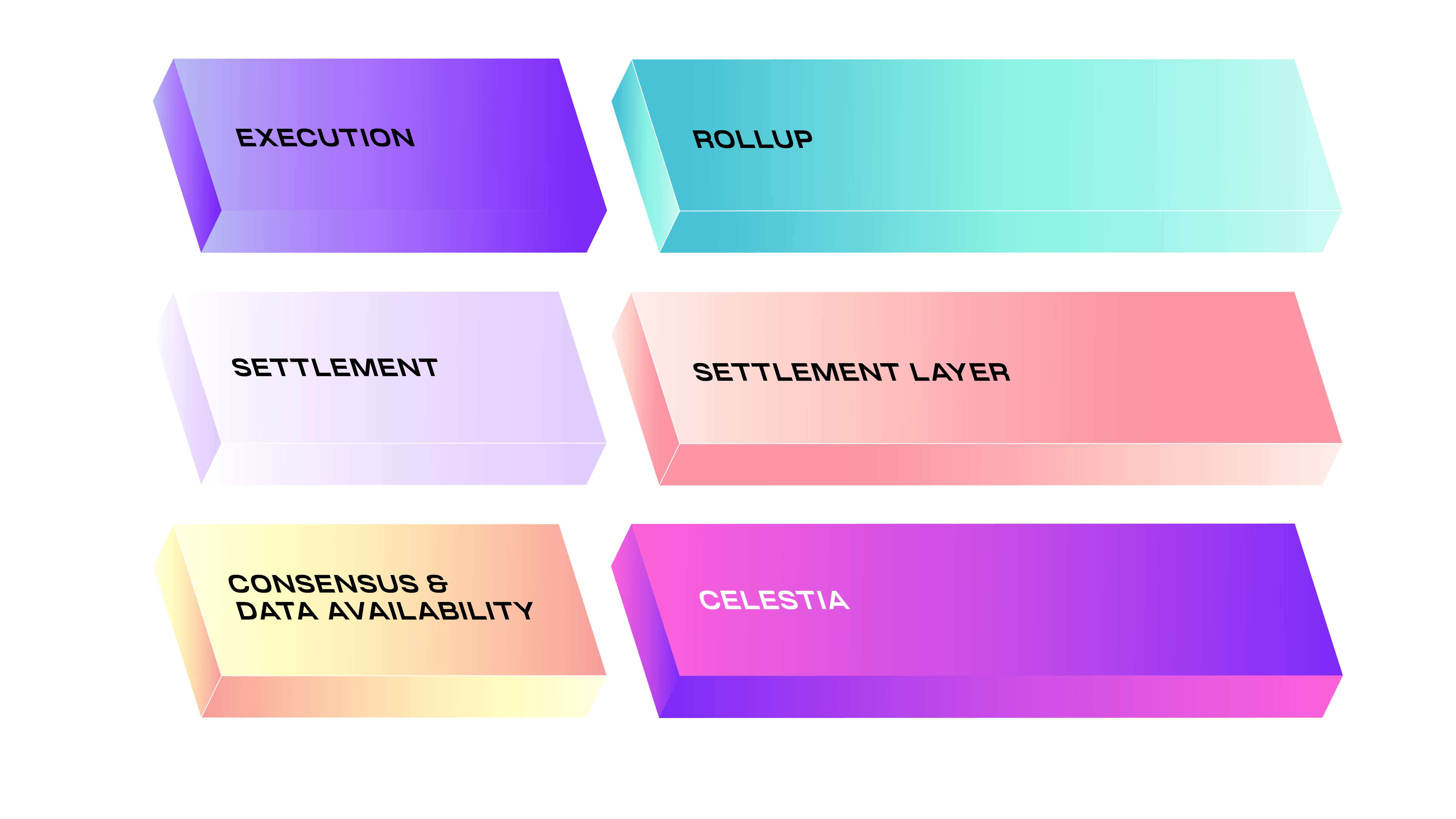
In the modular blockchain stack, settlement is the final step where a rollup posts its state root to a base layer to guarantee security and finality. This process distinguishes the execution layer—where transactions are processed—from the settlement layer, which serves as the ultimate source of truth.
Smart contract rollups publish their entire blocks to a settlement layer like Ethereum. The settlement layer's job is to order these blocks and verify their validity, ensuring that no two conflicting states can exist simultaneously. Without this step, a rollup would operate in isolation, lacking the cryptographic guarantees of the underlying network.
A settlement layer in modular architecture primarily provides proof verification and dispute resolution for rollups. It may also act as a liquidity source or bridging hub, but its core function remains the same: to resolve conflicts and finalize state transitions. This separation allows rollups to scale execution independently while inheriting the security of the base layer.
Optimistic versus ZK settlement paths
The choice between optimistic and zero-knowledge (ZK) rollups defines how quickly capital moves and who ultimately guarantees its safety. In 2026, these two architectures represent the primary methods for final settlement on Layer 2 networks, each carrying distinct implications for liquidity providers and users seeking speed.
Optimistic rollups operate on the assumption that transactions are valid unless proven otherwise. They batch thousands of transactions off-chain and post the data to Ethereum, relying on a seven-day challenge period to detect fraud. This approach prioritizes compatibility and developer ease, allowing existing EVM code to run with minimal modification. However, the security model introduces a delay: users must wait for the dispute window to close before they can confidently withdraw funds to the mainnet. This latency can create friction for high-frequency trading or arbitrage strategies that rely on immediate finality.
In contrast, ZK rollups generate cryptographic validity proofs that mathematically verify the correctness of every transaction batch before it settles. This means there is no waiting period for disputes; once the proof is accepted by the settlement layer, the state is considered final. The tradeoff lies in complexity. Generating these proofs requires significant computational resources, often making transaction processing more expensive per unit than optimistic models. Yet, for assets where time is money, the near-instant withdrawal capability of ZK rollups offers a distinct advantage in liquidity efficiency.
| Feature | Optimistic Rollup | ZK Rollup |
|---|---|---|
| Finality Time | 7-day challenge period | Near-instant (proof-based) |
| Security Model | Fraud proofs (dispute-driven) | Validity proofs (mathematical) |
| Transaction Cost | Lower (no proof generation) | Higher (computationally intensive) |
| EVM Compatibility | Native support | Often requires translation layers |
| Withdrawal Speed | Slow (must wait for finality) | Fast (immediate upon proof) |
The decision between these paths often depends on the specific use case. Applications requiring high throughput and low fees, such as social media or gaming, may favor optimistic rollups for their lower operational costs. Conversely, financial applications dealing with large capital flows often prioritize the speed and security guarantees of ZK rollups, accepting the higher computational overhead to minimize settlement risk. As the ecosystem matures, hybrid models are emerging to balance these tradeoffs, but the core distinction remains: optimistic rollups trade time for cost, while ZK rollups trade cost for time.
How settlement costs drive L2 fees
The price you pay to use a Layer-2 network is not just for computation; it is heavily anchored by the cost of settling that data on Ethereum. While L2s handle the heavy lifting of transaction processing off-chain, they must periodically post a compressed proof of that activity to the Ethereum mainnet. This act of "final settlement" is the economic bottleneck that determines baseline fees for users.
Settlement costs consist of two distinct components: gas for execution and data fees for storage. When a rollup posts its state root to Ethereum, it pays for the calldata required to validate the Merkle Root of the transaction batch. As Ethereum gas prices fluctuate, the cost to post this data rises and falls, directly impacting the minimum fee L2 operators must charge to remain solvent. If settlement becomes expensive, L2s cannot afford to subsidize user fees for long.
This dynamic creates a direct correlation between L1 congestion and L2 pricing. During periods of high Ethereum activity, the cost to settle a single rollup block can spike significantly. L2 operators typically pass these variable costs on to users, meaning that even if the L2 itself is fast and cheap, the final user experience is tethered to the health and cost structure of the Ethereum mainnet. Understanding this link is essential for predicting fee volatility across the modular blockchain ecosystem.
Shared sequencers and cross-rollup liquidity
The fragmentation of liquidity across isolated rollups has long been a bottleneck for capital efficiency. In 2026, shared sequencer infrastructure is dismantling these silos by allowing multiple rollups to post transactions to a common ordering layer before final settlement. This shift transforms cross-rollup swaps from multi-hop bridging operations into single-step atomic settlements, significantly reducing friction and latency for users.
By decoupling sequencing from execution, shared sequencers enable a "superpower" where the next L1 proposer can permissionlessly include rollup blocks as part of the consensus layer. This approach, detailed in foundational ethresear.ch discussions on based rollups, ensures that transaction ordering is not monopolized by individual rollup operators. Instead, it creates a unified market where liquidity providers can serve multiple chains simultaneously without managing separate bridging liquidity pools.
The result is a dramatic improvement in capital efficiency. Traders no longer need to pre-fund assets on every destination chain to capture arbitrage opportunities or execute complex DeFi strategies. Instead, liquidity remains concentrated in the settlement layer, flowing instantly to where it is needed. This reduces the "slippage tax" of bridging and allows DEXs to operate with tighter spreads, mimicking the liquidity depth of centralized exchanges while maintaining non-custodial security.
This architectural change also mitigates the risk of liquidity fragmentation during high-volatility events. When sequencers are shared, the ordering of transactions becomes more predictable and fair, reducing the advantage of front-running by private relays. As a result, cross-rollup liquidity becomes more resilient, providing a stable foundation for the next generation of decentralized finance applications.
Trading ETH against L2 activity trends
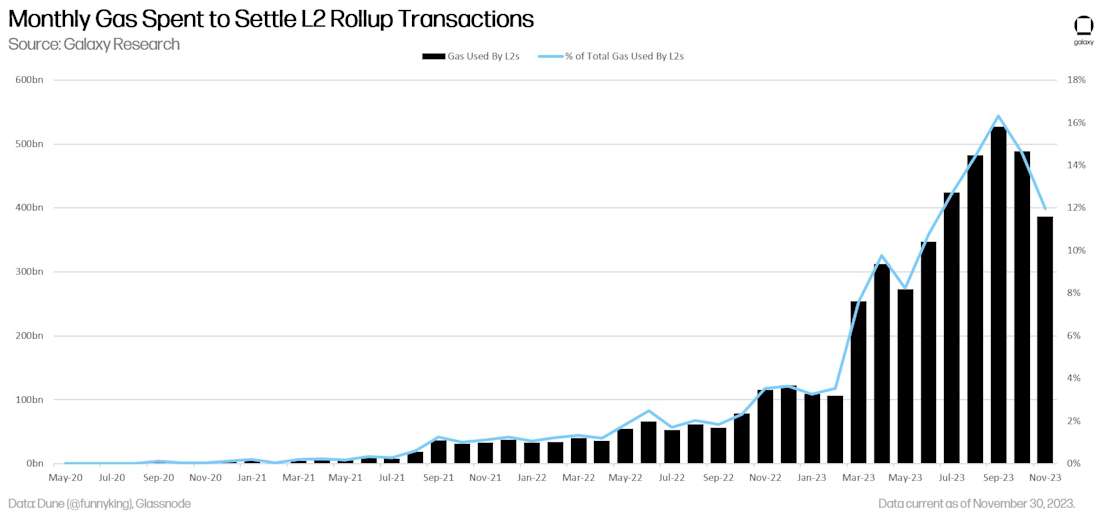
Ethereum’s price action and Layer-2 settlement activity often move in tandem, driven by the same underlying demand for block space. When rollup volume surges, the need for settlement on the base layer increases, creating a direct correlation between L2 usage and ETH liquidity.
As rollups batch thousands of transactions offchain and post them to Ethereum, they consume gas for data availability and proof verification. This activity injects demand into the network, making ETH both a settlement asset and a liquidity hub. The modular stack architecture ensures that this demand is visible in real-time on-chain metrics.
Tracking these trends provides a clear view of market sentiment. High settlement activity typically signals strong user engagement and network utility, while dips in volume often precede price corrections. Understanding this dynamic helps traders anticipate liquidity shifts before they fully impact the broader market.
Checklist for evaluating rollup security
Assessing the security of a rollup requires looking beyond the transaction speed to the underlying settlement layer. The settlement layer is responsible for proof verification and dispute resolution, acting as the final arbiter of truth [src-serp-5]. A robust framework helps you distinguish between genuine security guarantees and centralized assumptions.
- Data availability: Verify that block data is published to a transparent source. Without accessible data, users cannot reconstruct the state or challenge invalid proofs.
- Proof type: Identify whether the rollup uses fraud proofs or validity proofs. Validity proofs (ZK) generally offer faster finality, while fraud proofs (Optimistic) rely on challenge periods.
- Withdrawal windows: Check the time required to exit the rollup. Shorter windows with verified proofs reduce the risk of state disputes or central operator manipulation.
This checklist provides a baseline for evaluating trust. Always cross-reference these technical details with the official documentation of the specific rollup you are considering.
Settlement layer questions answered
Understanding the terminology behind rollup architectures helps clarify where liquidity settles and how finality is achieved. These definitions distinguish the execution layer from the trust-minimized base where disputes are resolved.
No comments yet. Be the first to share your thoughts!