
Defining rollup settlement 2026
The term "rollup settlement" in current search results frequently conflates blockchain infrastructure with unrelated legal proceedings. Recent filings, such as the class action regarding Rolling Stone or antitrust disputes involving private equity roll-ups, refer to judicial resolutions and financial payouts. These legal settlements are distinct from the cryptographic finality mechanisms that define Layer-2 (L2) scalability. To avoid ambiguity, this analysis focuses exclusively on the technical definition of rollup settlement within the 2026 blockchain architecture.
In the context of rollup settlement 2026, the term refers to the process by which a Layer-2 network commits its state to a Layer-1 (L1) base chain, such as Ethereum. Settlement is not merely a recording of transactions; it is the cryptographic guarantee that the L2 state is valid and irreversibly anchored on the L1. This finality ensures that assets moved on the L2 cannot be double-spent or altered without invalidating the proof submitted to the L1.
The 2026 shift toward shared sequencers has refined this process by decoupling transaction ordering from state execution. In earlier models, the sequencer was often a single point of failure or centralization risk. Shared sequencers distribute this ordering responsibility across multiple nodes, while the settlement layer remains responsible for verifying the resulting state transitions via validity proofs (ZK) or fraud proofs (Optimistic). This separation enhances security and decentralization without altering the fundamental definition of settlement: the L1-bound verification of L2 state integrity.
Shared Sequencers and Cross-Chain Intent
The architecture of rollup settlement in 2026 relies on shared sequencers to bridge the gap between isolated liquidity pools. Rather than forcing every cross-chain transaction to settle sequentially on a single chain, shared sequencers aggregate transaction intents from multiple rollups into a unified batch. This mechanism allows liquidity to flow across the modular stack without the latency and cost associated with traditional bridge transfers.
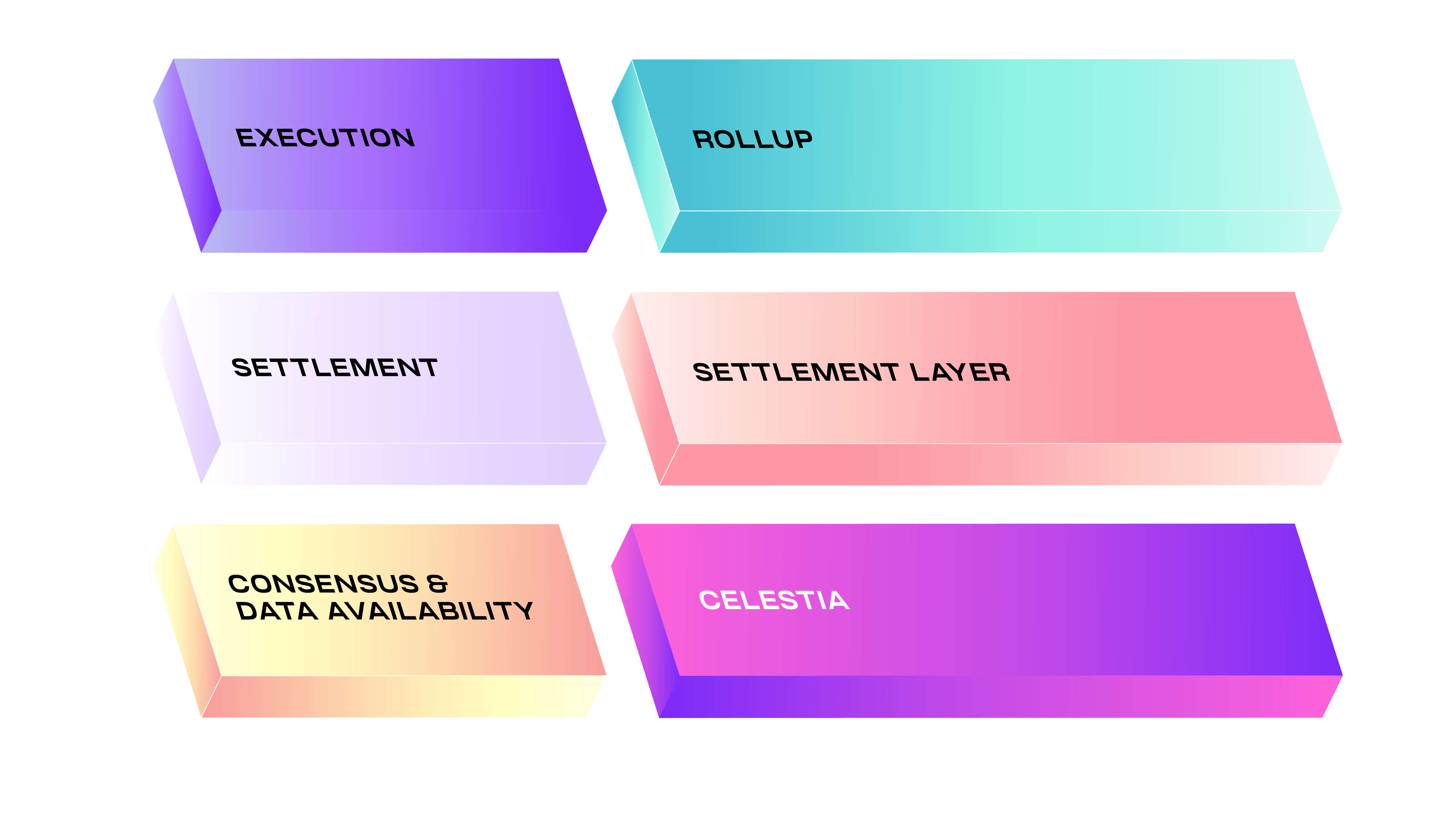
This aggregation process shifts the heavy lifting off-chain. Solvers, which are specialized entities competing to fulfill user intents, execute transactions outside the main settlement layer. They generate validity proofs that attest to the correctness of these off-chain state transitions. These proofs are then submitted to the underlying rollup settlement layer for final verification and finality.
From a regulatory and compliance perspective, this off-chain execution introduces distinct risk vectors. Because the intent matching and execution occur outside the immutable ledger, auditors must verify the integrity of the solver network and the validity proof generation process. The reliance on external actors for transaction ordering and execution requires rigorous oversight to ensure that the rollup settlement in 2026 remains transparent and resistant to front-running or manipulation. The settlement layer itself remains the source of truth, but the path to finality has become more complex.
ZK-Rollups vs Optimistic Rollups in 2026
Use this section to make the Rollup Settlement decision easier to compare in real life, not just on paper. Start with the reader's actual constraint, then separate must-have requirements from details that are merely nice to have. A practical choice should survive normal use, maintenance, timing, and budget. If a recommendation only works in an ideal situation, call that out plainly and give the reader a fallback path.
| Factor | What to check | Why it matters |
|---|---|---|
| Fit | Match the option to the primary use case. | A good deal still fails if it does not fit the job. |
| Condition | Verify age, wear, and service history. | Hidden condition issues erase upfront savings. |
| Cost | Compare purchase price with likely upkeep. | The cheapest option is not always the lowest-cost option. |
Evaluating intent settlement layers
Intent settlement layers are emerging as the primary infrastructure for rollup settlement 2026, shifting execution logic off-chain while maintaining on-chain validity proofs. This architecture separates the solver network from the consensus layer, allowing for more complex order routing and improved capital efficiency. For legal and compliance teams, this separation introduces new vectors for liability, particularly regarding how solvers handle user intent and execute trades.
Eco: Validity-Rollup Architecture
Eco employs a validity-rollup model where solvers execute intents off-chain and generate validity proofs of the state transition. This approach requires rigorous cryptographic verification to ensure that the off-chain execution matches the on-chain proof. The system’s reliance on validity proofs means that any failure in the proof generation process can halt settlement, creating a single point of failure that must be audited continuously. The technical mechanics require that solvers provide cryptographic evidence that the intent was executed exactly as specified, reducing the risk of front-running but increasing the complexity of the verification layer.
UniswapX: Aggregated Order Routing
UniswapX aggregates orders across multiple venues to find the best execution price, routing them through a network of professional solvers. This model prioritizes price improvement and reduced slippage for users, but it shifts the execution risk to the solver network. Legal scrutiny should focus on the transparency of the solver selection process and the potential for conflicts of interest when solvers aggregate orders from different sources. The system’s design ensures that users receive the best available price, but the opacity of the solver network can complicate regulatory oversight.
Across: Fast Bridge Settlements
Across facilitates fast cross-chain settlements by using a capital-efficient proof-of-reserve model. Solvers provide liquidity for cross-chain swaps, and the protocol verifies the liquidity through periodic audits. This model reduces settlement time significantly but introduces counterparty risk if the solver network fails to maintain sufficient reserves. The protocol’s reliance on external liquidity providers means that any disruption in the solver network can impact the availability of capital for rollup settlement 2026 workflows. Compliance teams should monitor the reserve audits and the solvers’ financial stability to mitigate these risks.
Risk factors in cross-rollup settlement
Use this section to make the Rollup Settlement decision easier to compare in real life, not just on paper. Start with the reader's actual constraint, then separate must-have requirements from details that are merely nice to have. A practical choice should survive normal use, maintenance, timing, and budget. If a recommendation only works in an ideal situation, call that out plainly and give the reader a fallback path.
The simplest way to use this section is to write down the must-have criteria first, then compare each option against those criteria before weighing nice-to-have features.
No comments yet. Be the first to share your thoughts!