
Defining the settlement layer role
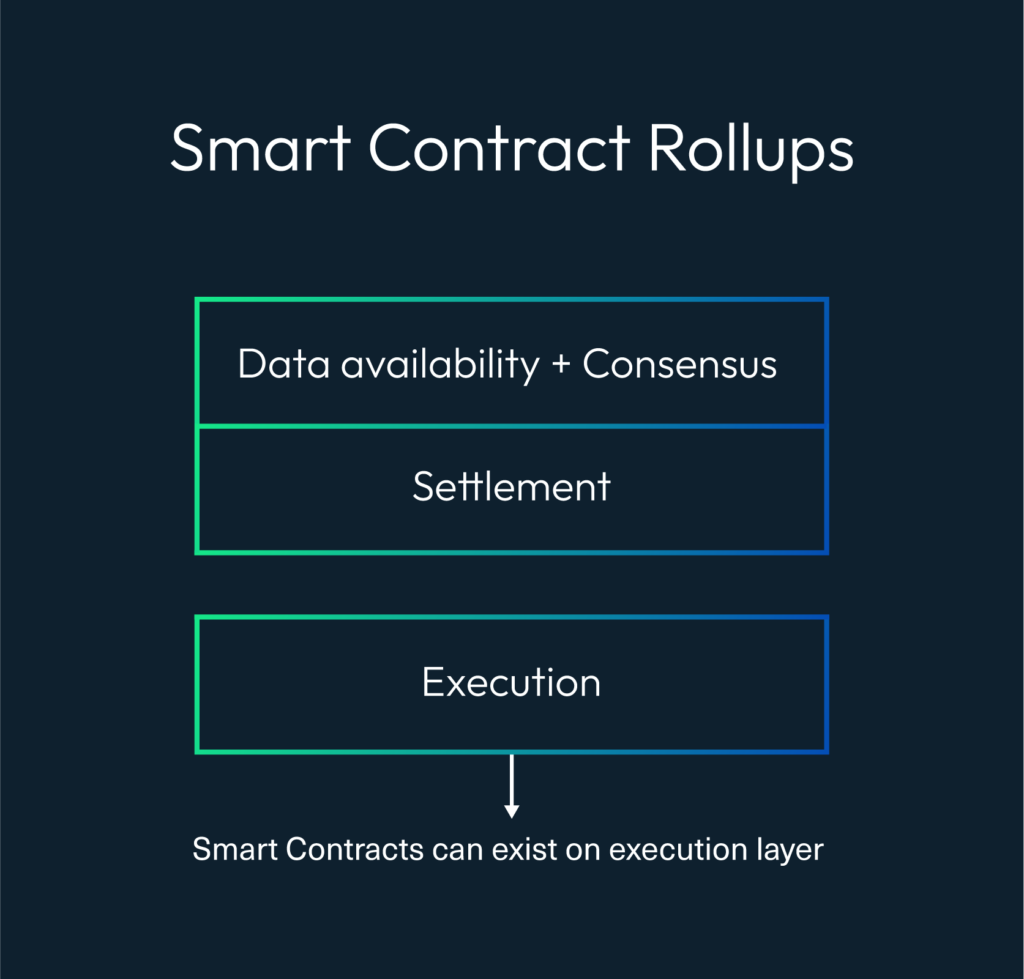
In the context of rollup architecture, settlement refers strictly to blockchain state finality and data availability. It is the process by which a Layer 2 chain posts its state root and transaction data to a Layer 1 blockchain, such as Ethereum. This technical definition is distinct from legal or financial settlement processes found in traditional finance, where settlement involves the actual exchange of assets and the resolution of disputes between counterparties.
The primary function of the settlement layer is to provide a secure, immutable record of the rollup's state. When a rollup processes transactions, it compresses them into a single state root. This root is then posted to the L1 chain, where it is verified against the consensus rules of the base layer. This process ensures that the rollup's state is final and cannot be altered without detection, even if the rollup's sequencer or validator nodes act maliciously.
This distinction is critical for developers and protocol designers. While traditional settlement involves the transfer of ownership and legal recourse, blockchain settlement is about cryptographic proof and data integrity. The settlement layer does not execute transactions or resolve legal conflicts; it only attests to the validity of the state transitions recorded by the rollup. This separation of concerns allows rollups to scale transaction throughput while relying on the security of the underlying Layer 1 network.
Settlement fees are distinct from rollup fees. Rollup fees cover the cost of operating the sequencer and processing transactions, while settlement fees cover the cost of posting data and verifying proofs on the L1 chain. This economic model ensures that the security of the rollup is directly tied to the cost of attacking the underlying Layer 1 blockchain.
TechnicalChart: Settlement Layer Architecture
ZK-Rollup vs Optimistic Rollup Mechanics
The choice between ZK-rollups and Optimistic rollups is fundamentally a choice between computational overhead and finality latency. Both models settle transactions on a base layer, but they differ in how they prove that the state transition is valid. This distinction drives the cost structure, security model, and user experience of each architecture.
Proof Generation and Verification
Optimistic rollups assume transactions are valid by default. They generate fraud proofs only when a challenger disputes a state root. This approach minimizes on-chain computation but introduces a mandatory challenge period—typically seven days—before funds are considered final. The security relies on economic incentives to deter malicious state submissions.
ZK-rollups generate validity proofs (zero-knowledge proofs) for every batch of transactions before settlement. These proofs are verified on-chain, allowing for near-instant finality. The computational cost shifts from the challenger to the prover, requiring significant off-chain resources to generate the cryptographic proof.
Impact on Finality and Gas Costs
Finality speed is the most visible tradeoff. Optimistic rollups offer slower withdrawal times due to the dispute window, while ZK-rollups provide immediate finality once the proof is verified. This makes ZK-rollups preferable for applications requiring rapid cross-rollup transfers or high-frequency trading.
Gas cost structures also diverge. Optimistic rollups benefit from lower proof verification costs, but users pay for the data availability of the entire transaction batch. ZK-rollups incur higher computational costs for proof generation, which can be amortized across many transactions, but the on-chain verification cost remains constant per batch.
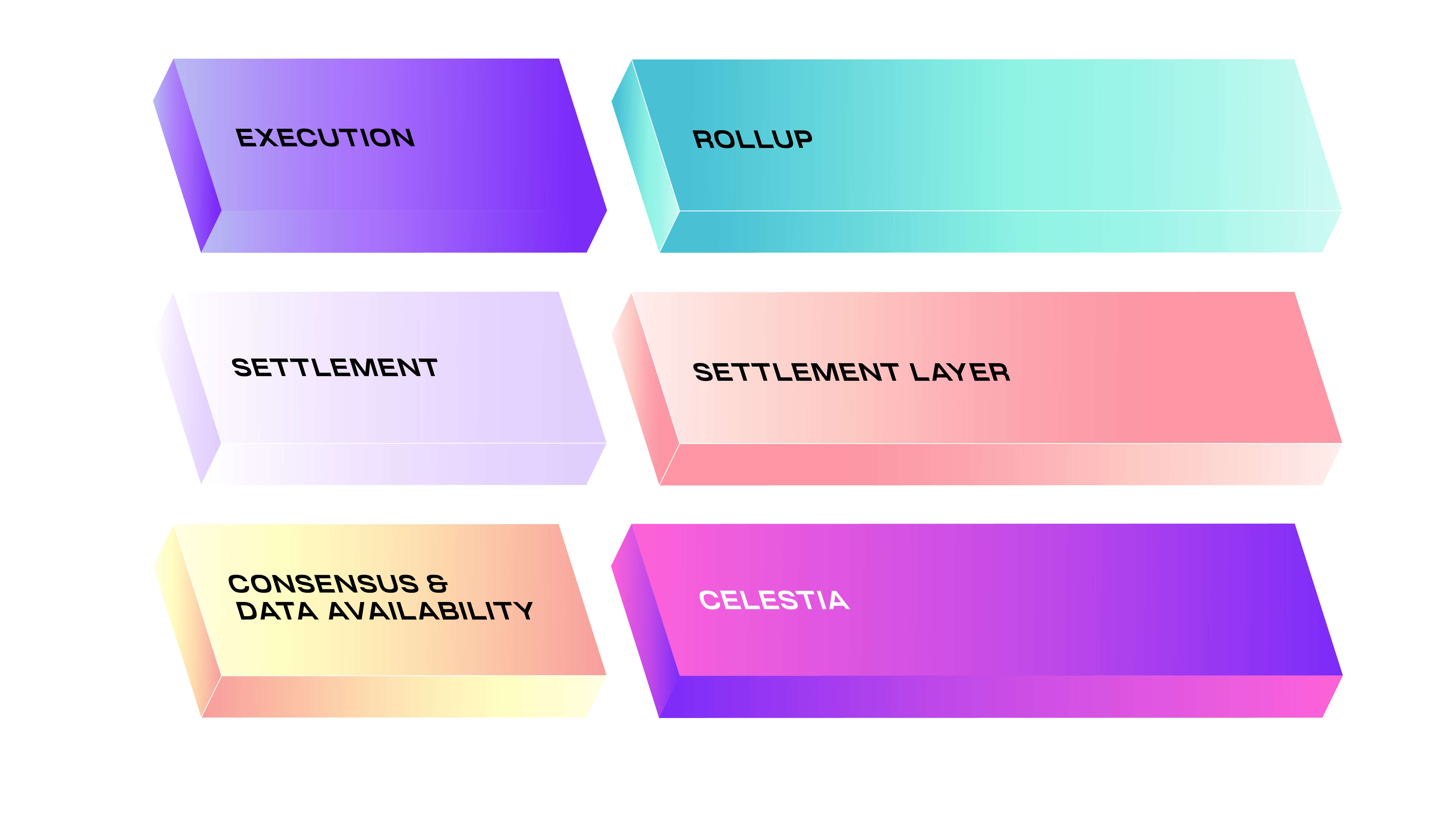
Comparison of Settlement Parameters
The following table summarizes the key technical differences between the two dominant rollup settlement models.
| Parameter | ZK-Rollup | Optimistic Rollup |
|---|---|---|
| Proof Type | Validity Proof (SNARK/STARK) | Fraud Proof |
| Finality Time | Minutes (Proof Verification) | 7 Days (Challenge Period) |
| On-Chain Verification Cost | High (Complex Math) | Low (State Root Check) |
| Off-Chain Compute | High (Proof Generation) | Low (Transaction Execution) |
| Security Model | Cryptographic | Economic |
Settlement Layer Implications
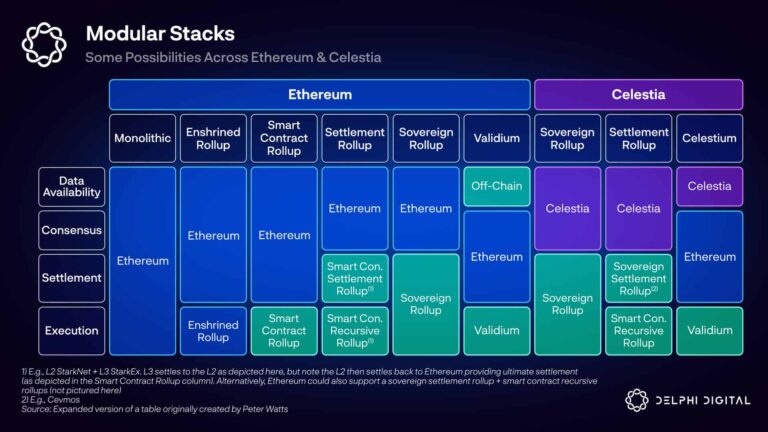
The choice of settlement model affects how rollups interact with the broader modular stack. ZK-rollups can settle more frequently with smaller data commitments, potentially reducing data availability costs. Optimistic rollups require larger data blobs to ensure the challenge period is effective, which can increase reliance on data availability layers like Celestia or Ethereum's blob space.
Shared sequencers and cross-rollup flow
Shared sequencers reduce latency for cross-rollup DEX settlements by batching transactions before they hit the settlement layer. In a standard multi-rollup architecture, a swap between Asset A on Rollup X and Asset B on Rollup Y requires two separate transaction submissions, two proof generations, and two settlement finalizations. This multi-step process introduces significant latency and doubles the gas costs for the user. Shared sequencers address this by acting as a unified ordering layer that accepts transactions from multiple rollups simultaneously.
Instead of processing each rollup's transactions in isolation, the shared sequencer aggregates them into a single batch. This batch is then submitted to the settlement layer as one atomic operation. The settlement layer verifies the integrity of the entire batch and updates the state of both rollups in a single step. This approach eliminates the need for intermediate state transitions and reduces the time required for cross-rollup transfers from minutes to seconds.
The efficiency gain is particularly pronounced for high-frequency trading and DEX settlements. By batching transactions, shared sequencers reduce the overhead associated with proof generation and verification. This allows for higher throughput and lower costs, making cross-rollup interactions more viable for everyday use. The system relies on a trusted sequencer to order transactions, but the settlement layer ensures that the final state is correct and immutable.
This architectural shift requires careful coordination between rollups and the sequencer. Rollups must agree on a common format for cross-rollup messages and proofs. The sequencer must ensure that transactions are ordered consistently and that no double-spending occurs. Despite these challenges, the benefits of reduced latency and lower costs make shared sequencers a compelling solution for cross-rollup interoperability.
Gas optimization strategies for 2026
Minimizing settlement costs requires a shift from passive fee payment to active data management. For 2026, the primary lever is not just reducing transaction count, but optimizing the data availability (DA) footprint and timing execution against network congestion. Settlement fees consist of proof verification and state root commitments, while data fees are driven by the volume of calldata or blob space consumed.
EIP-4844 introduced blob space as a cheaper alternative to calldata. Optimistic rollups and ZK rollups should batch transactions to maximize blob utilization. Blob space is ephemeral and significantly cheaper than calldata, reducing the data fee component of settlement by an order of magnitude. Configure your sequencer to fill blobs to near-capacity before submitting to the settlement layer.
Data compression directly lowers the gas required for state root commitments. Use efficient encoding schemes for account state diffs and transaction logs. For ZK rollups, ensure the proof system supports recursive proof aggregation to minimize the on-chain verification size. Smaller proofs mean less gas for verification, which is the core settlement cost for ZK architectures.
Network congestion spikes base fees. Deploy your settlement transactions during off-peak hours or when the mempool is less saturated. This is particularly effective for Optimistic rollups, where the gas cost for the state root is variable. Avoid submitting during major DeFi events or NFT mints that typically drive Ethereum gas prices up.
Grouping transactions reduces the overhead of fixed costs per block. Aim for larger batch sizes to amortize the gas cost of the state root commitment across more user transactions. This is a fundamental tradeoff: larger batches improve cost efficiency but may increase finality latency. Balance batch size with your user experience requirements.
The goal is to make each settlement transaction as data-light as possible while maintaining security. By combining blob space, compression, and smart timing, you can significantly reduce the cost of operating a rollup in 2026.
Selecting the right settlement path
Choosing between ZK and Optimistic rollups requires balancing finality speed, security assumptions, and cost. Settlement here refers to blockchain-level state commitment, distinct from legal or financial settlement, which operates under different regulatory frameworks.
ZK rollups offer immediate finality and stronger security guarantees through cryptographic proofs, but incur higher computational costs for proof generation. Optimistic rollups delay finality to allow for fraud challenges, reducing upfront costs but introducing latency and reliance on economic security assumptions.
| Feature | ZK Rollups | Optimistic Rollups |
|---|---|---|
| Finality | Immediate | Delayed (challenge period) |
| Security | Cryptographic | Economic |
| Cost | High (proof generation) | Low (no proofs) |
For applications requiring instant user experience and high security, ZK is preferable. For cost-sensitive applications with tolerance for latency, Optimistic models may be more suitable. The choice depends on your specific tradeoff between speed, cost, and security.
| Feature | ZK Rollups | Optimistic Rollups |
|---|---|---|
| Finality | Immediate | Delayed |
| Security | Cryptographic | Economic |
| Cost | High | Low |
No comments yet. Be the first to share your thoughts!