
Defining the rollup settle layer
The rollup settle layer is the final destination where transactions achieve irreversibility. It acts as the anchor to Layer 1 security, distinguishing itself from the execution layer (where transactions are processed) and the data availability layer (where transaction data is stored). Without a robust settlement mechanism, a rollup is merely a fast database without cryptographic guarantees.
In the context of L2 optimistic rollups, settlement involves posting state roots and execution data to the main chain. This process does not verify every transaction on Layer 1; instead, it relies on a challenge period where validators can dispute invalid states. The settle layer ensures that if a fraudulent state root is submitted, it can be corrected before finality is granted.
This architecture allows rollups to inherit the security of the base layer. By anchoring proofs and transaction data to Ethereum, rollups benefit from the same economic security that protects the mainnet. This separation of concerns enables scalability while maintaining trust minimization, a core requirement for decentralized finance.
Optimistic rollups vs zk rollups
The choice between optimistic and ZK rollups comes down to a single trade-off: waiting for finality or paying for proof generation. Both models inherit Ethereum’s security by anchoring data to Layer 1, but they handle validity verification differently. Optimistic rollups assume transactions are valid unless proven otherwise, while ZK rollups require mathematical proof before settlement.
The Cost of Finality
Optimistic rollups, such as Arbitrum and Optimism, offer lower immediate costs because they skip complex zero-knowledge proof generation. Instead, they rely on a 7-day challenge period where anyone can dispute invalid state transitions. This makes them ideal for high-throughput applications where users tolerate slight delays for cheaper fees. However, the withdrawal window can be a bottleneck for capital efficiency.
ZK rollups, like StarkNet and zkSync, generate a validity proof for every batch of transactions. This proof is verified on Ethereum before funds are released, enabling near-instant finality. The trade-off is computational overhead. Generating these proofs requires more intensive cryptography, which can impact transaction throughput and developer complexity, though hardware acceleration is rapidly closing this gap.
Settlement Mechanics Compared
The following table breaks down the core differences in how these two models settle transactions on Ethereum.
Shared sequencers for cross-rollup DEXs
Cross-rollup trading has long been hamstrung by the "bottleneck" of sequential settlement. When a user swaps tokens on Arbitrum for tokens on Optimism, the transaction must travel through two separate rollup chains and then settle on Ethereum mainnet. This path introduces significant latency and high gas costs, as each step requires independent proof generation and bridge transfers. The result is a fragmented liquidity landscape where users face slow execution and unpredictable fees.
Shared sequencers solve this by acting as a common ordering layer for multiple rollups. Instead of processing transactions in isolation, these sequencers batch orders from different chains together before they reach settlement. This approach allows DEXs to match trades off-chain with near-instant finality, bypassing the traditional bridge delays that plague cross-chain liquidity. The sequencer ensures that the sender and receiver rollups agree on the state change, reconciling transactions at the settlement layer with greater accuracy and efficiency.
By matching transactions off-chain before settlement, shared sequencers reduce the computational burden on individual rollups. This architecture enables DEXs to offer deeper liquidity pools and tighter spreads, as trades are settled more quickly and with lower overhead. The result is a more cohesive Layer 2 ecosystem where cross-rollup DEXs can compete effectively with centralized exchanges on speed and cost.
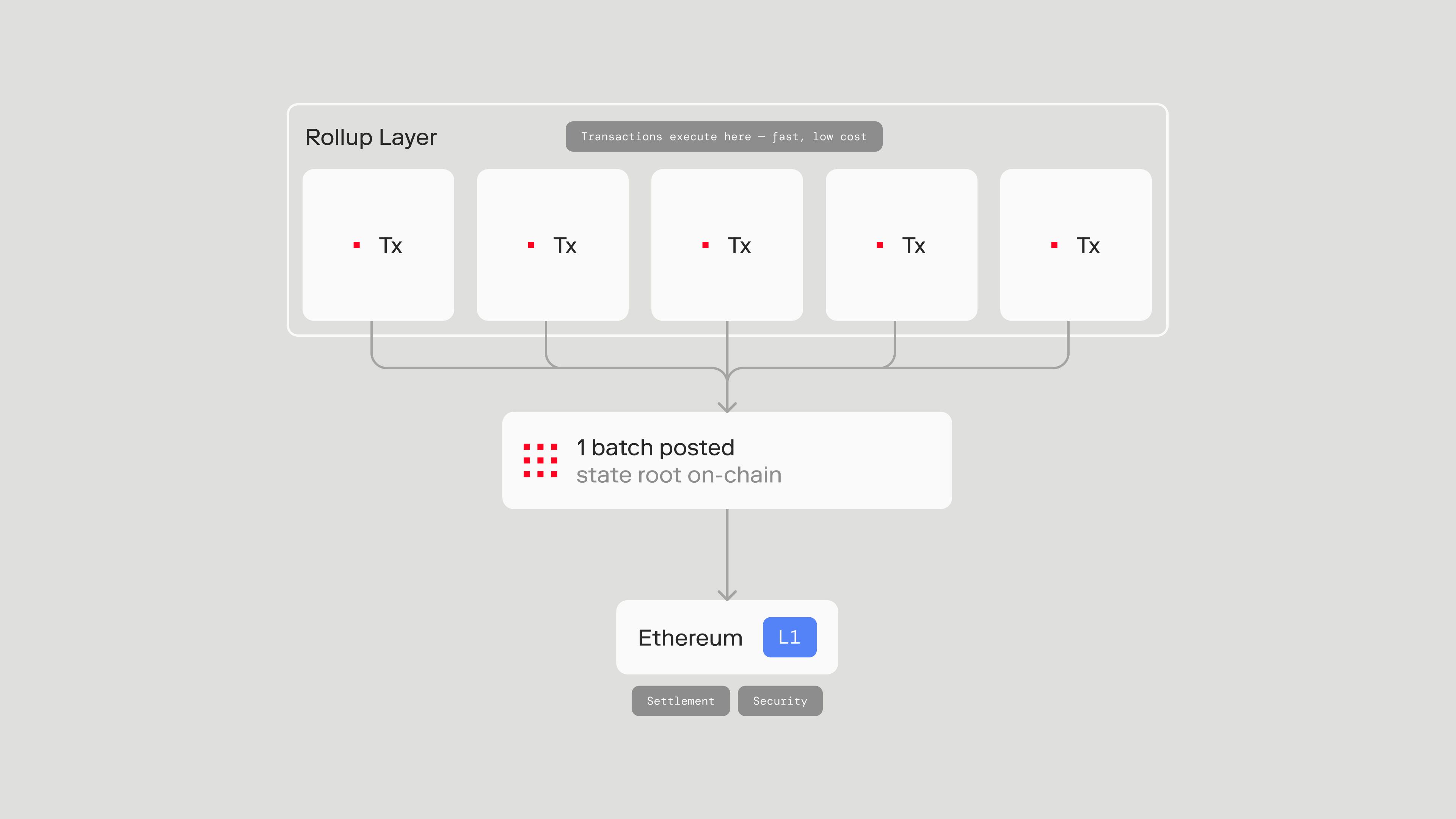
This shift transforms cross-rollup DEXs from niche alternatives into primary liquidity hubs. As more rollups adopt shared sequencing, the fragmentation that once defined the Layer 2 space will give way to a unified trading environment. Users will benefit from faster execution, lower costs, and seamless access to liquidity across multiple chains, making cross-rollup trading as intuitive as trading on a single chain.
Settlement costs and fee structures
The cost of settling transactions on Layer 1 has shifted from a linear scaling problem to a matter of data density. Before EIP-4844, rollups paid for block space by posting compressed transaction data as calldata, a method that competed directly with standard user transactions for limited block space. This scarcity kept settlement fees high, often ranging from $10 to $50 per batch depending on network congestion.
EIP-4844, also known as proto-danksharding, introduced a new data structure called "blobs." These blobs allow rollups to post their data to the Ethereum beacon chain without consuming standard block gas. The effect was immediate: settlement costs dropped by approximately 90% for most major rollups. Instead of competing for scarce gas, rollups now pay for temporary data storage, which is significantly cheaper and does not impact the execution layer's throughput.
Settlement fees are no longer a fixed overhead but a variable cost driven by blob demand. When blob utilization is low, fees can fall below $0.10 per transaction. However, during periods of high rollup activity, blob space becomes the bottleneck. The fee market now operates on a supply-and-demand basis for blob space, meaning settlement costs rise only when multiple rollups compete for the same data availability slots.
This consolidation effect means that as more transactions move on-chain, the marginal cost of settling each additional transaction decreases. The "more active -> lower fees" dynamic is now governed by the efficiency of data encoding and the availability of blob space, rather than the raw cost of Ethereum gas.
Market trends in 2026 settlement
By 2026, the optimistic rollup ecosystem has shifted from experimental testing to dominant market share. Total Value Locked (TVL) across major L2s has stabilized, with Ethereum-based settlement layers capturing the majority of institutional and retail liquidity. This concentration reflects a broader industry preference for security over speed, as users increasingly prioritize Ethereum's finality guarantees.
The settlement landscape is defined by a few dominant chains. Arbitrum and Optimism lead in TVL, benefiting from first-mover advantages and robust developer ecosystems. Their success demonstrates that users are willing to accept slightly longer withdrawal periods in exchange for lower fees and higher throughput. Meanwhile, newer entrants struggle to gain traction without unique value propositions beyond raw performance.
Settlement fees remain a critical factor in user adoption. As rollup activity increases, the cost per transaction on L1 decreases due to data availability optimizations. This economies-of-scale effect makes L2s increasingly competitive with L1s for high-frequency use cases. However, the gap is narrowing as L1s like Ethereum implement their own scaling solutions.
Market sentiment is reflected in token performance and on-chain metrics. Analysts note that sustained TVL growth correlates with active developer deployment and real-world use cases, not just speculative trading. The focus has shifted from hype to utility, with successful rollups integrating seamlessly with existing DeFi and NFT ecosystems.
No comments yet. Be the first to share your thoughts!