
How rollup settlement works in 2026
Settlement is the final step where Layer 2 state commitments are posted to the Layer 1 chain, ensuring data availability and security. In 2026, this process serves as the anchor for the entire rollup ecosystem, distinguishing itself from transaction execution and sequencing. While execution happens on the L2 for speed and cost efficiency, settlement provides the cryptographic proof that the L2 state is valid and backed by the security of the underlying L1 network.
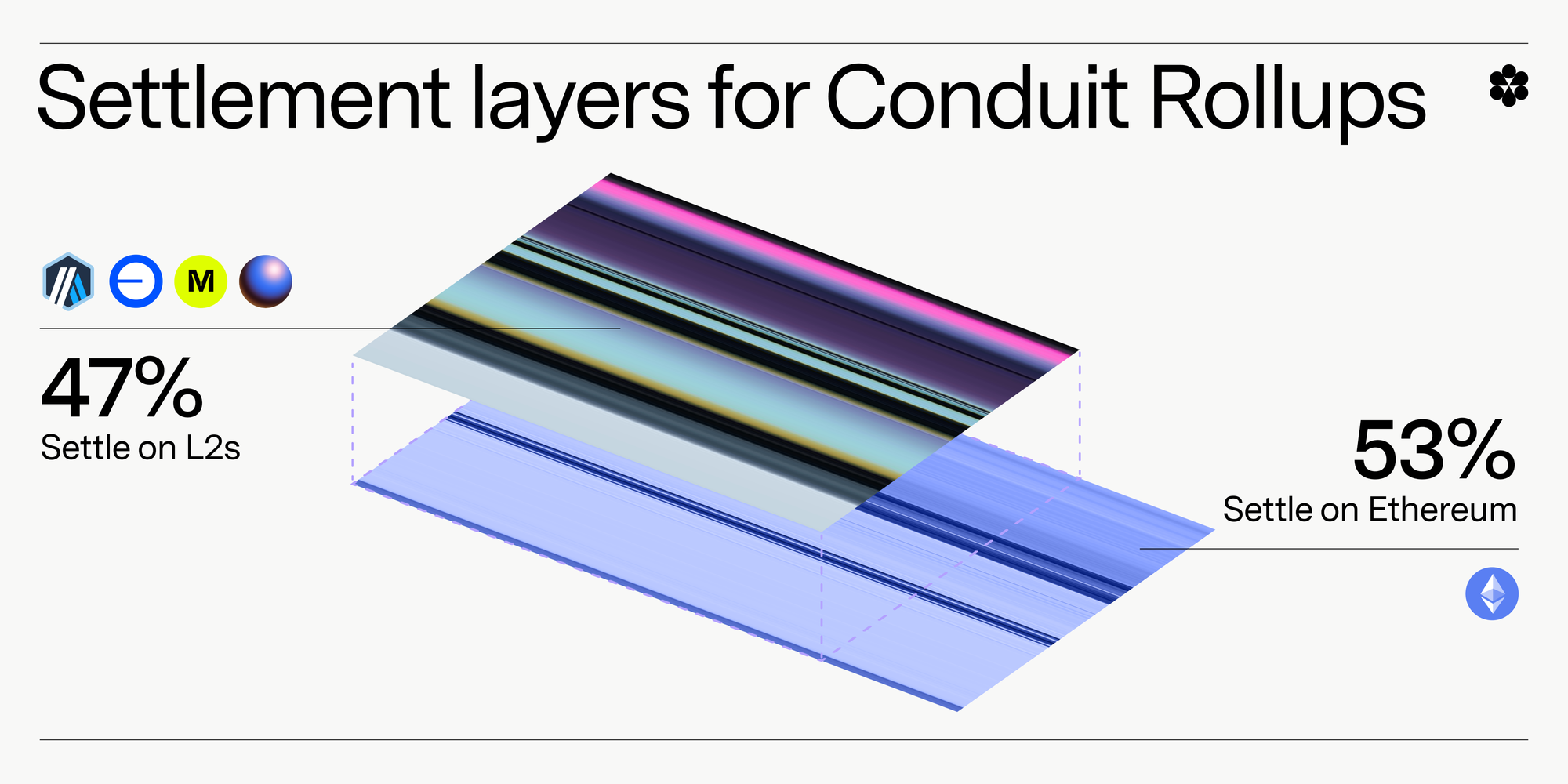
The settlement layer operates as the ground truth for rollups. It receives state roots and data blobs from L2s, which are then verified and stored on the L1 chain. This mechanism ensures that even if an L2 operator goes offline or acts maliciously, the L1 can reconstruct the correct state. In the modular stack, settlement layers are designed to provide maximal capacity, incentivizing applications to deploy on rollups rather than directly on the settlement layer itself.
It is important to distinguish blockchain settlement from legal settlements. In this context, settlement refers to the cryptographic finality of state transitions, not a dispute resolution process. The 2026 landscape emphasizes low-latency finality and reduced gas fees, making settlement more accessible for high-frequency applications. This shift has enabled a broader range of use cases, from decentralized finance to gaming, all relying on the robust security guarantees provided by the L1 settlement layer.
Optimistic vs ZK settlement costs
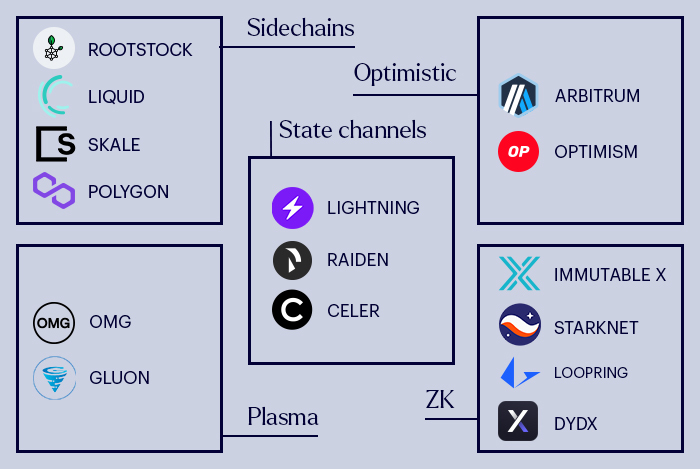
Rollup settlement in 2026 operates through two distinct economic models: Optimistic and Zero-Knowledge (ZK). Both methods secure data on a base layer, but they trade off different resources. Optimistic rollups prioritize lower data costs at the expense of time, while ZK rollups prioritize instant finality by accepting higher computational proof costs.
Optimistic rollups assume transactions are valid unless proven otherwise. This approach requires minimal data computation, making it cheaper to post data to the settlement layer. However, the trade-off is a mandatory fraud-proof window. Users must wait for this challenge period before funds are considered final. In 2026, this finality delay typically ranges from seven to ten days, depending on the specific protocol parameters.
ZK rollups generate cryptographic proofs that mathematically verify transaction validity. These proofs are expensive to generate, consuming significant computational resources. Despite the higher proof cost, ZK rollups offer instant finality. Once the proof is submitted to the settlement layer, the state change is immediately recognized, eliminating the waiting period associated with Optimistic models.
The following comparison outlines the key economic trade-offs between these two settlement approaches for 2026.
| Metric | Optimistic Rollup | ZK Rollup |
|---|---|---|
| Data Cost | Low | High |
| Finality Time | 7-10 days | Instant |
| Proof Generation | None (Fraud proofs only) | Complex (Validity proofs) |
| Best Use Case | High throughput, low urgency | Fast withdrawals, high security |
Shared sequencer gas optimization
In 2026, the cost of rollup settlement is no longer just about block space; it is about sequencing efficiency. When multiple rollups share a single sequencer, transactions from different layers are interleaved and batched before being posted to the base layer. This approach reduces the latency between transaction inclusion and finality while lowering the overall gas overhead per transaction.
Without shared sequencing, each rollup must pay for its own independent batch submission, including the fixed overhead of calldata and proof generation. By consolidating these batches, the fixed costs are amortized across a larger volume of transactions. For example, a batch containing 10,000 transactions from three different rollups incurs the same base gas cost as a batch of 10,000 transactions from a single rollup, but the per-unit cost drops significantly.
This optimization relies on the sequencer's ability to sort and order transactions from multiple sources without compromising isolation or state validity. Recent research, such as the efficiency-improved inter-rollup transfer system detailed in arXiv:2305.19514, demonstrates how batch settlement techniques can augment transfer efficiency between rollups by leveraging this shared infrastructure. The result is a more fluid settlement layer where gas fees reflect actual computational work rather than redundant submission overhead.
The shift toward shared sequencers marks a structural change in how rollups settle. Instead of treating each rollup as an isolated island, the ecosystem is moving toward a connected network where sequencing resources are pooled. This reduces the friction for users who interact with multiple rollups, as their transactions can be processed in a single, optimized batch rather than multiple disjointed submissions.
How long does a rollup withdrawal take?
Settlement finality is the point at which a transaction becomes irreversible. In the modular stack, this process differs significantly between Optimistic and ZK rollups. Understanding these windows is essential for anyone moving assets from a Layer 2 back to Ethereum mainnet in 2026.
The 7-day challenge period
Optimistic rollups assume all transactions are valid by default. To catch fraud, they enforce a dispute window, typically seven days. During this period, anyone can submit a fraud proof to challenge a state root. If no one contests the state, the withdrawal proceeds. This delay is the trade-off for lower computational costs on the rollup itself.
ZK rollup instant finality
ZK rollups submit cryptographic proofs that mathematically verify transaction validity. Because the proof is verified on-chain, there is no need for a challenge period. Withdrawals can be processed almost immediately after the batch is submitted to Ethereum. This offers near-instant finality, though it requires more complex infrastructure to generate proofs.
Sequencer vs. L1 finality
It is important to distinguish between sequencer finality and L1 finality. Sequencer finality means the rollup has recorded the transaction, but it is not yet settled on Ethereum. You can only consider an asset truly "settled" once the L1 contract confirms the withdrawal. Until that L1 confirmation, funds remain locked in the rollup contract.
Initiate the withdrawal on the rollup interface. The sequencer records your request, but the funds are not yet on Ethereum. This is the starting point of the settlement clock.
For Optimistic rollups, wait the full seven-day window. For ZK rollups, wait only for the proof verification on L1, which usually takes minutes. During this time, the state root is being finalized.
Once the challenge period expires or the proof is verified, claim your assets on the Ethereum mainnet contract. The funds are now fully settled and irreversible.
Common settlement errors to avoid
Even with robust rollup architectures, human error in the submission pipeline remains the leading cause of failed settlements. In 2026, as gas fees fluctuate and finality windows tighten, a single misconfigured parameter can cause a rollup to stall or reject valid state roots. These errors are not usually malicious; they are often the result of misaligned assumptions between the sequencer and the Layer 1 (L1) execution client.
The most frequent technical mistake is the incorrect submission of the state root. If the L2 output root does not match the canonical state derived from the L2 blocks, the L1 verifier will reject the transaction. This mismatch often occurs when developers forget to include the latest block in the batch or when the data availability layer fails to persist the blob data long enough for L1 to read it. Without accessible data, the state root is effectively unverifiable, leaving the rollup vulnerable to censorship or invalid state claims.
Gas limit miscalculations present a second critical failure point. Submitting a batch that exceeds the L1 block gas limit results in an immediate revert. In high-traffic periods of 2026, this can lead to significant backlogs. Developers must account for the variable cost of calldata and proof verification when setting batch sizes. Underestimating these costs forces the sequencer to split batches unnecessarily, increasing latency and reducing capital efficiency for users.
To prevent these failures, teams should implement automated pre-flight checks. The following checklist ensures that state roots and gas parameters are valid before broadcasting to the L1 network.
No comments yet. Be the first to share your thoughts!