
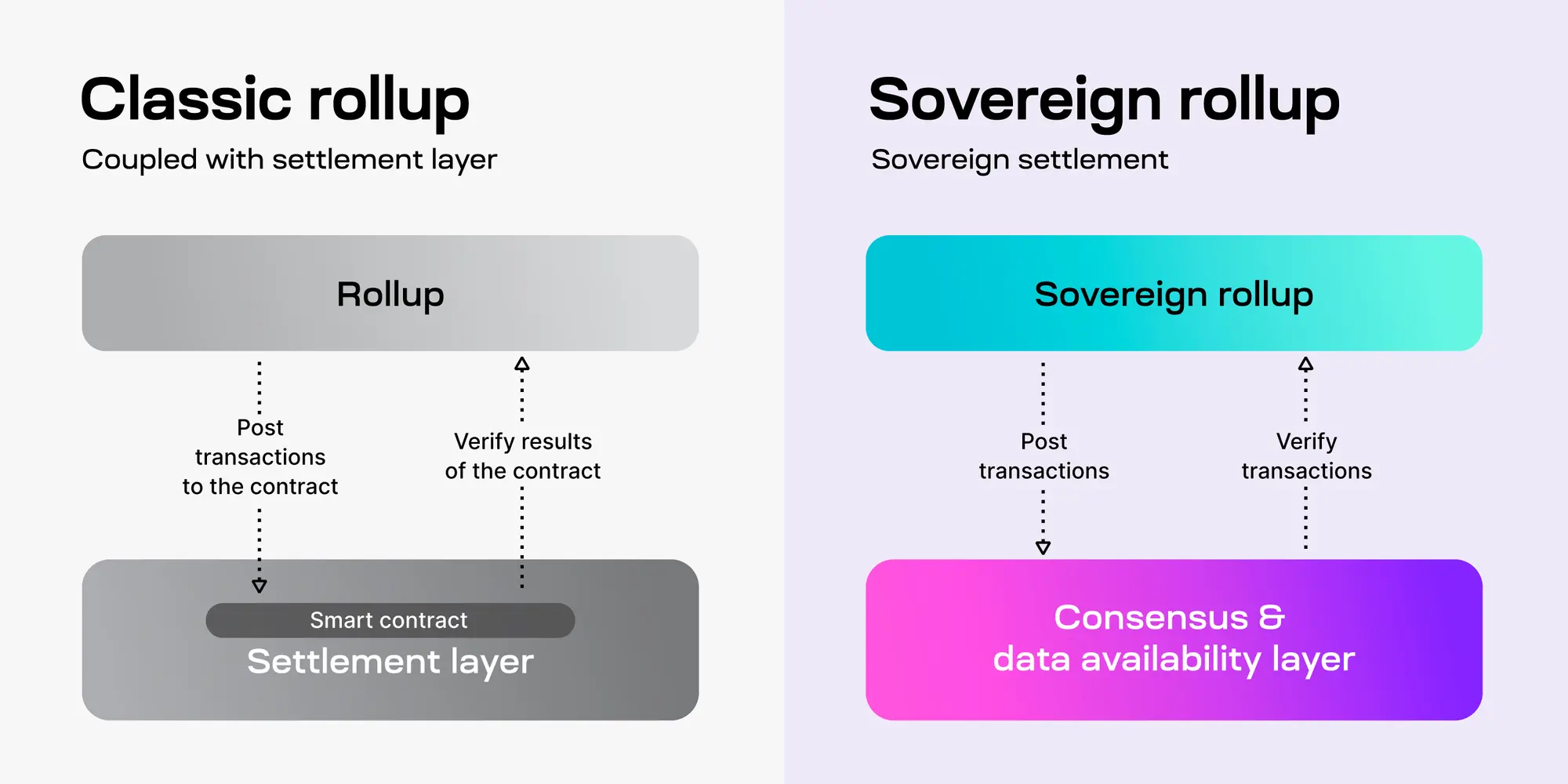
Rollup settlement limits to account for
Rollup settlement is the final step where Layer 2 transaction data is posted to a base Layer 1 blockchain, such as Ethereum. This process anchors L2 state to the main chain, ensuring that the compressed data is available for verification and dispute resolution. Without this settlement layer, L2s would operate in isolation, lacking the security guarantees of the underlying network.
The primary constraint lies in data availability and gas costs. Rollups must post calldata or blobs to the base chain to prove their state transitions. If the base chain is congested, settlement costs rise, squeezing L2 margins. Conversely, if data is withheld, users face censorship risks. This creates a direct trade-off between decentralization security and transaction throughput.
Settlement Tradeoffs by Use Case
Different rollup architectures handle this constraint in distinct ways, affecting liquidity and finality.
| Feature | Optimistic Rollup | ZK Rollup |
|---|---|---|
| Finality Time | 7-day challenge period | Near-instant upon proof verification |
| Data Cost | Lower (uses calldata/blobs) | Higher (requires complex proof data) |
| Security Model | Relies on economic incentives | |
| Liquidity Impact | Slower withdrawals due to delay |
Optimistic rollups prioritize lower data costs by assuming transactions are valid unless challenged. This makes them cheaper to settle but introduces a withdrawal delay. ZK rollups generate cryptographic proofs that verify correctness instantly, offering faster finality but at a higher computational and data cost. For high-frequency trading, ZK’s speed is valuable; for general payments, Optimistic’s lower fees may be preferable.
Decision Framework
Choose an L2 based on your need for speed versus cost. If you require immediate liquidity withdrawal and can tolerate higher fees, ZK rollups are the better fit. For applications where cost efficiency is paramount and a 7-day delay is acceptable, Optimistic rollups offer a more sustainable settlement model. Always verify the base chain’s current gas prices before initiating large settlements, as spikes can significantly impact your effective cost basis.
Rollup settlement choices that change the plan
Use this section to make the Rollup Settlement decision easier to compare in real life, not just on paper. Start with the reader's actual constraint, then separate must-have requirements from details that are merely nice to have. A practical choice should survive normal use, maintenance, timing, and budget. If a recommendation only works in an ideal situation, call that out plainly and give the reader a fallback path.
| Factor | What to check | Why it matters |
|---|---|---|
| Fit | Match the option to the primary use case. | A good deal still fails if it does not fit the job. |
| Condition | Verify age, wear, and service history. | Hidden condition issues erase upfront savings. |
| Cost | Compare purchase price with likely upkeep. | The cheapest option is not always the lowest-cost option. |
How to Choose the Right Settlement Layer
Selecting a settlement layer is no longer just about picking the cheapest chain. In 2026, the decision hinges on matching your liquidity needs to the specific tradeoffs of finality speed, data availability, and bridge security. A rollup that settles on Ethereum mainnet offers maximum security but slower throughput, while modular stacks using Celestia or EigenDA provide higher throughput but introduce new data availability risks.
1. Define Your Liquidity Priority
Start by identifying whether your protocol prioritizes capital efficiency or user experience. If your users are high-frequency traders or DeFi power users, latency matters more than absolute decentralization. For these use cases, L2s settling on high-throughput DA layers like Celestia or EigenDA offer the speed necessary for competitive trading. However, if your protocol handles institutional custody or long-term staking, the security of Ethereum mainnet settlement is usually worth the higher gas costs and slower confirmation times.
2. Evaluate Data Availability (DA) Costs
Data availability is the hidden cost of rollup settlement. When you settle on Ethereum, you pay for block space directly. When you use modular DA, you pay for data blobs, which can be significantly cheaper but are subject to different market dynamics. Check the current DA gas prices for your target layer. If the DA cost is volatile, your operational budget will be unpredictable. Use a provider-backed widget to monitor current L2 gas trends to see if the savings are real or just a temporary dip.
3. Assess Bridge and Custody Risks
The settlement layer dictates where your assets live and how they move. Bridges between L2s and mainnet are the most common attack vector in crypto. If you choose a settlement layer with a complex bridge architecture, you must audit the bridge contracts and the sequencer decentralization. Avoid layers that rely on centralized sequencers for finality unless you have a clear exit strategy. Look for rollups with transparent fault proof systems or optimistic verification windows that allow users to challenge invalid state roots.
4. Compare Finality Windows
Finality is the point of no return. Ethereum mainnet offers probabilistic finality that becomes near-instant after a few blocks, but L2s vary. Some rollups offer instant finality on the sequencer, but this is not guaranteed until L1 settlement. For high-stakes transactions, you need to know the exact time between a transaction on the L2 and its irreversible confirmation on L1. If your use case involves large, one-time transfers, a 15-minute finality window might be unacceptable. If it’s a continuous trading flow, instant L2 finality is sufficient.
5. Run a Stress Test Simulation
Before committing, simulate your protocol’s traffic on the testnet of your chosen settlement layer. Measure how the chain behaves under high load. Does the DA layer congest? Do bridge withdrawals delay? Use this data to build a risk matrix. If the stress test reveals bottlenecks, consider a hybrid approach where you settle critical assets on Ethereum while using a faster L2 for speculative activity. This balances security with performance, ensuring your liquidity remains accessible without compromising on safety.
Watch out for weak settlement options
Not every "rollup" settlement delivers real liquidity. In 2026, the gap between finality and actual capital availability widens for projects that rely on weak bridge architectures or opaque settlement layers. You need to distinguish between a legal settlement and a functional financial resolution.
A legal settlement, like the recent FTC agreement with Welsh, Carson, Anderson, and Stowe, resolves liability but does not guarantee market liquidity or technical finality. Similarly, administrative bodies like Kroll manage complex distribution but do not fix broken bridge mechanics. Confusing these administrative fixes with technical solutions is a common mistake that leaves investors exposed to bridge risks.
The primary keyword cluster here focuses on the distinction between legal/financial settlement structures and the technical reality of Layer 2 finality. Many projects market their "settlement" as a liquidity event, but it is often just a procedural step. True liquidity comes from robust cross-chain bridges and transparent rollup finality, not just a signed agreement.
When evaluating a rollup project, look for concrete technical metrics: bridge security audits, finality times, and actual locked value. Avoid projects that rely on vague "settlement" narratives without clear technical underpinnings. The market is moving toward transparency, and weak options will be filtered out as users demand real, verifiable liquidity.
Rollup settlement: what to check next
Layer 2 rollups handle transaction execution off-chain, but they must settle on Ethereum mainnet to achieve finality. This process determines when your assets are truly secure and irreversible. Understanding the differences between optimistic and ZK rollups, along with bridge mechanics, is essential for managing risk and liquidity.
| Feature | Optimistic | ZK |
|---|---|---|
| Finality Time | ~7 days | Minutes to hours |
| Security Model | Fraud proofs | Validity proofs |
| Cost per Tx | Lower | Higher |
| Complexity | High | Low |
Choose optimistic rollups for cost-sensitive, high-complexity applications where waiting a week for finality is acceptable. Opt for ZK rollups when speed, capital efficiency, and immediate finality are critical, such as in trading or lending protocols. Always verify the bridge security model before moving large sums, as the bridge is often the weakest link in the settlement chain.
No comments yet. Be the first to share your thoughts!