
What rollup settlement means
Rollup settlement is the cryptographic anchor that guarantees transaction finality on a Layer 1 blockchain. It is the process where off-chain execution data is compressed and posted to a base layer, such as Ethereum or Celestia, ensuring the state cannot be altered without detection. This mechanism distinguishes cryptographic finality from traditional legal settlements, which rely on judicial enforcement rather than mathematical proof.
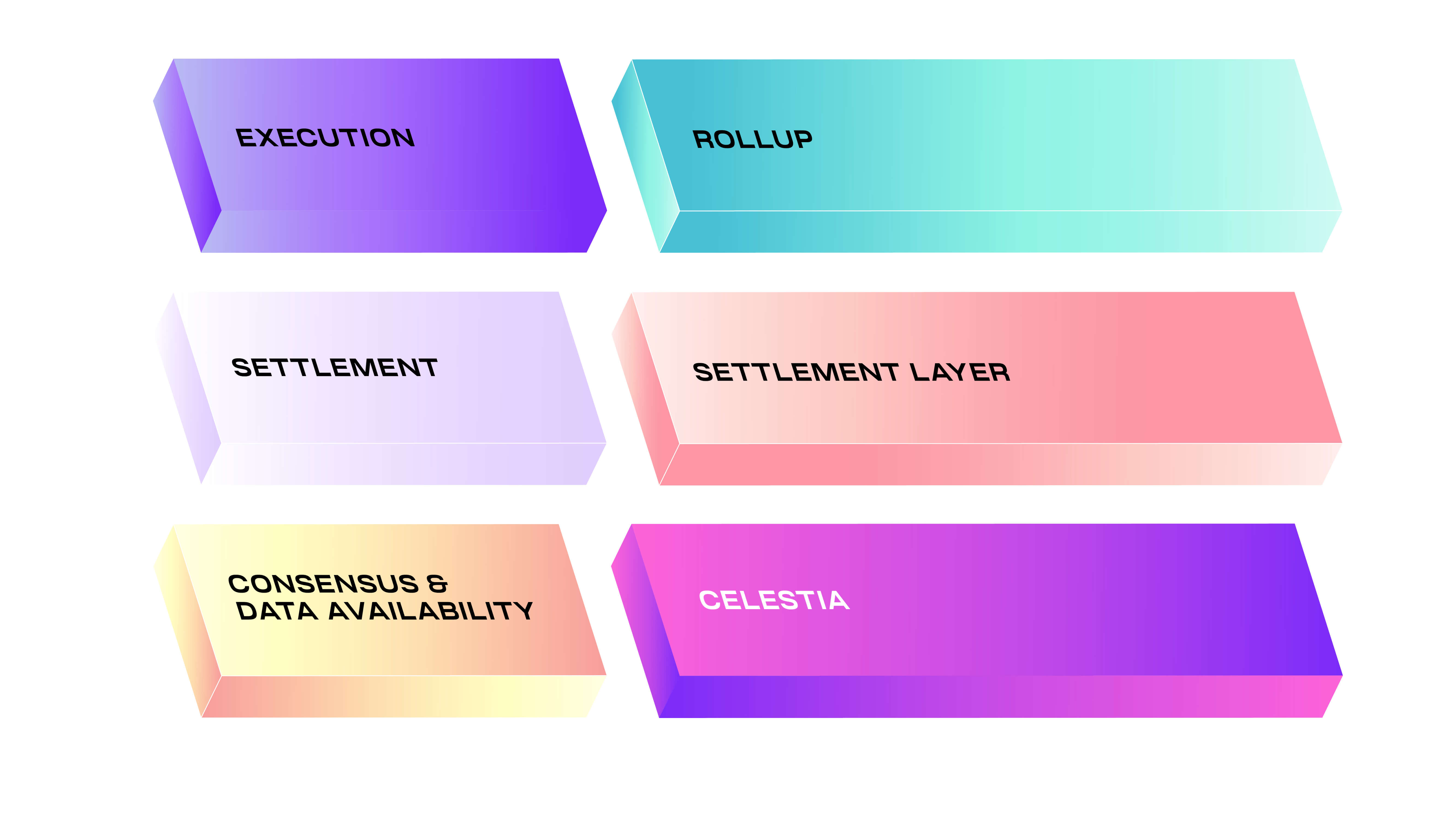
To understand settlement, it helps to separate execution from anchoring. Rollups process transactions off-chain to achieve speed and low costs. Without settlement, these transactions remain unverified and vulnerable to fraud. Settlement layers serve multiple purposes: they verify proofs or resolve disputes, facilitate cross-rollup bridging, and provide a single source of truth for the network state [[src-serp-3]].
The settlement layer acts as the ultimate arbiter of truth. When a rollup posts its batch to L1, it either includes a validity proof (in ZK rollups) or opens a window for challengers to dispute invalid state transitions (in Optimistic rollups). Once the L1 confirms this data, the transactions are considered final. This finality differentiates rollups from simple off-chain ledgers, which lack the security of a decentralized base layer [[src-serp-6]].
ZK vs Optimistic settlement mechanics
Rollup settlement models differ fundamentally in how they establish trust and achieve finality on the base layer. ZK (Zero-Knowledge) rollups rely on cryptographic proofs to validate batches of transactions instantly. Optimistic rollups assume transactions are valid by default, relying on a challenge period for fraud proofs to detect and reject invalid states.
The choice between these models dictates the user experience and security assumptions. ZK rollups offer immediate finality, meaning users can withdraw funds or interact with the settled state as soon as the proof is verified on-chain. Optimistic rollups require a waiting period—typically seven days on Ethereum—to allow validators to dispute any fraudulent state transitions. This delay is the cost of lower computational overhead during the sequencing phase.
| Feature | ZK Rollup | Optimistic Rollup |
|---|---|---|
| Proof Type | Validity Proofs (SNARKs/STARKs) | Fraud Proofs |
| Finality Time | Immediate (minutes) | 7 days (Ethereum) |
| Gas Cost | High (proof generation) | Low (sequencing) |
| Security Model | Cryptographic guarantee | Economic slashing + time delay |
The trade-off is clear: ZK rollups pay a premium in computational complexity to buy speed and certainty. Optimistic rollups defer that cost to the dispute phase, offering a more gradual path to decentralization but requiring users to trust the system's economic incentives during the challenge window. This distinction shapes the architectural roadmap for each scaling solution.
Shared sequencers and cross-rollup bridges
Cross-rollup decentralized exchanges (DEXs) face a structural bottleneck: moving assets between rollups typically requires waiting for L1 finality, introducing latency that high-frequency trading strategies cannot tolerate. Shared sequencer infrastructure addresses this by decoupling transaction ordering from settlement. By allowing multiple rollups to route their transactions through a single sequencer, users can execute trades across rollups within the same block or sequence, effectively creating an atomic bridge before the data is posted to Ethereum.
This architecture functions as a coordination layer rather than a trustless bridge. The shared sequencer batches transactions from different rollups, ensuring consistent ordering and state transitions. For example, a user swapping ETH on a ZK rollup for a token on an Optimistic rollup sees the trade settle instantly on the sequencer level. The actual asset transfer is finalized only when each rollup posts its state root to L1, but the user experience mirrors that of a single-chain DEX.
The reduction in latency is significant, but it introduces new security assumptions. The shared sequencer becomes a critical point of failure. If the sequencer is censored or experiences downtime, cross-rollup liquidity is frozen. Because the sequencer sees all transaction data before it is posted to L1, it must be trusted not to reorder or front-run trades during the batching process. This contrasts with trustless bridges, which rely on cryptographic proofs but suffer from multi-day withdrawal delays.
Celestia’s modular stack documentation highlights that settlement layers serve as a hub to facilitate cross-rollup bridging, but shared sequencers operate one layer above settlement. They prioritize speed over the finality guarantees inherent in L1 settlement. For market analysis, this means cross-rollup liquidity is deeper and faster, but it carries a higher risk profile due to the centralized nature of the sequencing layer. Traders must weigh the latency benefits against the potential for sequencer-side censorship or MEV extraction.
Settlement efficiency and L2 token valuations
The market prices Layer 2 tokens based on the reliability of their settlement layer. Investors distinguish between the theoretical throughput of a rollup and the actual finality guarantees provided by the underlying consensus mechanism. When settlement is optimistic, the market prices in the risk of fraud proofs and the associated capital efficiency constraints. When settlement is zero-knowledge, the market rewards the cryptographic certainty and faster finality, which reduces counterparty risk for institutional participants.
This divergence is visible in the price action of major L2 tokens. Optimistic rollups, which rely on dispute windows, often exhibit higher volatility during periods of network stress or when fraud proof mechanisms are updated. In contrast, ZK-rollups with shorter finality times tend to show more stable valuation metrics, as the settlement layer provides a clearer path to Ethereum mainnet security. The correlation between settlement speed and token utility is not merely speculative; it reflects the real-world demand for capital efficiency in DeFi protocols.
The following chart illustrates the recent price action of Optimism (OP), reflecting market sentiment toward optimistic settlement models. While token price is influenced by broader macroeconomic factors, the underlying trend often correlates with the perceived security and efficiency of the rollup's settlement layer. A robust settlement mechanism reduces the discount investors apply to L2 tokens due to settlement risk.
Evaluating L2 investments requires a clear understanding of these settlement differences. The choice between ZK and optimistic finality is not just a technical decision; it is a fundamental determinant of token utility and long-term valuation. As the ecosystem matures, tokens with superior settlement guarantees will likely command a premium, reflecting the reduced risk and increased efficiency they offer to users and developers.
Choosing a settlement layer for 2026
Selecting a settlement layer requires balancing finality guarantees against cost constraints. The decision hinges on whether your application prioritizes immediate user experience or maximum security assurance.
Evaluate finality requirements
Optimistic rollups offer faster integration and lower initial costs but require a seven-day challenge period for finality. This delay is acceptable for applications where users can tolerate pending states, such as internal governance tools or non-critical data logging.
ZK rollups provide immediate finality upon proof submission. This model suits high-frequency trading or applications requiring instant settlement certainty, though the computational overhead for proof generation remains higher.
Analyze cost structures
Settlement costs on Ethereum mainnet are volatile. A TechnicalChart of ETH gas trends illustrates that batched transactions can significantly reduce per-user fees compared to direct L1 interactions. However, ZK proof verification costs generally exceed optimistic dispute resolution costs.
Assess security assumptions
Optimistic security relies on the assumption that at least one honest validator will monitor and challenge fraudulent state transitions. If the validator set is small or centralized, this assumption weakens. ZK security relies on cryptographic proofs, offering a more robust guarantee against invalid state updates, provided the ZK circuit is correctly implemented and verified.
Implement the selection
- Define latency tolerance: If finality must be under one hour, ZK is the primary candidate.
- Calculate batch efficiency: If transaction volume is high, the lower verification cost of Optimistic rollups may dominate.
- Verify security model: Ensure the settlement layer’s validator set meets your risk threshold for censorship or fraud.
A ComparisonTable below summarizes these tradeoffs for quick reference.
| Feature | Optimistic | ZK |
|---|---|---|
| Finality Time | 7 days | Immediate |
| Verification Cost | Low | High |
| Security Model | Economic (Challengers) | Cryptographic (Proofs) |
Settlement Finality and Security Assumptions
Understanding the difference between ZK and Optimistic finality requires examining the time-to-settlement and the underlying security guarantees. Settlement layers serve as the anchor for rollups, handling proof verification, dispute resolution, and cross-rollup bridging Celestia. This section addresses common questions regarding these mechanisms.
No comments yet. Be the first to share your thoughts!