
What Is the Rollup Settle Layer?
In the modular blockchain stack, the rollup settle layer serves as the final authority for state validity. It is the on-chain mechanism that verifies the computational results produced by a Layer 2 network and commits the final state root to Layer 1. This step is distinct from execution, where transactions are processed, and data availability, where transaction data is stored and made accessible.
For institutional DeFi, this distinction matters because it defines where security and cost are actually incurred. Execution happens off-chain to achieve speed and low fees. Data availability ensures that anyone can reconstruct the state if needed. Settlement, however, is the trust-minimized bridge that guarantees the L2 state is immutable and correct once committed to L1.
The rollup settle layer typically operates by accepting zero-knowledge (ZK) proofs or fraud proofs. Once the L1 contract validates the proof, the state root is updated. This commitment is what allows users to withdraw assets or interact with other chains with confidence that the L2 state cannot be altered retroactively without detection. Without this layer, the rollup would be an isolated system with no verifiable link to the base layer’s security.
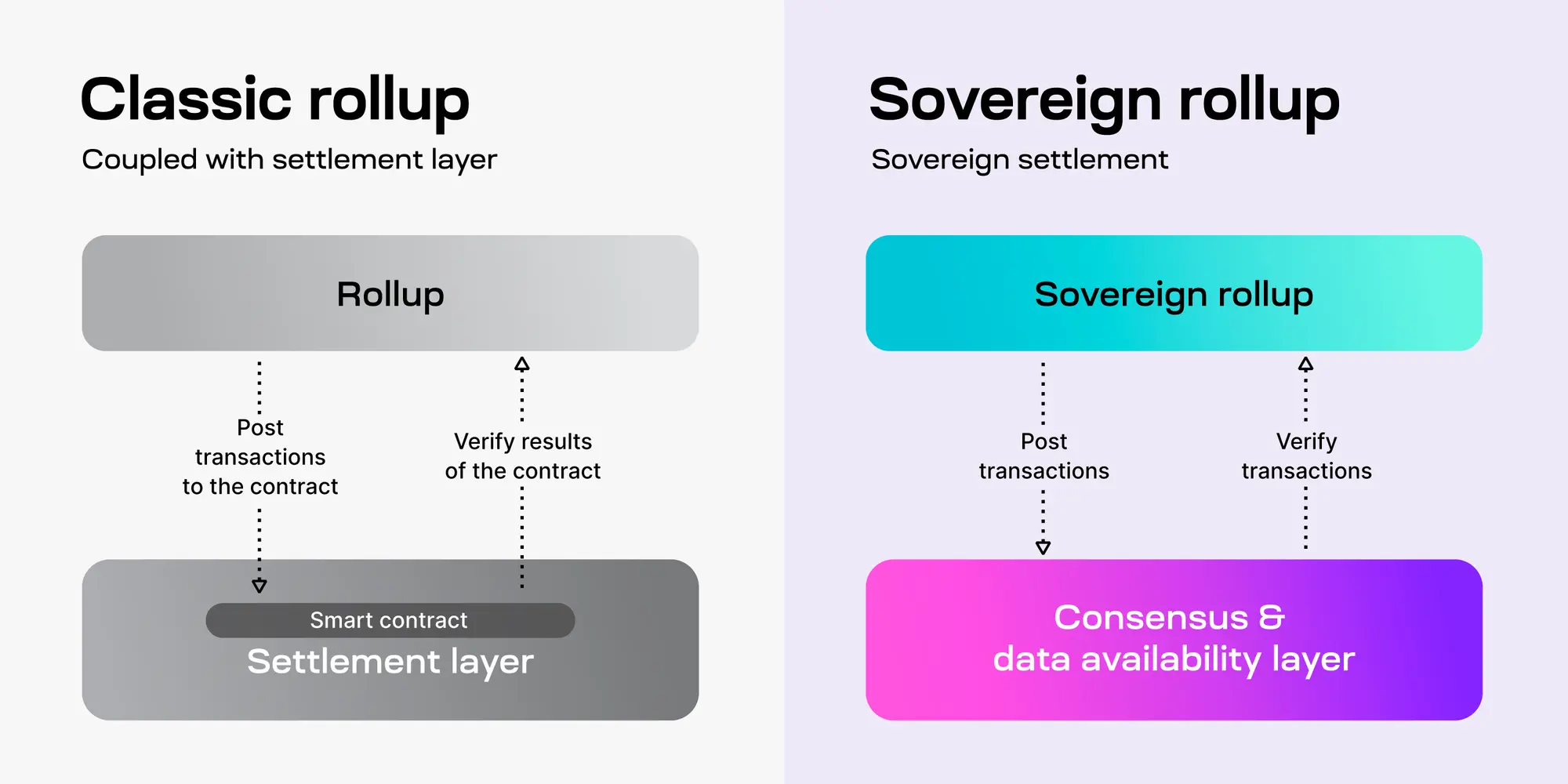
In a modular architecture, settlement is not always handled by the same chain that provides data availability. Sovereign rollups, for instance, may use a standalone consensus layer and rely on external data availability networks like Celestia. In these cases, the settle layer might be a separate L1 or even a sidechain dedicated to verifying the rollup’s state transitions. This modularity allows developers to optimize for specific cost and security trade-offs, but it also introduces complexity in how finality is achieved.
The cost of settlement is directly tied to the complexity of the verification process on L1. ZK-rollups, which use succinct proofs, generally have lower settlement costs than optimistic rollups, which require a challenge period and larger data availability commitments. For institutions, understanding this cost structure is essential for predicting transaction fees and designing efficient DeFi protocols that rely on fast, low-cost finality.
Why traditional rollup settlement costs more
Institutional DeFi firms face a different cost structure than retail users. While Layer 2 networks handle execution, the final settlement step on the mainnet remains expensive. For high-frequency trading, these settlement fees accumulate quickly, eating into margins that rely on thin spreads and rapid turnover.
The primary expense comes from two sources: data availability and proof verification. Every transaction batch must post its data to the mainnet to ensure security. This data posting fee scales with the volume of transactions. Additionally, if the rollup uses validity proofs (ZK-rollups), the mainnet must verify these complex cryptographic proofs. This verification process consumes significant gas, creating a bottleneck that slows down finality and increases costs.
Optimistic rollups avoid heavy proof verification by assuming transactions are valid unless challenged. However, they still require data posting. For institutions executing thousands of trades per second, the cumulative cost of posting data and waiting for the challenge period can make traditional rollup settlement prohibitive. This is where rollup settlement models that reduce mainnet dependency become critical for institutional adoption.
As Ethereum gas prices fluctuate, so do settlement costs. During network congestion, the price to post data and verify proofs spikes. Institutions need predictable costs to manage risk. Traditional rollup settlement often fails to provide this stability, pushing firms to seek alternatives that offer lower and more consistent fees.
Shared sequencers reduce settlement overhead
Shared sequencers lower the cost of cross-rollup DEX settlement by aggregating transactions before they hit the settle layer. Instead of each rollup posting its own batch of transactions to the L1, a shared sequencer bundles them together. This aggregation reduces the per-transaction cost burden on the settle layer, making cross-rollup swaps cheaper and faster.
In a traditional setup, each rollup operates independently. When a user swaps tokens across rollups, each chain must post its own batch to the L1, including proof data. This duplication of effort increases the total gas cost. With a shared sequencer, transactions from multiple rollups are collected and processed in a single batch. The sequencer then posts this aggregated batch to the L1, sharing the gas cost across all participating rollups.
This approach is particularly beneficial for institutional DeFi, where large volumes of cross-rollup trades are common. By reducing the overhead of settlement, shared sequencers enable more efficient capital allocation and lower trading costs. The Espresso Network's configurable execution environments demonstrate how this architecture can be implemented to support diverse rollup types while maintaining security and consistency [[src-serp-5]].
The result is a more scalable and cost-effective settlement process. Institutions can execute complex, multi-rollup strategies without being penalized by high gas fees. This efficiency gain is a significant step toward making institutional DeFi more accessible and competitive.
| Feature | Single Rollup | Shared Sequencer |
|---|---|---|
| Settlement Cost | High (per rollup) | Low (aggregated) |
| Latency | Higher (sequential) | Lower (parallel) |
| Cross-Rollup Swaps | Complex | Simplified |
Settling on a given L1 gives the rollup the choice to exchange liquidity with the L1. As such rollups can choose to settle on multiple chains at once, further enhancing the flexibility and efficiency of the settlement process [[src-serp-6]].
Institutional implications for DeFi liquidity
Lower settlement costs on rollups directly improve capital efficiency for institutional players. When transaction fees drop from dollars to cents, the friction that previously prevented small-scale institutional participation disappears. This shift allows firms to deploy capital more precisely, reducing the idle cash that often sits in wallets waiting for cost-effective execution windows.
Faster finality is equally critical. Traditional L1 settlement times can introduce counterparty risk during volatile market hours. Rollups compress this window, allowing institutions to settle trades with near-instant certainty. This speed enables strategies that were previously too risky due to latency, such as high-frequency arbitrage or real-time collateral rebalancing across multiple chains.
The combination of lower costs and faster finality drives a structural change in DeFi liquidity. Institutions are no longer treating L2s as experimental playgrounds but as primary settlement layers. This trend is expected to accelerate in 2026 as infrastructure matures and regulatory clarity improves, drawing significant institutional capital into the ecosystem.
Checklist for evaluating settle efficiency
Institutions must verify that a rollup’s settlement mechanism aligns with strict cost and speed thresholds before deployment. Settlement is the final on-chain confirmation that secures L2 state and enables withdrawals. Use this checklist to assess whether a rollup’s settle architecture meets institutional requirements.
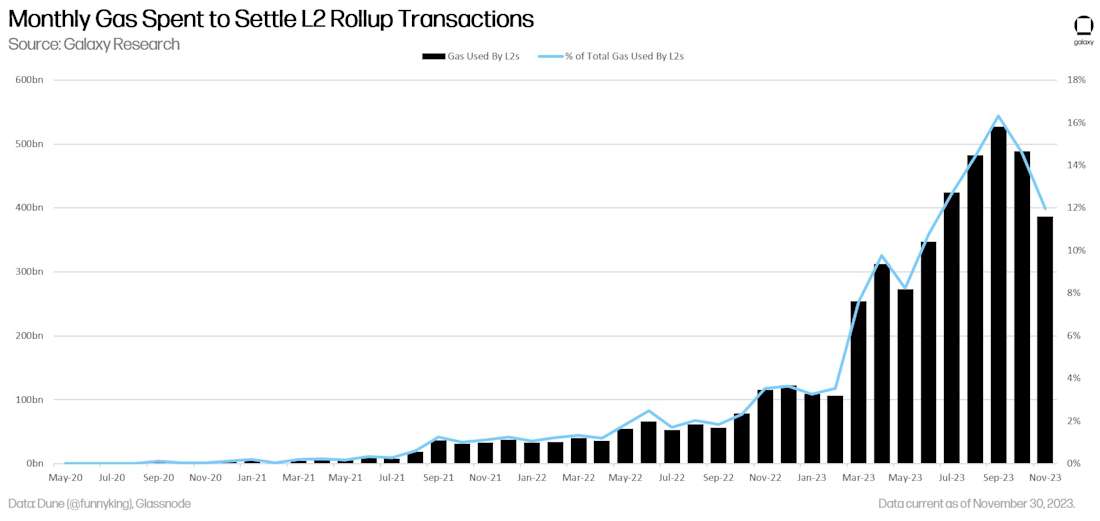
- Gas cost per transaction: Calculate the average L1 gas fee required to post a batch. High gas costs erode the L2 value proposition.
- Settlement finality time: Measure the duration from L2 block production to L1 confirmation. Institutional workflows often require sub-hour finality.
- Data availability (DA) method: Confirm whether the rollup uses Ethereum calldata or a dedicated DA layer like Celestia. Cheaper DA reduces overall settlement overhead.
- Proof verification cost: Evaluate the gas required to verify ZK proofs or fraud proofs on L1. ZK rollups typically have higher verification costs but faster finality than Optimistic rollups.
- Withdrawal liquidity: Ensure sufficient liquidity exists in the bridge or liquidity pool to process withdrawals within the expected time frame.
Refer to Cube Exchange’s settlement layer guide for a deeper breakdown of commitments, proofs, and data availability.
No comments yet. Be the first to share your thoughts!